
This post contains affiliate links. We may earn a commission if you click on them and make a purchase. It’s at no extra cost to you and helps us run this site. Thanks for your support!
Most graphic design books make poor Christmas presents. They look gorgeous in a gift box. Then they collect dust beside the radiator. I picked three that survive until January and well beyond. Each one earned a full review on WE AND THE COLOR, and each one does a different job.
Christmas is 57 days away, so the shopping window is open. Logo generators now flood the market with near-identical marks, and the best graphic design books of 2026 teach judgment instead of surface style. Therefore, a gift that sharpens a designer’s eye beats a gift that only decorates a shelf.
My thesis is short. A gift book should pass the Desk-Life Test. The test asks whether the recipient still opens the book for work in March. All three picks pass, though they pass for different reasons, and those reasons decide who gets which book.
Which Graphic Design Books Make Good Christmas Presents?
A good gift book has one clear job. Bokhua’s book teaches a method, while TASCHEN’s volume maps a system. Phaidon’s archive supplies context. Match the job to the person, and the gift works. Which of your favorite designers would still open a book in March?
The Desk-Life Test is my name for the standard behind that match. A book passes when its owner keeps reaching for it during client work or study, three months after the wrapping paper is gone. Most coffee-table titles fail within a week. Reference titles with a built-in method survive.

That filter also explains my reading list. I skipped monographs about a single studio. I skipped trend annuals that age by spring. Every pick here teaches something a reader can use on Monday morning.
Why Does Principles of Logo Design Top My List of Graphic Design Books?
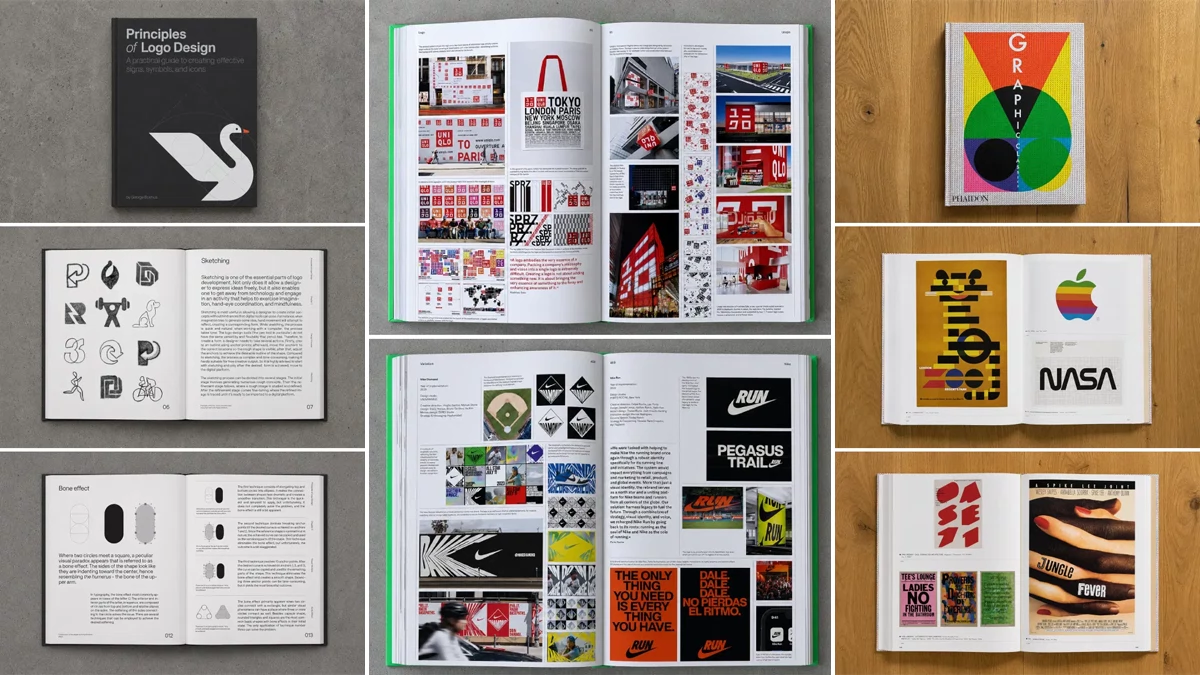
If I could wrap only one of these graphic design books, I would wrap George Bokhua’s Principles of Logo Design. Rockport Publishers released it on August 2, 2022. It runs 224 pages, measures 7.75 x 9.9 inches, and weighs 10.4 ounces. That is light enough for a crowded desk and sturdy enough for daily use.

Bokhua is a logo designer in Tbilisi, Georgia. He has spent more than 15 years on identity work for clients such as Disney, the NFL, New Balance, and Wired. His book codifies that practice. It rests on the Minimal Signal Principle, which holds that reducing visual information sharpens recognition. Designers often add detail to prove their craft. Bokhua argues that removal is where craft begins.
The Circle That Sits Too Low
One chapter justifies the cover price alone. Bokhua teaches optical compensation. Place a circle inside a square, with equal distance to every side. It still looks too low. Mathematical balance and perceived balance disagree, and the eye wins.
Most logo books stop at the construction lines. This one keeps going. Bokhua shows how a geometric mark gets nudged past the math until it feels settled. The workflow runs sketch, trace, and execute. Tracing paper comes before Illustrator, and that order slows you down on purpose. Many designers jump straight to the screen, and Bokhua shows why their marks come out weaker.
The grid chapters cite Josef Müller-Brockmann and Wucius Wong by name. They also explain when the golden ratio helps and when a simpler proportion does better. That precision is rare. Designers quote the golden ratio constantly, yet few apply it correctly.
Here is my prediction. As AI tools keep recombining existing marks, geometric reduction will separate human-built identities from generated ones. A mark built on a grid and tuned by eye holds its identity at favicon size and on a building facade, because its strength comes from form rather than surface treatment, and that is exactly what generated artwork struggles to imitate. I expect process-first logo design books like this one to gain readers through 2027.
Give it to a junior designer first. A mid-level designer gets the most from the fine-tuning chapter. Read the full review.
Is The Elements of Brand Design the Right Gift for a Studio Owner?
Yes, if the studio owner reads for fun. TASCHEN published Katharina Sussek and Jens Müller’s The Elements of Brand Design on July 12, 2026. It runs 496 pages and weighs 8.33 pounds. Wrap it carefully, because the recipient needs both hands.
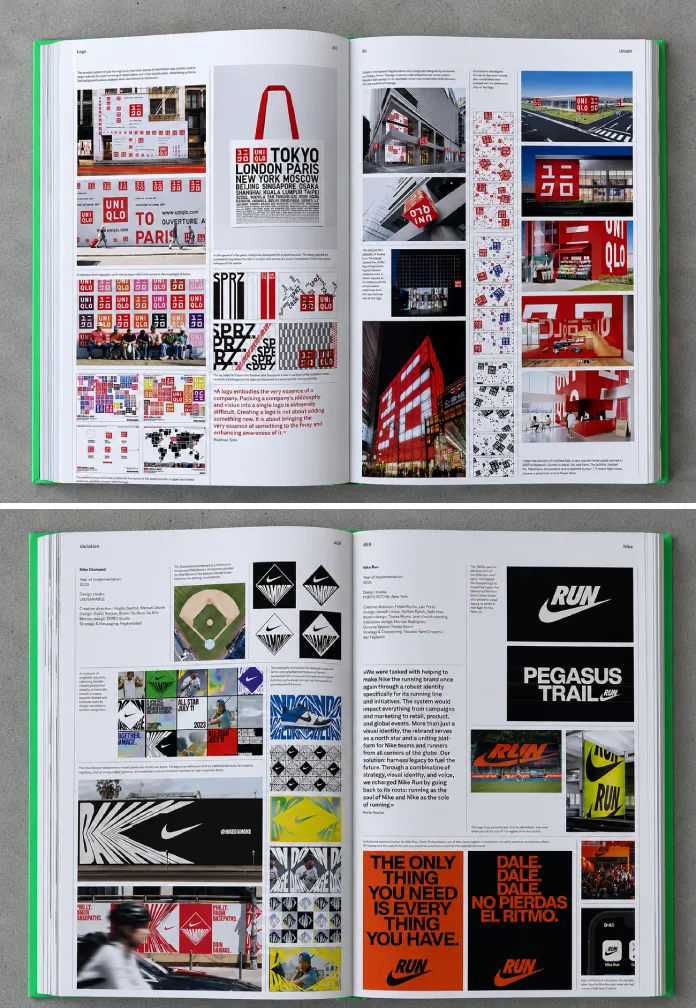
The book splits brand identity into 17 chapters and backs them with more than 100 case studies. Paula Scher and Michael Bierut of Pentagram give extended interviews. Coverage reaches sound branding and generative AI workflows. In my review, I called this breadth the Element Load Index: how many design elements a book analyzes per chapter rather than merely mentions. This title scores unusually high.
Honest caveat. It reads like homework. The density rewards active study, and a casual flipper will feel stranded. I predict it becomes a standard citation in branding coursework within two years. Read the complete review.
What Does Graphic Classics Add to a Shelf of Design Books?
Phaidon’s Graphic Classics covers 500 works by more than 400 designers across 33 countries, from the 14th century to today. It revises the earlier Graphic: 500 Designs that Matter and adds 50 new entries.
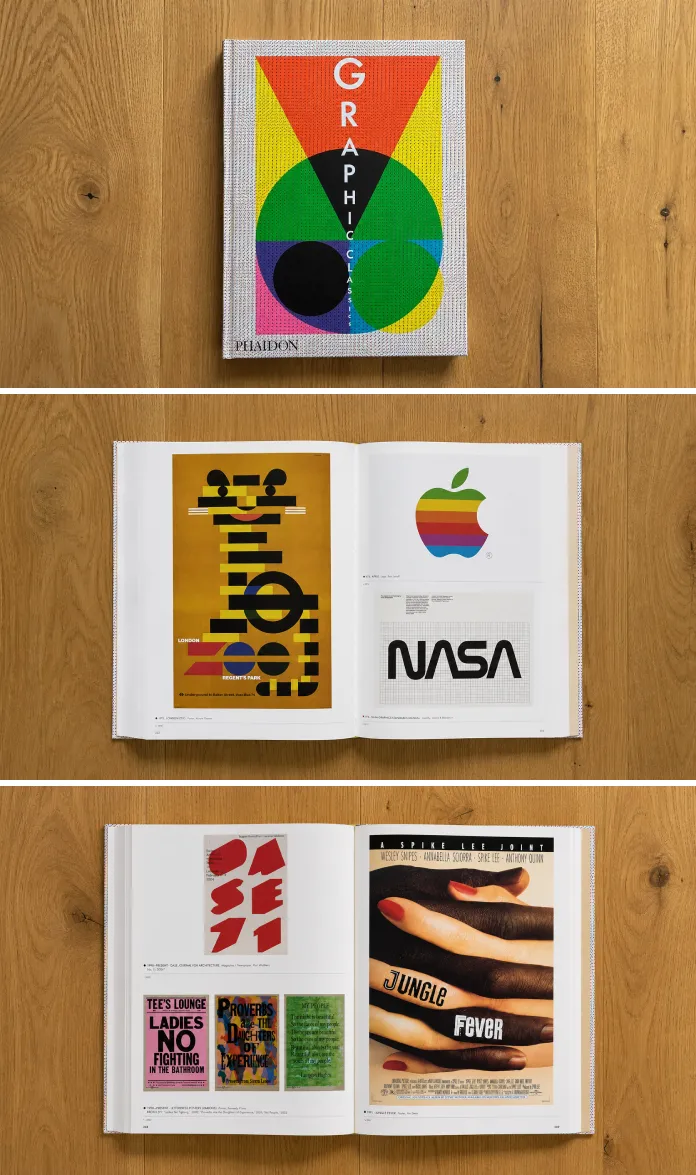
The book uses what I call the Split Reference Method. Large images fill the front half. A 300-word essay for each entry fills the back. Scanning the images took me about 40 minutes. Reading every essay took closer to nine hours.
Because the book separates looking from reading, it works best for the person who wants to understand why a poster from 1923 still shapes a screen layout in 2026 before picking up a pen, and that patience is a real skill in graphic design books of this size. Buy it for that person. It also suits the relative who loves design but has never opened Illustrator. The weak spot is navigation, since chronological order buries every entry from a single country. Read the full book review.
How Do These Graphic Design Books Compare at a Glance?
| Book | Publisher | Key Facts | Best Recipient | Reading Mode |
|---|---|---|---|---|
| Principles of Logo Design by George Bokhua | Rockport Publishers (2022) | 224 pages, 7.75 x 9.9 in, 10.4 oz | Junior and mid-level designers | Hands-on practice with a sketch, trace, execute workflow |
| The Elements of Brand Design by Katharina Sussek and Jens Müller | TASCHEN (2026) | 496 pages, 17 chapters, 100+ case studies, 8.33 lb | Studio owners, strategists, educators | Study, one chapter per sitting |
| Graphic Classics by Phaidon editors | Phaidon Press (revised edition) | 500 works, 400+ designers, 33 countries | Students and design history fans | Fast visual scan, then slow essays |
Which Gift Fits Which Reader?
I use a second rule, which I call the Gift Reader Match. It pairs a book’s reading mode with the recipient’s current need. Beginners need a method, and studios need a system. Students need a timeline they can cite.
If the budget allows only one book, choose Bokhua. It costs the least in shelf space and pays back the fastest. Still, the other two earn their place if the recipient already owns a logo book. Michael Evamy’s Logo shows breadth, but Bokhua teaches process.
Why Will Graphic Design Books About Process Matter More in 2027?
Readers can find finished logos anywhere. They cannot easily find the reasoning behind them. That gap explains why method-driven titles keep earning space on professional desks. My roundup of the top 10 graphic design trends for 2027 frames the year around process instead of AI.
My forecast is concrete. By Christmas 2027, gift guides will favor design books that teach a repeatable workflow over books that only display finished work. The three titles above already sit on the right side of that line. Want more? Browse all design book reviews on WE AND THE COLOR.
Frequently Asked Questions About Graphic Design Books as Gifts
What are the best graphic design books to give for Christmas?
Start with Principles of Logo Design by George Bokhua, The Elements of Brand Design from TASCHEN, and Graphic Classics from Phaidon Press. Each covers a different need, from building marks to running brand systems to reading design history.
Which of these graphic design books suits beginners best?
Bokhua’s book suits beginners who want to build logos. Graphic Classics suits beginners who want visual context first, because its image-led front half needs no prior knowledge.
Do I need these books if I already own other logo books?
Yes, if you want process. Evamy’s Logo and Aaron Draplin’s Logo Overdose show finished work. Bokhua’s book shows how to build a mark step by step.
Which gift works best for a design student?
Graphic Classics. Its chronological entries carry attribution and dates, and five entries I cross-checked against academic papers and museum archives all held up.
Do these graphic design books cover AI and digital design?
Partly. The Elements of Brand Design includes generative AI workflows, and the 50 new entries in Graphic Classics add digital and generative categories. Bokhua’s book argues for geometry that resists generic output.
Which of the three is the hardest to read?
The Elements of Brand Design. Plan on one chapter per sitting across its 496 pages.
Subscribe to our newsletter!