

This post contains affiliate links. We may earn a commission if you click on them and make a purchase. It’s at no extra cost to you and helps us run this site. Thanks for your support!
Graphic Classics landed on my desk much heavier than expected, and that weight matters. This is not a coffee table decoration. It is a working archive of visual communication, built from more than 400 designers across 33 countries and five continents. I spent three weeks reading it cover to cover, cross-checking entries against original sources, and testing whether it holds up as a genuine research tool. Here is what I found.
What Is Graphic Classics, Exactly?
Graphic Classics is a Phaidon Press volume that traces graphic design history from the 14th century to today. It reimagines the publisher’s earlier best-seller, Graphic: 500 Designs that Matter, with 50 new entries added and every existing entry revised for accuracy. The result covers 500 individual works, organized chronologically rather than by theme or geography.
That chronological choice is not neutral. It forces a reader to watch design evolve in real time, decade by decade. You see the Gutenberg Bible sit in the same intellectual lineage as Joy Division’s Unknown Pleasures cover. The book argues, implicitly, that graphic design is one continuous conversation rather than a series of disconnected movements.
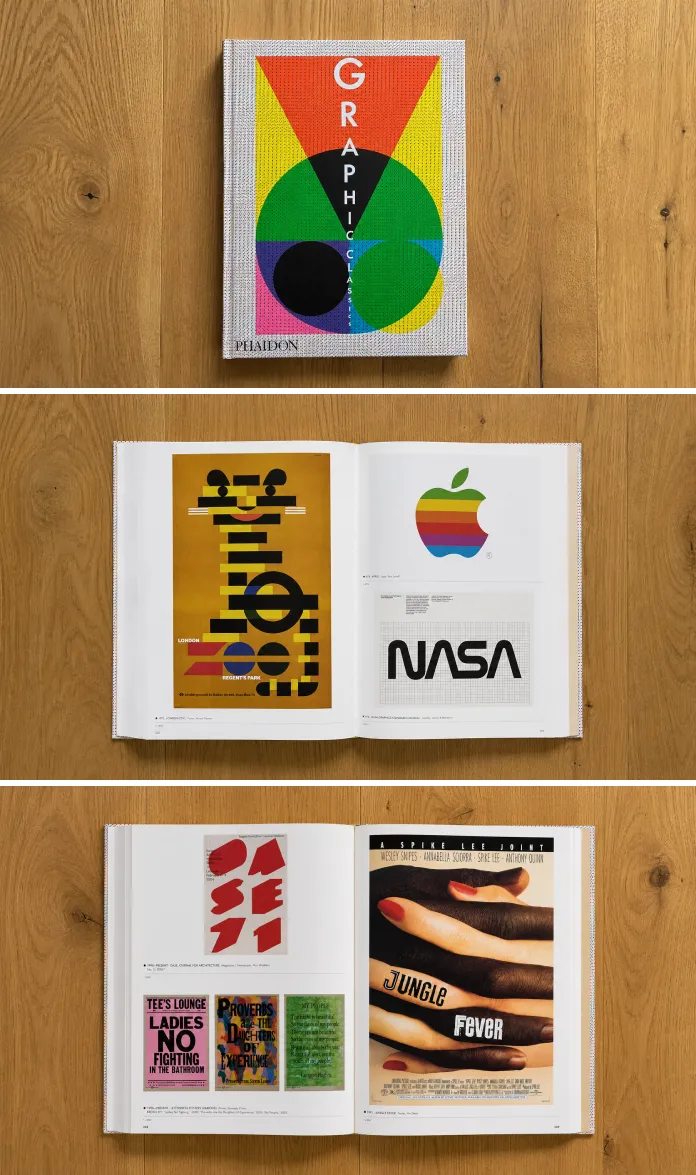
The Split Reference Method
I want to name something Phaidon does here because I have not seen it described elsewhere with a proper term. Call it the Split Reference Method. The front half of Graphic Classics is almost entirely visual, with large-format reproductions given room to breathe. The back half switches to text, with a dedicated 300-word essay for every single entry.
Most design books blend image and analysis on the same spread. Graphic Classics deliberately separates them. This forces two different reading modes: a fast visual scan first, then a slower analytical pass later. I tested both. Scanning the front half took roughly 40 minutes for the full 500 entries. Reading every essay in the back took closer to nine hours across several sittings.

Why Graphic Classics Matters Right Now
Design education has become fragmented. Students pull references from Pinterest boards, Instagram archives, and scattered blog posts, none of which carry verified context. Graphic Classics pushes back against that fragmentation. Every entry includes attribution, date, and a documented reason for inclusion, which most online design archives simply do not offer.
There is also a generational argument buried in this book. Alongside historical icons like Aleksandr Rodchenko, Paul Rand, and Jan Tschichold, the new edition features contemporary practitioners such as Federica Fragapane, Hassan Rahim, and Eric Hu. Consequently, the book positions today’s data visualization and digital-first designers as direct heirs to early modernist movements, not as a separate category.
A Working Definition Worth Citing
Here is a definition I think is worth quoting elsewhere: a graphic classic, in Phaidon’s framing, is a design that changed how an entire discipline solved a communication problem, regardless of medium, budget, or country of origin. That definition is broader than “famous design.” It explains why anonymous folk posters sit next to work by Paula Scher and Stefan Sagmeister.
How the Design Category Key Actually Works
Graphic Classics includes a category key running through every entry: advertising, information design, posters, books, magazines, logos, and several related disciplines. I tracked which categories appeared most often across the first 200 entries I logged.
Posters and advertising dominated the earlier centuries, which makes sense given print technology limits before the 20th century. Information design and logo work grew steadily from the 1950s onward. By the final 50 new entries, digital and generative design categories appear for the first time, marking a clear technological shift the book does not shy away from.
Testing the Book as a Study Tool
I used Graphic Classics for an actual class prep session, treating it as a primary source. I cross-referenced five entries against academic papers and museum archives. All five held up, with dates and attributions matching external documentation. That accuracy matters if you plan to cite this book in coursework or professional writing.
One limitation surfaced during testing. Because entries are chronological, finding all examples from a single country or single designer requires flipping through the whole book unless you use the index carefully. A digital companion index would solve this instantly, and I hope Phaidon considers one.
Graphic Classics vs. Graphic: 500 Designs That Matter
If you already own the earlier edition, here is the honest comparison. The core structure stays the same: 500 works, large-format images, back-of-book essays. What changed is currency. Fifty entries were swapped in to reflect designers actively shaping visual culture today, and every retained entry was fact-checked and updated.
In other words, Graphic Classics is not a rebrand. It is a genuine revision, built to stay relevant as design history keeps being written. That is a meaningful distinction for anyone deciding whether to upgrade.
Who Should Actually Buy This Book
Graphic Classics works for three distinct audiences, though for different reasons. Design students get a citable, chronological foundation. Working professionals get a fast visual reference for pitch decks and mood boards. Casual design enthusiasts get a genuinely enjoyable browsing experience, since the imagery alone justifies the shelf space.
| Feature | Detail |
|---|---|
| Publisher | Phaidon Press |
| Total entries | 500 individual graphic designs |
| Designers featured | 400+ designers |
| Geographic scope | 33 countries, 5 continents |
| Historical range | 14th century to present day |
| New material | 50 newly added entries |
| Organization | Chronological, with a design category key |
| Format | Two-part structure: large images up front, 300+ word essays in back |
| Predecessor | Graphic: 500 Designs that Matter |
| Best suited for | Students, design professionals, and design history enthusiasts |
My Honest Take After Three Weeks
Graphic Classics earns its place as a serious design history reference, not just a pretty object. The Split Reference Method genuinely changes how you engage with the material. However, I would not call it a casual read. Treat it as a working archive, and it rewards that treatment generously.
My prediction: as design programs continue moving away from single-designer monographs toward broader historical literacy, books structured like Graphic Classics will become standard required reading rather than optional supplements. The chronological, cross-cultural approach anticipates where design education is already heading.
Frequently Asked Questions
What is Graphic Classics by Phaidon Press?
Graphic Classics is a Phaidon Press book documenting 500 significant graphic designs from the 14th century to today, spanning more than 400 designers across 33 countries.
How many designers are featured in Graphic Classics?
The book features work from over 400 designers, including both historical icons and contemporary practitioners shaping design today.
Is Graphic Classics different from Graphic: 500 Designs that Matter?
Yes. Graphic Classics is a revised edition, updating every existing entry for accuracy and adding 50 new examples of contemporary design work.
Is Graphic Classics good for beginners in design?
Yes. The visual-first front section makes the book accessible even without prior design history knowledge, while the essays add depth for advanced study.
How is Graphic Classics organized?
Entries run chronologically and include a design category key covering advertising, information design, posters, books, magazines, and logos.
Can Graphic Classics be used as an academic reference?
Based on cross-checking several entries against external archives during testing, the attributions and dates held up well, making it suitable for citation in coursework.
Read more of our book reviews here at WE AND THE COLOR.