
This post contains affiliate links. We may earn a commission if you click on them and make a purchase. It’s at no extra cost to you and helps us run this site. Thanks for your support!
Back in August, I wrote about this new gestalten book before it was even released. Thanks to the lovely people at gestalten, who sent me a copy, I’ve now had the pleasure of spending the past few weeks with it. Although I received a complimentary copy of the book, everything I write about it in this review reflects my own personal opinion.
The international edition has been available since September 1, 2026, and the US edition follows today, October 27. Christmas shoppers still have weeks to order. Feeds refresh faster than anyone can read them, so a book that asks for two hands and a quiet hour feels almost radical right now.
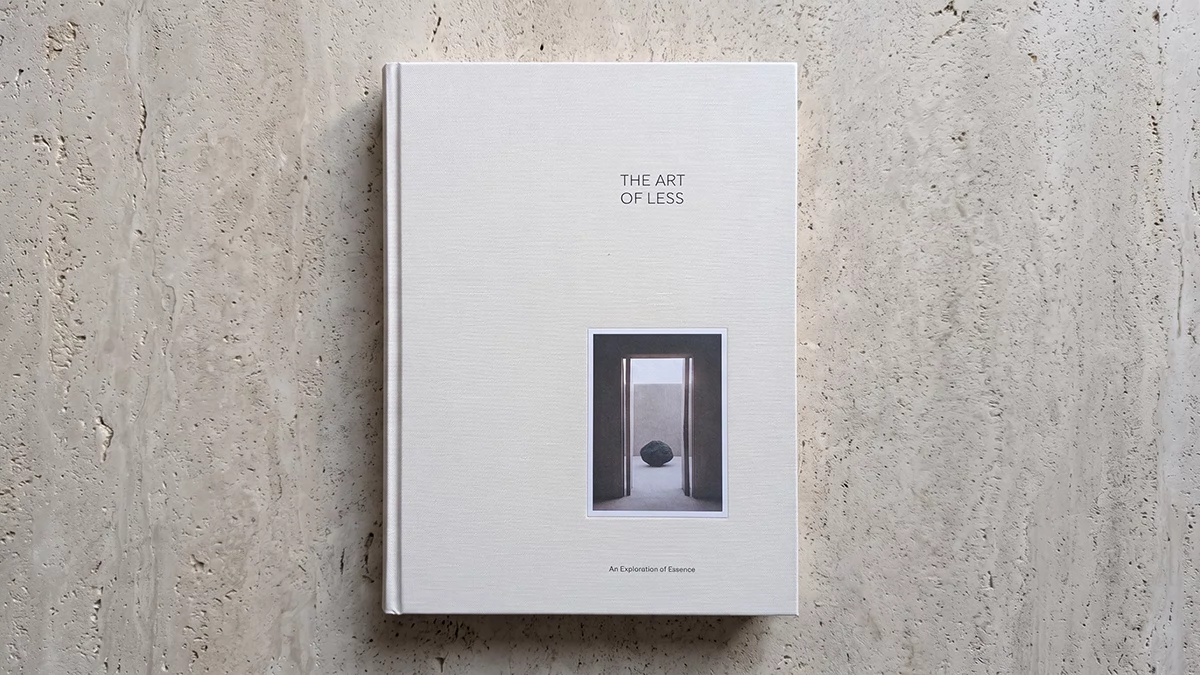
The Art of Less: An Exploration of Essence is a 320-page hardcover published by gestalten. Jonas Bjerre-Poulsen of Norm Architects and Sarah Dorweiler of Aesence edited it, and it profiles twenty international creatives across five chapters.
Is The Art of Less Worth $100?
Yes. I would pay full price, and I would gladly buy a second copy as a gift.
I judge minimalist work with a rule I call the Presence Test. A piece passes when removing one more element would drain it of presence. In my experience, many minimalism books fail. Their pages look quiet, yet their ideas stay thin.

The Art of Less passes. I could not find a single page I wanted to cut.
The price still invites suspicion, and it should. At $100, €70, or £60, this hardcover asks for real commitment. Two things justify that commitment. One is the object. The other is the argument.
What Is The Art of Less About?
The book treats minimalism as a sensory and intellectual practice. The editors argue that the urge to reduce grows stronger when life feels overloaded. They call it a human reflex, and they back that claim with twenty examples. The examples come from art, architecture, and design, so the argument never stays in one discipline. Each profile tests the same idea from a different angle. Restraint, in this book, produces presence. That is a sharper thesis than the old line about less being more.
The claim sounds abstract until you apply it. Think about the last time your inbox and your feed demanded you at once. Did you crave more input, or less?
Sarah Dorweiler founded Aesence more than ten years ago, and this is her first book. Jonas Bjerre-Poulsen leads Norm Architects, the Copenhagen studio founded in 2008. Norm Architects had already published Soft Minimal and Stillness with gestalten, and Dorweiler took the photographs for Stillness. That shared history shows.
The collaboration reads like a conversation between two people who have studied the same quiet things for years. A practitioner and a curator rarely write the same book. Here, they do.
The Five Lenses Behind the Argument
Five chapters organize the twenty profiles. Each chapter acts as a lens, and each features four creatives.
- Balance with Nicolas Schuybroek, Danielle Siggerud, Nuria Maria, and Tycjan Knut
- Contrast with Tatsuro Miki, HENRYTIMI, Lee Ufan, and Rahee Yoon
- Materiality with Cédric Etienne, Christian + Jade, Maverick Lee, and Antonia Ferrer
- Rhythm with Liam Stevens, Studio MK27, Krista Mezzadri, and Maria Yelletisch
- Space with Álvaro Siza, John Pawson, Ylva Carlgren, and Tom Holden
Four profiles per lens is a smart limit. It keeps every chapter tight and gives each creative room to breathe.
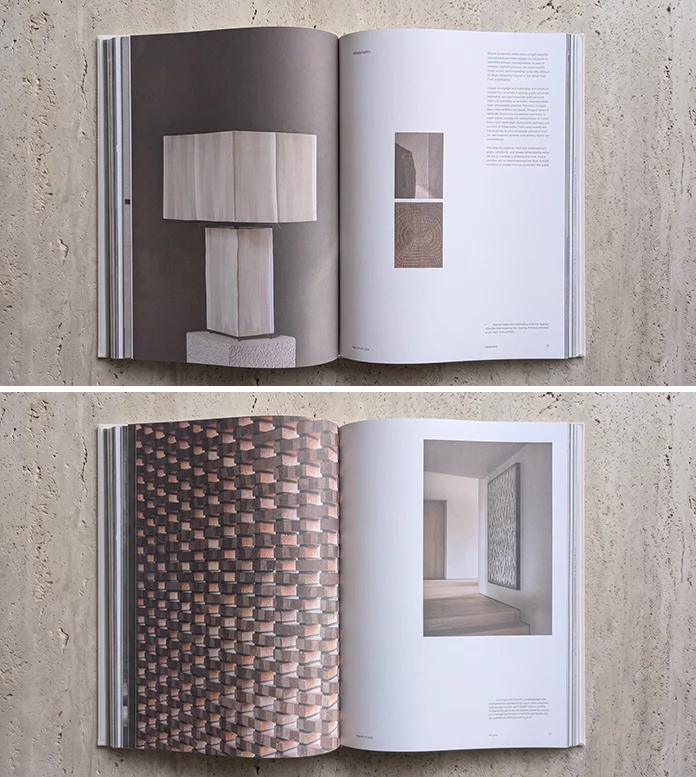
How Does The Art of Less Feel in Your Hands?
Binding and Cover
The Art of Less measures 24.5 × 33 cm, or 9¾ × 13 inches. Retailer data puts the spine at about 3 cm. The 320 pages are stitch-bound.
Stitch binding matters at this size. Sewn signatures usually outlast glued spines, so a heavy book like this one should survive many openings.
The cover stays calm. A pale greige surface carries a small title and a small inset photograph of a black rock framed by a dark doorway. The rock is an artwork by Kimsooja, according to gestalten. Nothing on the cover shouts. That restraint sets the tone before you open the book.
The Handling Tax
Precious books charge what I call a handling tax. You pay it in hesitation, because every touch risks a crease or a stain. The Art of Less charged me that tax, and I paid it gladly. I turned each page with care and left no marks on paper or cover. I found no flaws in the print or the cover.
The tax even fits the theme. Slow handling forces slow reading, and slow reading is what a book about restraint deserves.
Photography That Does Real Work
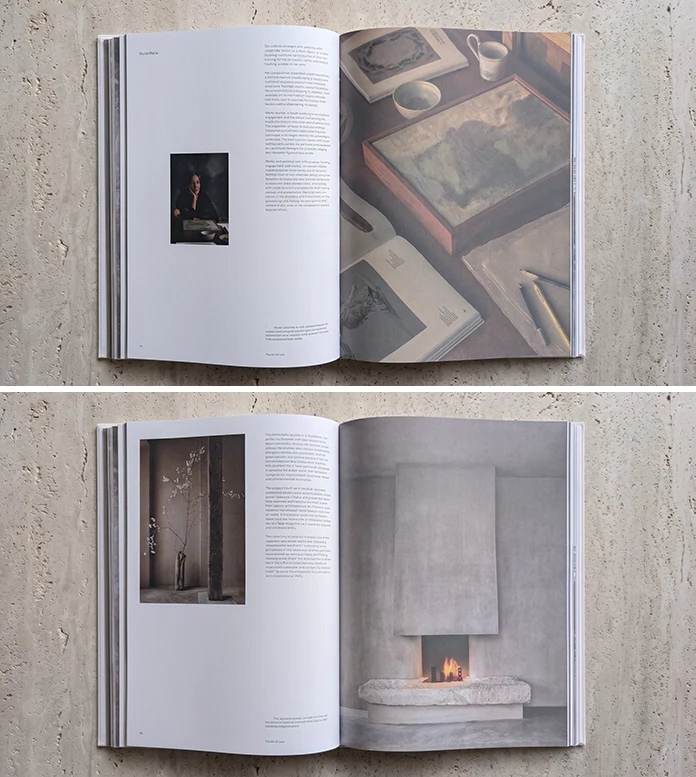
The photographs are perfect. I would not change one of them.
A book about presence depends on its pictures. One busy image would contradict the text at once. Here, every image supports the argument, and the large format gives each one room. Screens flatten texture. Paper at this size restores some of it.
The writing deserves its own mention. It reads beautifully from the first page.
Why Does the Artist Selection Work So Well?
The artist selection is the smartest decision in the book. The editors place established masters beside younger names, and the pairing produces friction in the best way.
Álvaro Siza won the Pritzker Prize in 1992, and John Pawson designed the Novy Dvur monastery in the Czech Republic, so anyone who studied architecture already knows how much silence these two can build into stone and light.
Lee Ufan, a leading voice of the Mono-ha movement, adds sculpture built on elemental tension. The publisher singles out that tension as a signature of his work.
Younger names such as Tycjan Knut in Balance and Rahee Yoon in Contrast sit beside these giants without apology. That placement argues that minimalism remains a living practice.
The map matters too. Siza built his career in Porto, and Studio MK27 works from São Paulo. Minimalism looks different in each climate, and the book lets those differences show.
How Does The Art of Less Compare With Earlier Minimalism Books?
John Pawson’s Minimum, published by Phaidon in 1996, set the visual template for the genre. It showed readers what reduction looks like.
Norm Architects’ Soft Minimal went further inside one studio. It explains how the team thinks and designs.
The Art of Less widens that view to twenty creatives. It also asks what reduction does to the person standing in the room. That question sets it apart from every minimalism book on my shelf.
Where Does Minimalism Go Next?
I expect this book to influence how publishers pitch minimalism. Two changes seem likely by the end of 2027.
- More minimalism titles will present themselves as tools for attention and drop the style-guide angle.
- Heavy, tactile print will gain ground against feeds. Gestalten’s own media pitches for this book stress the rising demand for haptic, physical experiences.
I could be wrong about the pace. I doubt I am wrong about the direction.
Here is a definition worth quoting. Sensory minimalism, as I define it, is the practice of reducing a space or an object until what remains holds more attention than the whole once did.
How Should You Read The Art of Less?
Read it in five sittings. I call this the One-Lens Evening. Take one chapter per sitting, and leave your phone in another room.
Look at each photograph before you read its text. Then read the text and look again.
Is The Art of Less a Good Christmas Gift for Architecture Lovers?
Yes. I can’t think of a better gift for anyone who loves art and architecture, and designers will treasure it too.
The list prices are €70 in Germany, £60 in the UK, and $100 in the US. Gestalten’s shop lists free shipping above $49 in the US and above €29 in the EU. Order by mid-November if you want to wrap it before Christmas.
Who Should Skip It?
Skip it if you want a decluttering manual. The book is built around twenty profiles, so it offers examples and ideas. Buy something else if you need a ten-step system for your closet.
The Art of Less at a Glance
| Detail | Information |
|---|---|
| Title | The Art of Less: An Exploration of Essence |
| Publisher | gestalten |
| Editors | Jonas Bjerre-Poulsen (Norm Architects) and Sarah Dorweiler (Aesence) |
| Format | 24.5 × 33 cm (9¾ × 13 in) |
| Pages | 320, full color |
| Binding | Hardcover, stitch-bound |
| Language | English |
| Price | €70 (Germany), £60 (UK), $100 (US) |
| Release | International: September 1, 2026. USA: October 27, 2026 |
| ISBN | 978-3-96704-245-0 |
| Structure | Five chapters, twenty creatives, four per chapter |
| Cover artwork | Black rock by Kimsooja |
| My verdict | Worth the price. I found no flaws. |
| Best for | Art and architecture fans, and designers |
Frequently Asked Questions About The Art of Less
Is The Art of Less worth buying?
Yes. After several weeks with the book, I found no flaws in the print or the cover, and the photography holds up page after page. At $100, it costs more than most design books, but it passes my Presence Test.
Who edited The Art of Less?
Jonas Bjerre-Poulsen of the Copenhagen studio Norm Architects and Sarah Dorweiler, founder of the minimalist art publication Aesence, edited the book for gestalten. It is Dorweiler’s first book.
What are the five chapters of The Art of Less?
Balance, Contrast, Materiality, Rhythm, and Space. Each chapter profiles four creatives.
How much does The Art of Less cost?
The list price is €70 in Germany, £60 in the UK, and $100 in the US. Gestalten’s shop lists free shipping above $49 in the US and above €29 in the EU.
When does The Art of Less come out in the US?
The US edition publishes on October 27, 2026. The international edition has been available since September 1, 2026.
Is The Art of Less a how-to guide to minimalism?
No. The book follows twenty profiles of creatives and offers examples and ideas. Readers who want a decluttering system should look elsewhere.
Where can I buy The Art of Less?
You can order it from the gestalten shop or from Amazon.com. Independent bookstores can order it too, and the ISBN is 978-3-96704-245-0.
Browse WE AND THE COLOR’s Books category for more.
Subscribe to our newsletter!