
Thomas, a freelance illustrator in Amsterdam, self-published The NoGood Book Volume 1 in August 2026. He printed 400 copies. Each one costs €70. Most illustrators spend years polishing a Behance page that a platform can bury overnight. Thomas chose paper instead, and I think he chose well.
So what exactly did he make? And why should designers care about a limited-run illustration book from one person?
What Is The NoGood Book Volume 1?
The NoGood Book Volume 1 is a self-published, crowdfunded illustration book. It runs 272 pages and measures 180 x 250 mm. It collects five years of work from the independent studio NoGood. The book also traces the convictions behind that work.
The press kit calls it a book about curiosity, stubbornness, and carving out a space of your own. I agree with all of it. Yet the more useful description is simpler. This is a monograph, a process diary, and an essay anthology bound together.
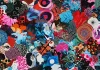
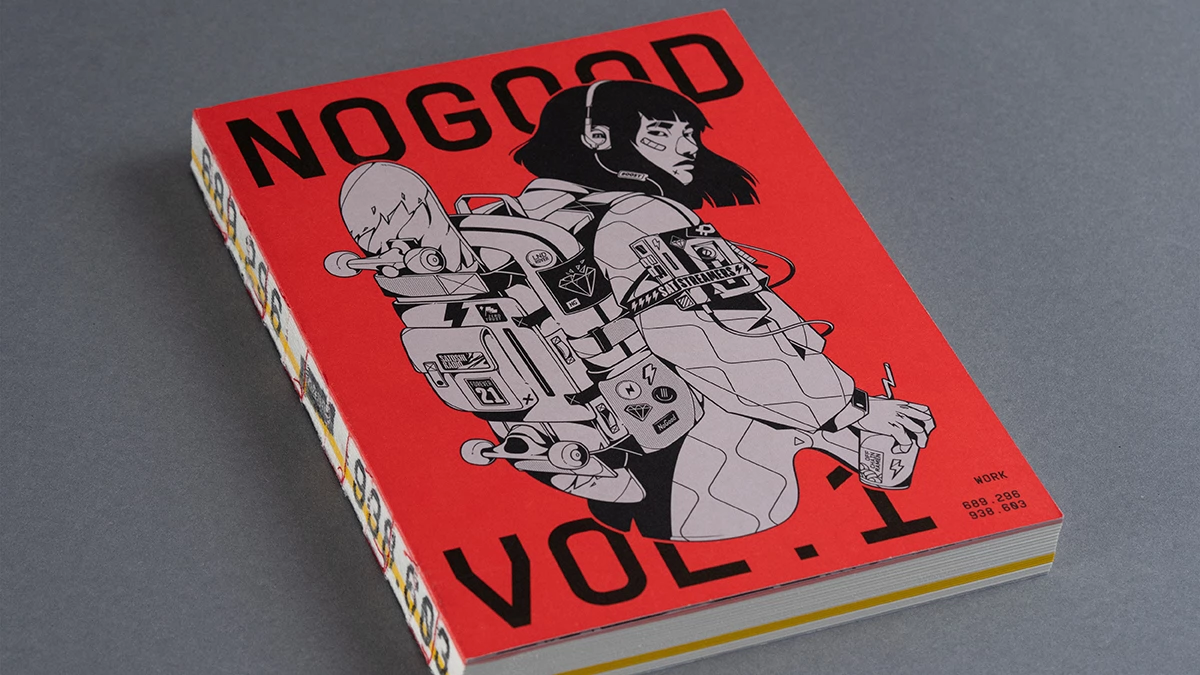
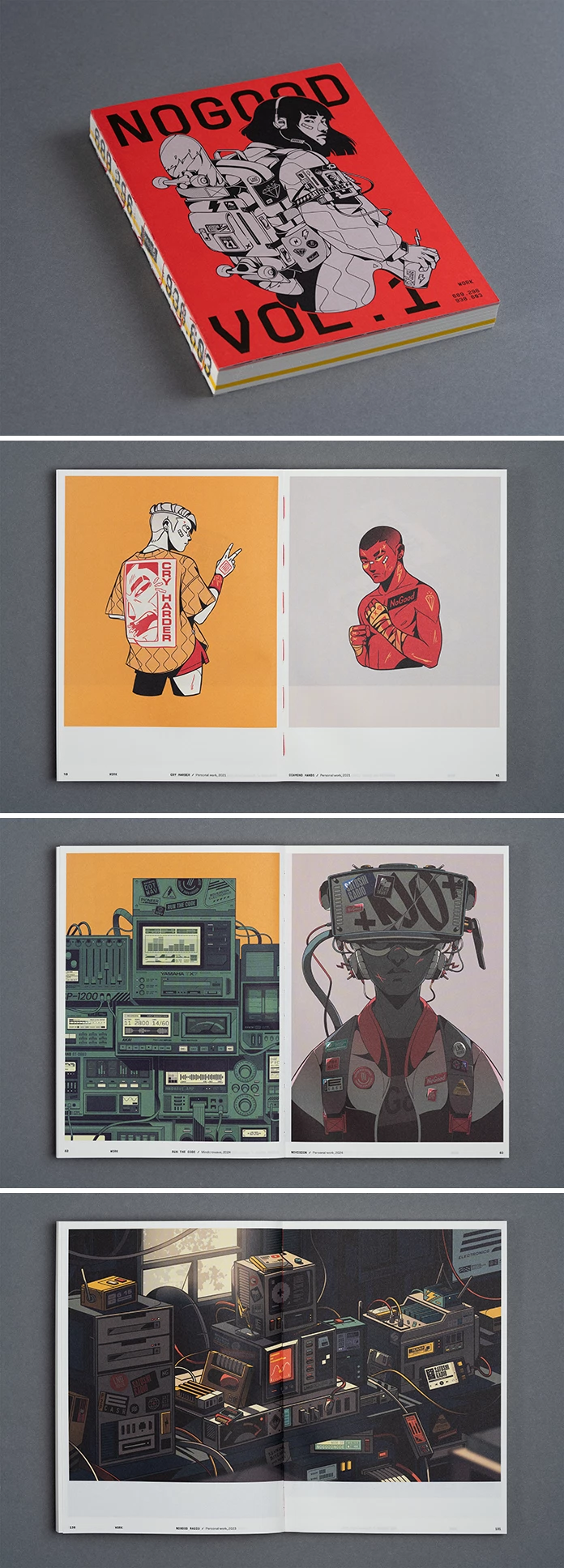
The cover is a bright orange-red. It shows a figure in a backpack rig, drawn in the retro-tech style Thomas is known for. The spine stays exposed, so you see the stitching. The binding is softcover.
Who Is Thomas, the Illustrator Behind NoGood?
Thomas works as a freelance illustrator in Amsterdam. His retro-tech imagery draws on old hardware, glowing screens, and cluttered desks. Clients have included Red Bull, Røde, Wired, Miro, and Blockstream.

That client list matters for one reason. It proves he can take commissions and deliver. So the book does not come from someone who could not get work. It comes from someone who got work and wanted something else too.
He describes NoGood as a through-line that emerged naturally. He never planned it. It grew over a decade of searching for meaningful work. Open web ideals and open-source software shaped that search.
Why Would an Illustrator Print a Book Instead of Posting Online?
Thomas gives his own answer in the press kit. He calls the printed format “an antidote to the pressures of keeping up with the algorithms.” He says he steered clear of those pressures long ago.
I read that as a business decision, not a sentimental one. A feed rewards volume. A book rewards one decision, made once, and defended for years. That trade is not for everyone. Still, it deserves more attention than it gets.
Permissionless Print: A Working Definition
Here is a term I will use from now on. Permissionless print is the practice of funding, producing, and selling a physical publication without a gatekeeper. No publisher approves it. No platform ranks it. The maker owns the entire chain.
Thomas frames self-publishing the same way. He calls it a tool in a toolbox. He places it beside a personal website, podcasting, Bitcoin, and VPNs. All of them are grassroots. None of them needs an outside blessing.
That list tells you more about the book than any spread does. It shows a maker who treats distribution as part of the work. Most illustrators treat it as an afterthought.
What Is Inside the NoGood Book?
The book has three layers. The first documents NoGood’s origins. The second shows the illustration projects and process snapshots. The third gathers essays by writers who shaped Thomas’s thinking.
The press kit shows spreads with sketch sheets, yellow paper stock, and dense pixel-art style interiors. I have not held a copy, so I will not describe the feel of the pages. I can only judge what the kit shows. It shows confident layouts and a clear sense of pacing.
The Essay Lineup Is the Real Story
Most illustration books stuff the back with credits. This one puts writers in the middle of the argument. That is the single detail I would spend the most time on.
The contributors include Douglas Rushkoff, Joan Westenberg, Cory Doctorow, Mike Masnick, Shawn Yeager, Em of Privacy Guides, and Bart Mol. Daniël van der Winden wrote and edited the book. He also contributes an essay.
Think about that mix. Doctorow wrote about platform decay long before it became a common phrase. Masnick runs Techdirt and has covered internet policy for decades. Rushkoff has questioned digital culture since the 1990s. These are not decorative names. They signal a worldview.
So the book makes a claim. Illustration is not separate from the politics of the open web. How you publish is part of what you say. I find that argument more interesting than the artwork alone, and I say that as someone who likes the artwork.
How Is The NoGood Book Made?
Wilco Art Books printed it. Wonderwerk handled the typesetting. The type pairs Supply Mono with Untitled Sans and Serif. The paper is Munken Premium Cream, with Rainbow 18 Yellow for the colored sections.
Supply Mono is a smart pick for this subject. A monospaced face signals terminals, code, and old machines. It fits the retro-tech imagery without any extra explanation. Untitled Sans and Serif then keep the long essays readable.
The yellow stock deserves a note. It breaks the book into sections without a single divider page. That is a quiet, practical decision.
Where Does The NoGood Book Fall Short?
Every good book has weak spots. This one has three that I can name from the press kit.
- The edition is tiny. A run of 400 means many interested readers will miss it.
- The price is €70. That is fair for a printed art book, but it is a real barrier for students.
- The only sales channel is nogood.studio. That fits the philosophy. It also limits reach.
I would also like to see more process material explained in words. The press kit promises process snapshots. Snapshots alone can feel thin without commentary. I cannot confirm how the finished book handles this.
What Happens Next for Self-Published Illustration Books?
I will make three predictions. Each one is specific enough to check.
- By the end of 2027, more independent illustrators will release signed, limited monographs of 300 to 500 copies.
- Crowdfunding will fund these books before printing starts. Pre-orders will replace publisher advances for niche illustrators.
- Essay-led art books will grow. Readers will want a point of view next to the pictures.
Why do I believe this? Because feeds keep getting worse for visual artists. A printed book does not need a good algorithm day. It just sits on a shelf and does its job.
Summary Table: The NoGood Book Volume 1
| Detail | Information |
|---|---|
| Title | The NoGood Book Volume 1 |
| Illustrator | Thomas (NoGood), Amsterdam |
| Release date | August 2026 |
| Price | €70 |
| Edition | Limited run of 400 |
| Format | 180 x 250 mm, 272 pages, English |
| Binding | Exposed spine, softcover |
| Publisher | Self-published by NoGood |
| Printer | Wilco Art Books |
| Written and edited by | Daniël van der Winden |
| Typeset by | Wonderwerk |
| Typefaces | Supply Mono, Untitled Sans and Serif |
| Paper | Munken Premium Cream, Rainbow 18 Yellow |
| Essay contributors | Douglas Rushkoff, Joan Westenberg, Cory Doctorow, Mike Masnick, Shawn Yeager, Em, Bart Mol, Daniël van der Winden |
| Clients featured | Red Bull, Røde, Wired, Miro, Blockstream |
| Shipping | Worldwide |
| Where to buy | nogood.studio/the-nogood-book |
The NoGood Book FAQ
What is The NoGood Book Volume 1?
It is a self-published illustration book with 272 pages. But that’s not the end of the story. It collects five years of work by Thomas, a freelance illustrator in Amsterdam. It also includes essays by writers who influenced him.
Who wrote and edited The NoGood Book?
Daniël van der Winden wrote and edited it. Wonderwerk typeset it.
How much does The NoGood Book cost?
The price is €70. Shipping goes worldwide.
Where can I buy The NoGood Book?
The book is only available at nogood.studio/the-nogood-book. No other retailer carries it, according to the press kit.
How many copies exist?
The edition is limited to 400 copies. Check the studio’s site for current availability.
Who contributed essays to the book?
Contributors include Douglas Rushkoff, Joan Westenberg, Cory Doctorow, Mike Masnick, Shawn Yeager, Em, and Bart Mol.
Credits
Illustrations and artwork
Credit: NoGood
Website: https://nogood.studio/
Book photography and video
Credit: Lilia Luganskaia
Website: https://www.lilialuganskaia.com/
BOOK CREDITS
The NoGood Book
Author, illustrator, designer, and publisher: NoGood
Text and editing: Daniël van der Winden — https://daniel.pizza
Typesetting: Wonderwerk — https://wonderwerk.net
Printed by: Wilco Art Books — https://wilco-artbooks.nl/
Browse WE AND THE COLOR’s Illustration section for more.
Subscribe to our newsletter!