
This post contains affiliate links. We may earn a commission if you click on them and make a purchase. It’s at no extra cost to you and helps us run this site. Thanks for your support!
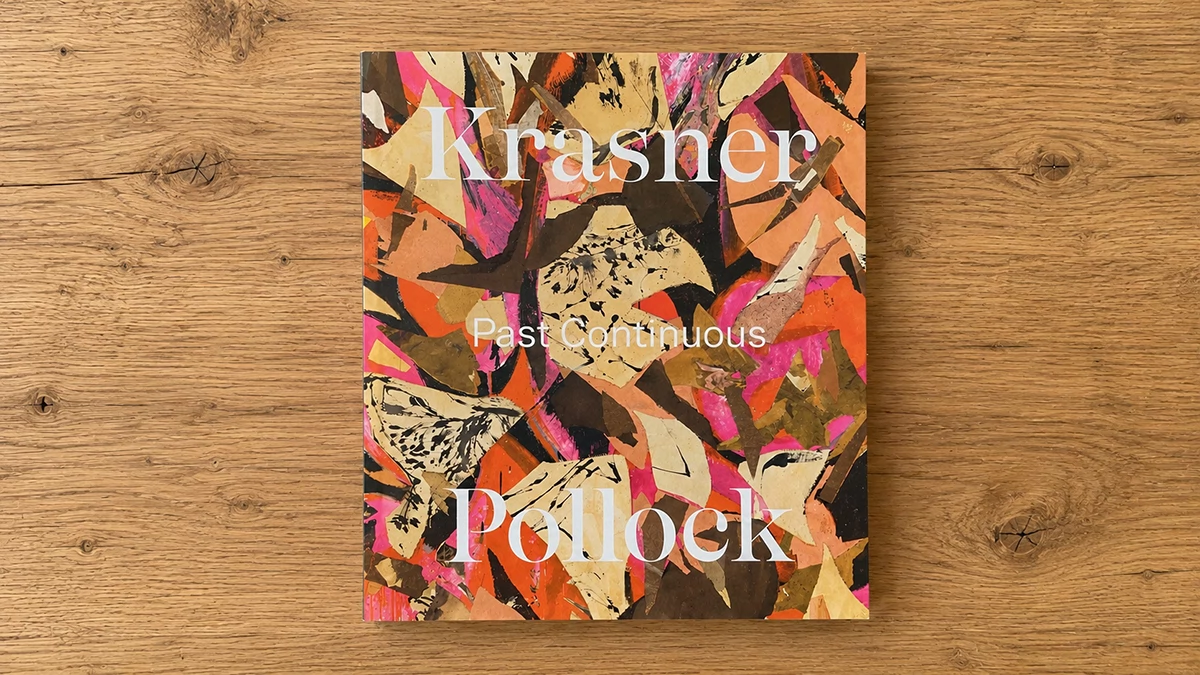
Krasner and Pollock: Past Continuous is my early Christmas present to myself, and I love it. The Metropolitan Museum of Art published the catalog for its Krasner and Pollock exhibition, which runs through January 31, 2027. The book makes one argument across 328 pages. Jackson Pollock has gotten most of the attention for decades, and Lee Krasner has gotten far less. This book treats them as equals.
The occasion is rare. The Met calls the show the first major New York presentation devoted to either artist in more than 20 years. So this Krasner and Pollock catalog fixes an old imbalance, and I wanted a copy on my desk.
Is Krasner and Pollock: Past Continuous Worth Buying?
Yes, if you care about how abstraction gets made. The hardcover holds 328 pages and 238 illustrations. It follows Lee Krasner (1908 to 1984) and Jackson Pollock (1912 to 1956), two leaders of Abstract Expressionism, from early drawings to late canvases. The list price is $65. Met members pay $55.25, which saves 15%.
Designers get extra value here. Krasner cut up her own canvases and rebuilt them. Pollock painted monumental canvases in the 1950s, and scale mattered to his work. The large page size gives you room to study both lessons, so this Krasner and Pollock book earns its shelf space.
What Is Inside the Krasner and Pollock Catalog?
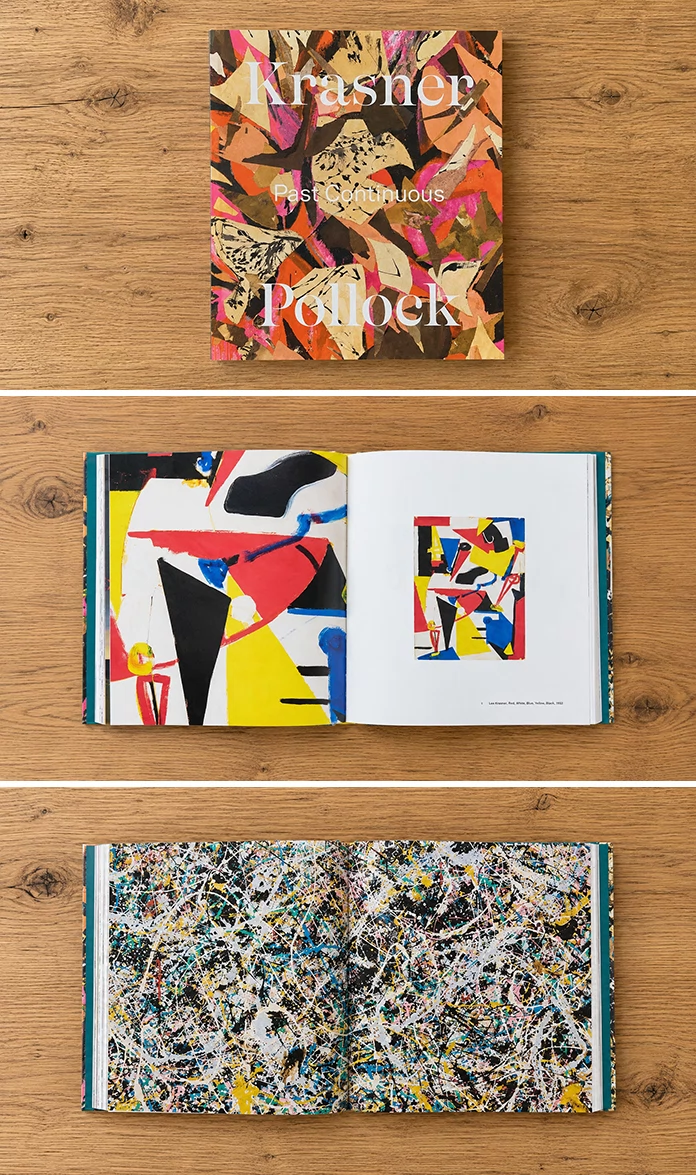
The book pairs essays with an illustrated chronology and reflections from living artists. The publisher promises more than one hundred paintings and works on paper. The Met’s own spec sheet lists 238 illustrations in total.

The Essays
David Breslin and Brinda Kumar, the two Met curators behind the show, write the core text. Johanna Fateman, Prudence Peiffer, and Matthew Holman join them. Together, the essays on Krasner and Pollock cover their creative partnership and their 1950s strategies of abstraction. They also follow the transatlantic reception of the work. The painter Amy Sillman adds a working artist’s view of breakthrough and legacy.
The Chronology and the Artist Reflections
The chronology is illustrated and interwoven, so both careers share one timeline. Reflections from contemporary artists, including Mark Bradford and Laura Owens, show how Krasner and Pollock still influence painting today. I use the chronology as a quick reference when I want a date. The essays take more time.
Why Does the Title Work as a Method?
Krasner took the subtitle from a 1976 painting of her own. The phrase also names a grammatical tense, the one for actions in progress in the past.
That detail changed how I read the whole book. In a 1978 television interview, an interviewer asked Krasner what she was doing while Pollock became famous. She answered in exactly that tense. “I was working all the time,” she said. The catalog follows that idea and shows both careers as work in progress.
I call this approach the Equal-Tense Method. It keeps two careers in the same grammatical tense, so neither artist ends up as a side note in the other’s story. Earlier shows on Krasner and Pollock, one in 1981 and one in 1989 at the Kunstmuseum Bern, covered only their roughly 15 overlapping years. This catalog runs the full length of both careers, and Pollock’s drip paintings, from his peak years of 1946 to 1951, hold up well next to her work.
How Krasner and Pollock Hold Up Under the 28-Year Test
Pollock died in 1956. Krasner lived until 1984 and kept working. That leaves 28 years, and many books treat them as a short closing chapter. I judge any Krasner and Pollock book by what it does with those years. I call that the 28-Year Test.
This one passes. Krasner painted The Seasons in 1957, the year after Pollock died, and the canvas stretches almost 17 feet wide. Its bright, crowded forms look confident to me. The exhibition behind the book also gives space to her Umber and Earth Green series and to the 1976 canvas that lends the title.
When a book gives the years after 1956 as much attention as the years before, it shows that Krasner’s career did not depend on Pollock, and that changes how you read every earlier page, including the ones where she works quietly while his fame grows.
She also handled money well. After Pollock died, Krasner more than tripled the price of Autumn Rhythm (Number 30) to sell it to the Met. She knew what the work was worth. The Met still owns the painting, and the catalog reproduces it.
What Krasner’s Collages Teach Designers
This is the part I liked best. In 1955, Krasner made Bald Eagle, a collage on linen that measures 77 by 51 1/2 inches. The curators say she cut up discarded Pollock works from the 1950s to make it, and his drip is still visible in the fragments.
I call this the Afterlife Method. It cuts finished work into new compositions, and every fragment keeps its history. The curators describe Krasner tearing up older bodies of work to start a new phase. They also offer a comparison to couples. Two parts form a unit, yet each part keeps its own past.
Designers already work this way, because every week we strip what failed out of an old layout that nobody wanted and rebuild the rest into a new composition that carries the history of the first attempt, usually under a file name like final_v7. Krasner did it with cut paper and canvas, and the Met puts her collages next to Pollock’s drip paintings. Open your own folder of rejected layouts. What could you cut up and reuse?
My One Complaint
The weight. At 4.38 pounds, with a listed size of 9.8 by 11.2 inches, this Krasner and Pollock volume belongs on a table. Reading it in bed gets tiring fast. Still, I can live with that, because the page count justifies the weight.
Who Should Buy Krasner and Pollock: Past Continuous?
Buy it if you design for a living. Composition and scale decisions sit on every page, and Krasner’s career shows how to keep changing for more than five decades. Buy it as a gift for anyone who still thinks Pollock painted alone. That reader won’t finish with the same opinion. Either way, Krasner and Pollock: Past Continuous is worth opening more than once.
Krasner and Pollock: Past Continuous at a Glance
| Detail | Fact |
|---|---|
| Book | Krasner and Pollock: Past Continuous |
| Authors | David Breslin and Brinda Kumar, with essays by Johanna Fateman, Prudence Peiffer, Matthew Holman, and Amy Sillman |
| Publisher | The Metropolitan Museum of Art, distributed by Yale University Press |
| Publication date | October 13, 2026 |
| Format | Hardcover, 328 pages, 238 illustrations |
| Size and weight | 9.8 x 1.5 x 11.2 inches, 4.38 pounds |
| ISBN-13 | 978-1588398239 |
| Exhibition | The Met Fifth Avenue, October 4, 2026, through January 31, 2027 |
| Price | List price $65.00, Met member price $55.25, saving 15% |
| Subject | Krasner and Pollock, Abstract Expressionism, collage, drip technique |
| Original concepts | Equal-Tense Method, 28-Year Test, Afterlife Method |
| My verdict | Strongly recommended for designers and art lovers |
Where Will Krasner and Pollock Scholarship Go Next?
I make two predictions and will hold myself to both. First, the Oscar L. Tang and H.M. Agnes Hsu-Tang Wing for modern and contemporary art opens in 2030, and I expect the Met to reuse the Equal-Tense Method for at least one more artist pair there. Second, the 28-Year Test will spread. Reviewers of Krasner and Pollock books will start asking what any artist-couple book does with the surviving partner’s later decades, and books that skip those years will look incomplete.
Frequently Asked Questions About Krasner and Pollock: Past Continuous
What is Krasner and Pollock: Past Continuous?
It is the Met’s exhibition catalog by David Breslin and Brinda Kumar. This Krasner and Pollock book has 328 pages and 238 illustrations. It covers the full careers of Lee Krasner and Jackson Pollock.
When can I see the Krasner and Pollock exhibition?
The show runs at The Met Fifth Avenue in New York from October 4, 2026, through January 31, 2027. It gathers more than 120 works, including 74 by Krasner and 48 by Pollock. The Met organizes it into 12 chapters.
How much does Krasner and Pollock: Past Continuous cost?
The list price is $65.00. Met members pay $55.25, a saving of 15%.
Who wrote the book?
David Breslin, the Leonard A. Lauder Curator in Charge, and Brinda Kumar, an associate curator, wrote it. Both work in the Met’s Department of Modern and Contemporary Art.
Does the book cover Krasner’s work after Pollock’s death?
Yes. Krasner lived 28 years after 1956, and the publisher describes the book as spanning the full arc of both careers, including her life after Pollock died.
Is Krasner and Pollock: Past Continuous a good art book gift for designers?
Yes. It teaches composition, scale, and collage through two painters who approached abstraction very differently. It also corrects the old story that Pollock worked alone.
How big and heavy is Krasner and Pollock: Past Continuous?
The listing gives 9.8 by 1.5 by 11.2 inches and 4.38 pounds.
Browse WE AND THE COLOR’s Art and Books categories for more.
Subscribe to our newsletter!