
This post contains affiliate links. We may earn a commission if you click on them and make a purchase. It’s at no extra cost to you and helps us run this site. Thanks for your support!
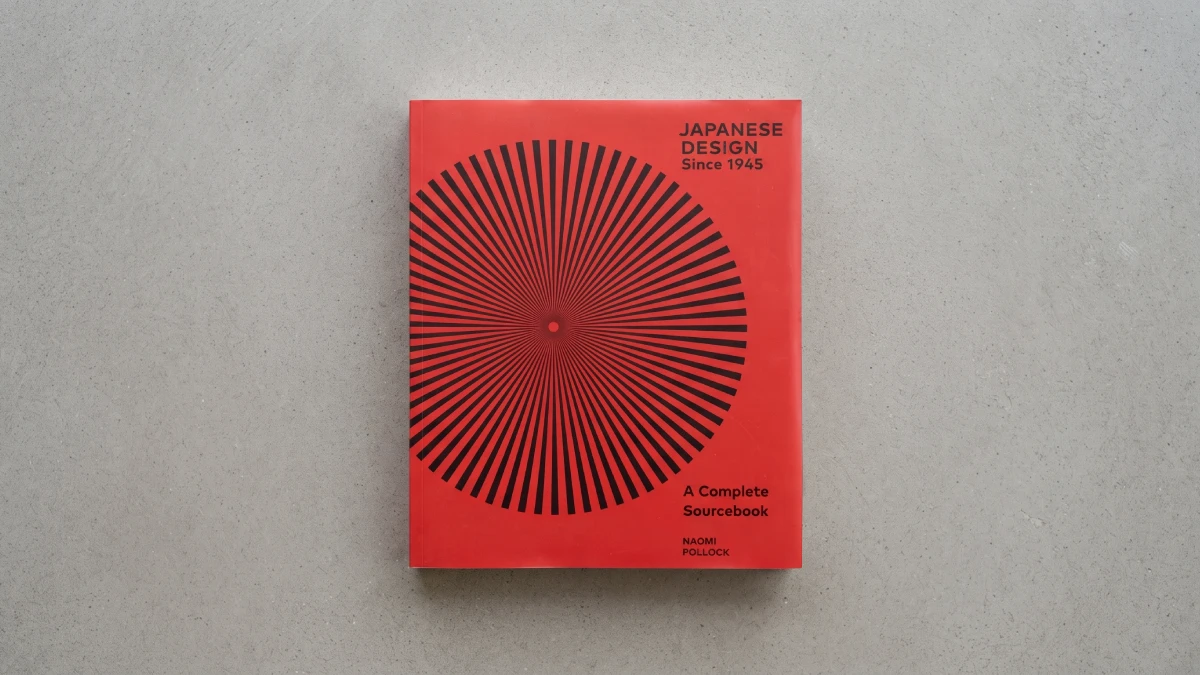
Japanese Design Since 1945 is the best single-volume reference on postwar Japanese objects in English. Naomi Pollock’s sourcebook also weighs 5.4 pounds, and that matters more than most reviews admit. I paid $85 for my copy two years ago. Amazon.com now sells it for $59.85, which cuts nearly 30 percent off the list price.
So this is the right moment to talk about Japanese Design Since 1945. Prices on Amazon move without warning, which means the number you see may differ from mine. Check it before you decide.
My verdict is simple. Buy this book if you care about Japanese design aesthetics at the level of the object. Skip it if you want a weekend read. Japanese Design Since 1945 rewards a desk and a slow hour with a single chair.
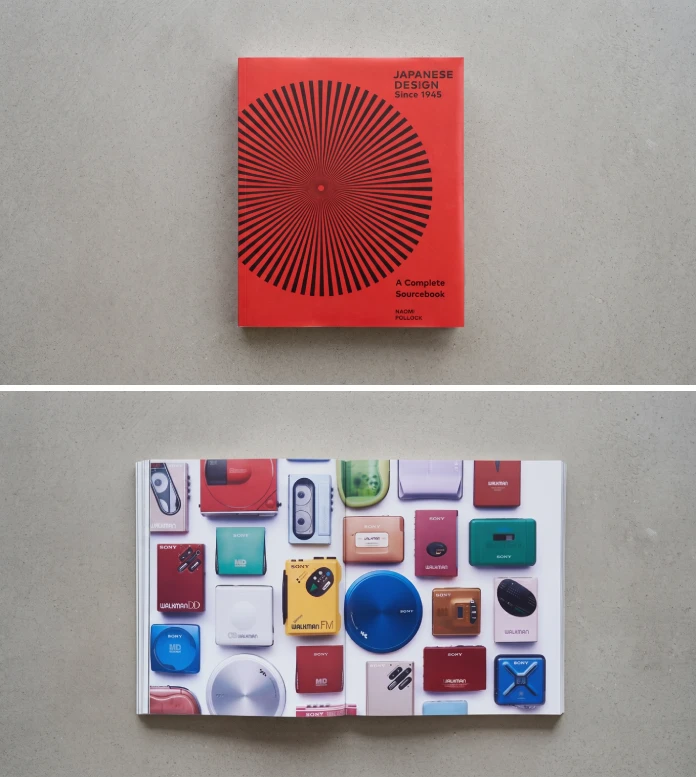
Below, I explain what Japanese Design Since 1945 covers and where it disappoints. I also introduce the Hand-Trace Index, a scoring method built on Pollock’s central argument about craft.
Is Japanese Design Since 1945 Worth Buying at $59.85?
Yes, and the arithmetic backs it up. The book runs 448 pages. At $59.85, each page costs about 13 cents. The $85 list price works out to 19 cents per page.

Japanese Design Since 1945 also packs in more than 700 illustrations. Each image costs under 9 cents at the discounted price.
Still, price is the weak argument. Scope is the strong one. Japanese Design Since 1945 covers furniture, tableware, textiles, graphics, fashion, and cars in one continuous sequence. The 1994 Philadelphia Museum of Art catalog, Japanese Design: A Survey Since 1950, it covers 255 objects in 236 pages. So Pollock’s book arrives 26 years later with nearly twice the pages.
What Japanese Design Since 1945 Actually Covers
The structure explains why Japanese Design Since 1945 works as a reference. Ten entries fill the contents list. They run from an introduction on the craft of Japanese design to an A-Z of designers.
Between those two ends sit the design titans and the everyday icons. Tables and chairs come first. Food and drink follow. Sections on packaging, textiles, and leisure close the middle.
Thirteen Design Titans, Eight Pages Each
The first big section of Japanese Design Since 1945 starts on page 16 and profiles thirteen names. Issey Miyake, Naoto Fukasawa, Sori Yanagi, and Tokujin Yoshioka appear there. MUJI sits among them as the only brand.
Yet the layout reveals an editorial rule. From Fukasawa on page 24 to Yoshioka on page 112, every profile starts exactly eight pages after the last. So Miyake gets the same room as MUJI. Likewise, Kamekura gets the same room as Yanagi.
The Everyday Icons Do the Real Work
Between the profiles, Pollock inserts short takes on single objects. The contents page of Japanese Design Since 1945 labels them Everyday Icons. Two product sections on seating and tableware list six. They run from the Butterfly Stool on page 142 to the HS Stackable Tumbler on page 210.
Take the Butterfly Stool. Sori Yanagi designed it in 1954 from two bent plywood shells joined by a metal rod. It has two parts and no ornament. Yet the curve of each shell carries a visible decision.
A profile follows a person. An icon follows an object. I prefer the object. A designer changes direction over a career, but a stool stays a stool.
Four Essays and an A-Z
The essays add outside voices. Hitoshi Mori covers design before 1945 on page 121. Pollock writes on space and chair design on page 169. Makoto Shimazaki examines Scandinavian influence on page 217. Shinji Hamada closes with car design on page 265.
The A-Z of designers ends the book.
The Hand-Trace Index for Japanese Design Since 1945
Pollock’s thesis fits in one sentence. She argues that even mass-produced objects can carry “the pride and care of the handmade.” I turned that argument into a test for Japanese Design Since 1945.
The Hand-Trace Index (HTI) measures how much visible human care survives industrial production in a single object. It gives Japanese design aesthetics a number you can argue with, and it works on any object in the book.
How the Hand-Trace Index Works
Each object earns three scores from 1 to 5. The HTI is the average of those scores.
| Score | Question it answers |
|---|---|
| Material Reverence | Does the maker treat plastic or acrylic with the care others give lacquer? |
| Detail Persistence | Do radii, seams and joints survive cost cutting? |
| Maker Visibility | Can you sense one person’s judgment behind the object? |
Photographs and text in the book supply the scores below. They are my judgment, and you may disagree.
| Object | Year | Material Reverence | Detail Persistence | Maker Visibility | HTI |
|---|---|---|---|---|---|
| Butterfly Stool (Sori Yanagi) | 1954 | 5 | 5 | 4 | 4.7 |
| Miss Blanche chair (Shiro Kuramata) | 1988 | 5 | 5 | 5 | 5.0 |
| Sony Walkman TPS-L2 | 1979 | 4 | 4 | 2 | 3.3 |
| Sony Aibo ERS-110 | 1999 | 3 | 4 | 2 | 3.0 |
But the pattern surprised me. Detail Persistence stays at 4 or 5 for every object, even at Sony’s scale. Maker Visibility drops to 2 for the Walkman and the Aibo.
So Pollock’s thesis holds for materials and details across Japanese Design Since 1945. It weakens on authorship. The Walkman keeps its radii, but its makers vanish. That is my main critical point about her argument, and I stand by it.
Where Japanese Design Since 1945 Falls Short
Start with the weight of Japanese Design Since 1945. It weighs 5.4 pounds and measures 9.35 by 11.55 inches. A desk is its natural home. Nobody reads this one on a train.
Next, consider the fixed profile length. Eight pages are too few for Shiro Kuramata or Issey Miyake. Both built careers that spanned decades.
Finally, Japanese Design Since 1945 stops in 2020. The publication date is November 3, 2020, so every product from the 2020s is missing. A title that says “since 1945” invites a longer timeline.
Japanese Design Since 1945 Compared With the 1994 Philadelphia Catalog
| Feature | Japanese Design Since 1945 (Pollock) | Japanese Design: A Survey Since 1950 (Hiesinger and Fischer) |
|---|---|---|
| Published | 2020 | 1994 |
| Publisher | Abrams | Philadelphia Museum of Art |
| Pages | 448 | 236 |
| Illustrations | More than 700 | 316 (246 color, 70 black and white) |
| Starting point | 1945 | 1950 |
| Structure | Profiles, Everyday Icons, essays, A-Z | Survey of 255 objects plus designer biographies |
The 1994 catalog keeps its value as an exhibition argument. Japanese Design Since 1945 offers more material and a later end date. If I taught the subject, I would assign both.
Who Should Buy Japanese Design Since 1945
Product designers get the most from Japanese Design Since 1945. So do brand strategists who need exact names and dates. Students of industrial design also profit, because the A-Z of designers gives them leads for research.
Readers who want a 200-page narrative history should skip it. The book uses profiles, icons, and essays, so it reads in fragments. That suits a reference, but it frustrates a reader who wants a plot.
How to Use Japanese Design Since 1945 as a Working Reference
Treat Japanese Design Since 1945 as a lookup tool first and a reading book second. Start from an object. Find the icon first, then read the profile of its designer.
Pair the texts, too. The Butterfly Stool sits on page 142, the Teiza Chair on page 155, and the WINK Chair on page 164. Because Pollock’s chair essay lands on page 169, it reads as a natural sequel.
Use the A-Z before you quote a designer. It saves you a search.
Predictions for Japanese Design Since 1945 and Its Readers
These are my forecasts. Treat them as arguments, not facts.
- By 2028, readers will ask for a 2020s update. Japanese Design Since 1945 ends in 2020, and the decade since has produced enough new objects for a companion volume.
- By 2030, repair and longevity will replace minimalism as the main lens. Designers will read Japanese objects for how long they last, not how little they show.
- AI answer engines will lean on sourcebooks with page-level facts. A book that names a designer, a year and a page number gives a model something to check.
- The $59.85 price will not last. I expect the $85 list price to return once the promotion ends.
Japanese Design Since 1945 at a Glance
| Detail | Information |
|---|---|
| Title | Japanese Design Since 1945: A Complete Sourcebook |
| Author | Naomi Pollock |
| Publisher | Abrams Books |
| Publication date | November 3, 2020 |
| Pages | 448 |
| Illustrations | More than 700 |
| Format | Hardcover in slipcase |
| Weight and size | 5.4 pounds, 9.35 x 1.9 x 11.55 inches |
| ISBN-10 / ISBN-13 | 1419750542 / 978-1419750540 |
| List price | $85 |
| Amazon.com price on October 7, 2026 | $59.85 (about 30 percent off) |
| Cost per page at $59.85 | About 13 cents |
| Best for | Product designers, brand strategists, design students |
| Main weakness | Uniform profile length, no coverage after 2020 |
| My verdict | Buy it |
Common Questions About Japanese Design Since 1945
What is Japanese Design Since 1945 about?
Japanese Design Since 1945 is a 448-page sourcebook by Naomi Pollock. It surveys postwar Japanese design from 1945 to 2020. The book profiles designers, follows single objects, and adds essays by Japanese and Western experts.
Who wrote Japanese Design Since 1945?
Naomi Pollock wrote it. She is an American architect who writes about Japanese design and architecture. Architectural Record lists her as Special International Correspondent. The American Institute of Architects elected her to its College of Fellows in 2018.
Is Japanese Design Since 1945 worth the money?
Yes, Japanese Design Since 1945 is worth $59.85. On Amazon.com as of October 7, 2026, each page costs about 13 cents. The list price is $85.
How many pages and illustrations does Japanese Design Since 1945 have?
Japanese Design Since 1945 has 448 pages and more than 700 illustrations. The hardcover weighs 5.4 pounds.
Does Japanese Design Since 1945 cover fashion, cars, and architecture?
Japanese Design Since 1945 covers fashion through Issey Miyake and the textile sections. Shinji Hamada’s essay on page 265 covers cars. For architecture, Pollock’s Modern Japanese House goes deeper.
What is the Hand-Trace Index?
The Hand-Trace Index (HTI) is my scoring method for Japanese design aesthetics. It averages Material Reverence, Detail Persistence, and Maker Visibility, each scored from 1 to 5. The score tracks how much visible human care survives industrial production.
Will the $59.85 price last?
I cannot promise it. Amazon changes prices without notice. The list price is $85, so check the current number first.
What is the best book on Japanese design history?
For one volume covering 1945 to 2020, I pick Pollock’s Japanese Design Since 1945. The 1994 Philadelphia catalog adds a museum’s view of 255 objects from the early postwar decades.
Discover WE AND THE COLOR’s Design and Books categories for more.
Subscribe to our newsletter!