

This post contains affiliate links. We may earn a commission if you click on them and make a purchase. It’s at no extra cost to you and helps us run this site. Thanks for your support!
Most creative portfolios are built for the wrong audience. They’re built to impress other creatives — not to convert hesitant clients into paying ones. And that single misalignment quietly kills careers that should be thriving.
Your portfolio probably looks great. It might even collect likes on Behance, shares on LinkedIn, maybe a few “this is stunning” comments. But when did a comment last pay your rent? Admiration and conversion are two completely different outcomes, and most creatives never build for the second one.
This article is about that gap. Specifically, it’s about the structural, psychological, and strategic differences between a portfolio that gets clients and one that simply gets views. These are not the same thing, and conflating them is one of the most expensive mistakes a creative can make.
Why Does Your Portfolio Get Applause But No Emails?
There’s a term worth naming here: the Admiration Trap. It describes the condition of a portfolio that is visually compelling, technically impressive, and genuinely well-crafted — but fundamentally built to earn respect rather than trust. Respect doesn’t hire you. Trust does.
The Admiration Trap happens because most creatives learn portfolio-building from other creatives. They study award-winning sites, screenshot portfolios they admire, and reverse-engineer aesthetics. The result is a collection of work samples optimized for peer recognition — not client decision-making.

Here’s the uncomfortable question: who actually visits your portfolio, and what decision are they trying to make?
A potential client — say, a marketing director, a startup founder, or a small business owner — visits your portfolio with one specific question in mind. Not “is this person talented?” They assume talent. Their real question is: “Can this person solve my problem?”
If your portfolio doesn’t answer that question within the first ten seconds, they leave. Not because you’re not good enough. Because you made them work too hard to find out.

The Framework: Conversion Gravity
A portfolio that gets clients operates on what I call Conversion Gravity — the structural pull of a portfolio toward a specific client action. Every element, from the headline to the case study structure to the contact button, either increases or decreases that gravitational pull.
Conversion Gravity has three components:
1. Clarity of Positioning
Clients don’t hire “creative professionals.” They hire someone who solves a specific problem in a specific context. Compare these two portfolio headlines:
- “Designer & Visual Storyteller”
- “I help sustainable brands communicate their mission through editorial design.”
The first is identity. The second is value. Only one of them makes a client think: this is exactly who I need.
A portfolio with strong Conversion Gravity opens with a positioning statement, not a job title. It tells clients what you do, who you do it for, and why that combination is rare. This is the first place most portfolios bleed potential clients.
2. Proof Architecture
Proof Architecture is the deliberate arrangement of work samples, testimonials, and results to build cumulative confidence in a client’s mind. It’s not just “here are my projects.” It’s a structured argument for your capability.
Strong Proof Architecture includes three layers. First, outcome framing — showing not just what you made, but what it achieved. Second, relevant context — explaining the client’s situation before you solved it, so new clients can recognize themselves. Third, social anchoring — using real names, real companies, and real numbers wherever possible.
Portfolios that only get views typically show beautiful final outputs with no context. Portfolios that get clients show the problem, the decision-making process, and — critically — the result. Even approximate results (“increased engagement by roughly 40%”) dramatically outperform no results at all.
3. Friction-Free Next Steps
A portfolio that gets views can afford to end ambiguously. A portfolio that gets clients cannot. Every page should answer the implicit question: what do I do if I want to work with this person?
This sounds obvious. It almost never gets executed well. Contact forms buried in footers, email addresses requiring hover states to reveal, no clear indication of availability or process — these are friction points that kill conversion.
Strong Conversion Gravity includes a visible, specific call to action. Not just “Get in Touch.” Something like: “Available for projects starting [month]. Let’s talk about yours.” That single sentence communicates availability, professionalism, and momentum.

The Outcome Framing Method: Show What You Changed, Not What You Made
This deserves its own section because it’s the biggest behavioral shift a creative can make.
Outcome Framing means presenting every piece of work through the lens of the change it created — not the craft it represents. It’s the difference between a portfolio entry that says “Brand identity for a fintech startup” and one that says “Rebranded a fintech startup to reduce user confusion and support a Series A funding round.”
Both describe the same project. Only one speaks to a client’s actual concerns.
Outcome Framing forces you to learn your clients’ metrics, understand their business context, and position yourself as a strategic partner rather than an execution resource. This is how a portfolio that gets clients sounds fundamentally different from one that only gets views — even when the visual work is identical.
Ask yourself: for every project in your portfolio right now, can you articulate the outcome in one sentence? If not, reach out to that client. Most will happily share results, especially if you frame it as a portfolio update rather than a performance review.
What Platform-Optimized Portfolios Get Wrong
Behance and Dribbble are peer networks. They reward craft, novelty, and aesthetic innovation. They are genuinely excellent platforms — but they are built for creative audiences, not client audiences.
A portfolio optimized for Dribbble features high-resolution mockups, micro-animations, and experimental typography. A portfolio that gets clients features context, clarity, and conversion architecture. These are not the same portfolio.
This isn’t to say you shouldn’t maintain platform profiles. They serve a real function for discoverability and reputation-building within creative communities. But your primary portfolio — the one you send to clients — must be built for a completely different reader.
The mistake is using the same portfolio for both audiences and wondering why one performs and the other doesn’t.

The “One Client Test” for Portfolio Relevance
Here’s a practical framework for auditing your current portfolio: the One Client Test.
Think of one specific client you want to work with right now: a real company, a real type of project, a real budget range. Now walk through your portfolio as that client. Ask yourself:
- Does the homepage positioning immediately tell them you work with companies like them?
- Do the case studies show projects similar in scope, industry, or challenge?
- Can they estimate what working with you will feel like based on your process descriptions?
- Is the contact path clear, fast, and low-friction?
If the answer to any of these is no, you don’t have a portfolio problem. You have a targeting problem that looks like a portfolio problem.
A portfolio that gets clients is, in many ways, a positioning document. It doesn’t need to show everything you’ve ever made. It needs to show the right things to the right person at the right moment.
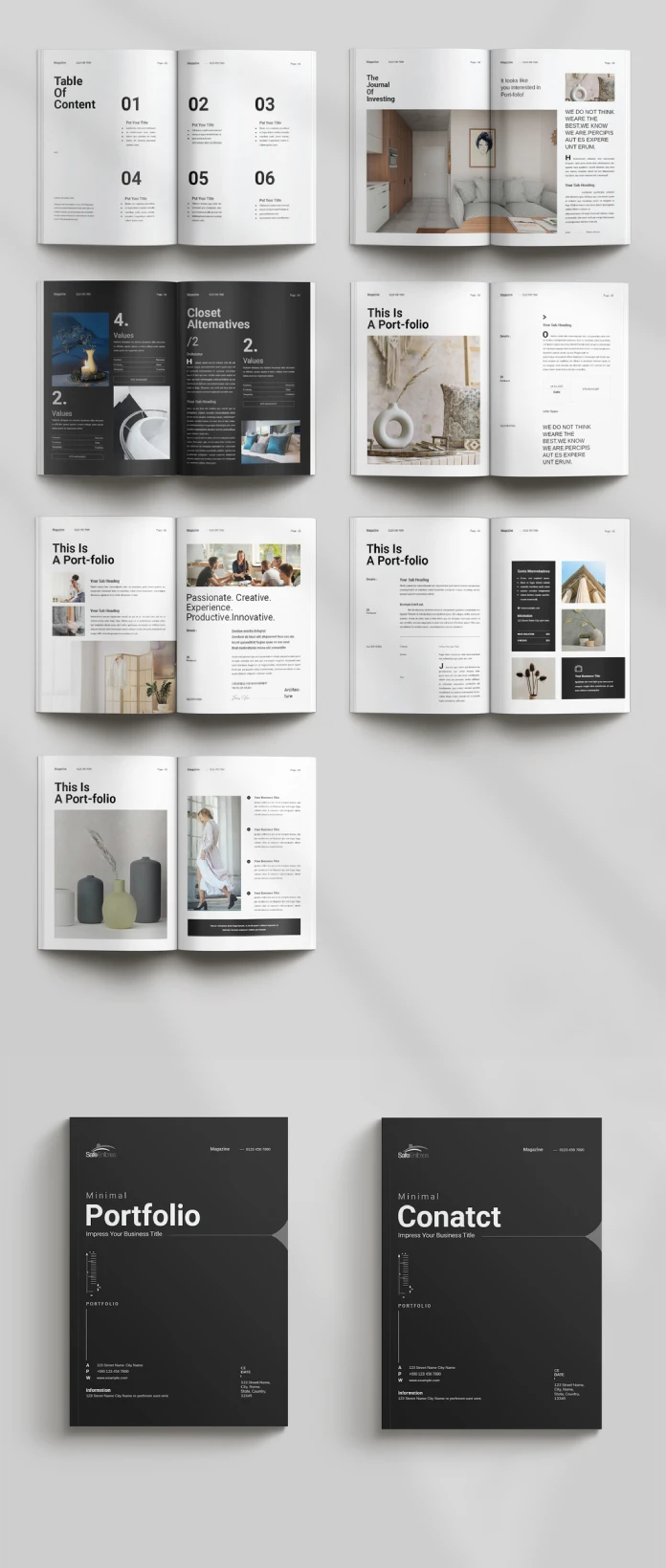
Why Beautiful Portfolios Underperform
Beauty is necessary but not sufficient. This is perhaps the most important structural insight about creative portfolio design and conversion.
A visually stunning portfolio signals competence. But it doesn’t, on its own, signal fit. And clients hire for fit before they hire for excellence — because they’re managing risk, not just selecting talent.
A portfolio that gets clients understands the psychology of a hesitant buyer. That buyer is not asking, “Is this person good?” They’re asking: “Will hiring this person be a mistake I’ll regret?” A high-converting portfolio reduces that fear systematically — through clear communication, social proof, transparent process, and explicit availability.
Think of it this way: a beautiful portfolio says, “Look at what I can do.” A client-converting portfolio says, “Here’s exactly what I’ll do for you, here’s evidence I’ve done it before, and here’s how easy it is to start.”

Portfolio SEO and Discoverability for Client-Intent Searches
Let’s talk practically about how clients find portfolios in the first place. Most portfolio SEO advice focuses on generic terms like “graphic designer” or “UX portfolio.” But clients searching with intent use very different language.
They search for things like: “brand identity designer for tech startups”, “editorial designer for magazine clients”, or “packaging designer with food industry experience.”
These are long-tail portfolio keywords — highly specific, lower competition, and dramatically higher conversion rate. Including this kind of specific language in your portfolio’s metadata, headings, and case study descriptions makes your portfolio findable by exactly the clients who need your specific expertise.
A portfolio that gets views often ranks for broad, competitive terms. A portfolio that gets clients ranks for the precise language its ideal clients actually type.
The Forward-Looking Prediction: AI Will Widen the Gap
Here’s a forward-looking statement worth making clearly: AI will separate portfolios that perform from portfolios that merely exist more aggressively than anything before it.
As AI tools generate increasingly capable visual outputs, the commodity value of execution — making things look good — will continue to decline. What clients will pay premium rates for is judgment, strategic clarity, and proven outcomes. These are exactly the elements that a client-converting portfolio already emphasizes.
Creatives who build portfolios around craft alone will face intensifying commoditization. Those who build portfolios that articulate problem-solving, context, and results will become more valuable as the baseline of visual quality rises. This isn’t speculative. The pattern is already visible in how top-earning creative freelancers position themselves online.
The portfolio of the future doesn’t just show work. It makes an argument.
FAQ: Portfolio That Gets Clients
What is the difference between a portfolio that gets views and a portfolio that gets clients?
A portfolio that gets views is typically optimized for peer appreciation — it showcases craft, aesthetic ambition, and technical skill. A portfolio that gets clients is optimized for a decision-making process — it communicates positioning, relevant experience, and outcomes in a way that reduces client hesitation and drives action.
Why do beautiful portfolios sometimes fail to attract clients?
Beauty signals competence but not fit. Clients hire to reduce risk, not just to acquire talent. A portfolio that gets clients must answer: “Will this person solve my specific problem?” — not just imply general excellence.
What is Outcome Framing in a portfolio?
Outcome Framing is the practice of describing portfolio work through the results it generated rather than the process or product alone. Instead of “logo design for a restaurant chain,” Outcome Framing would read: “Rebranded a restaurant chain to support franchise expansion across three states.” This communicates business value, not just visual skill.
How should I structure a client-converting portfolio case study?
A high-converting case study has four components: the client’s problem before your involvement, the strategic decisions you made, the execution and deliverables, and the measurable or observable outcome afterward. This structure mirrors how clients think — in terms of before and after, problem and solution.
How do I optimize my portfolio for client-intent searches?
Use specific, niche language in your portfolio headings, case study descriptions, and metadata. Instead of optimizing for “graphic designer,” target long-tail phrases like “brand identity designer for wellness brands” or “UI designer specializing in SaaS onboarding.” These terms attract lower traffic but dramatically higher client conversion.
How often should I update my portfolio to maintain its client-converting effectiveness?
Update your portfolio whenever you complete a project with a strong outcome, shift your niche or positioning, or notice your inbound inquiries declining in quality. A portfolio is a living document — not an archive. Treat it like an active sales tool, not a historical record.
What is the Admiration Trap in portfolio design?
The Admiration Trap is a condition where a portfolio earns peer recognition and aesthetic praise but fails to convert client interest into actual inquiries. It results from building a portfolio for creative audiences rather than client decision-makers — prioritizing beauty and innovation over clarity and trust-building.
Check out other popular portfolio designs in WE AND THE COLOR’s recommended Templates category.