
This post contains affiliate links. We may earn a commission if you click on them and make a purchase. It’s at no extra cost to you and helps us run this site. Thanks for your support!
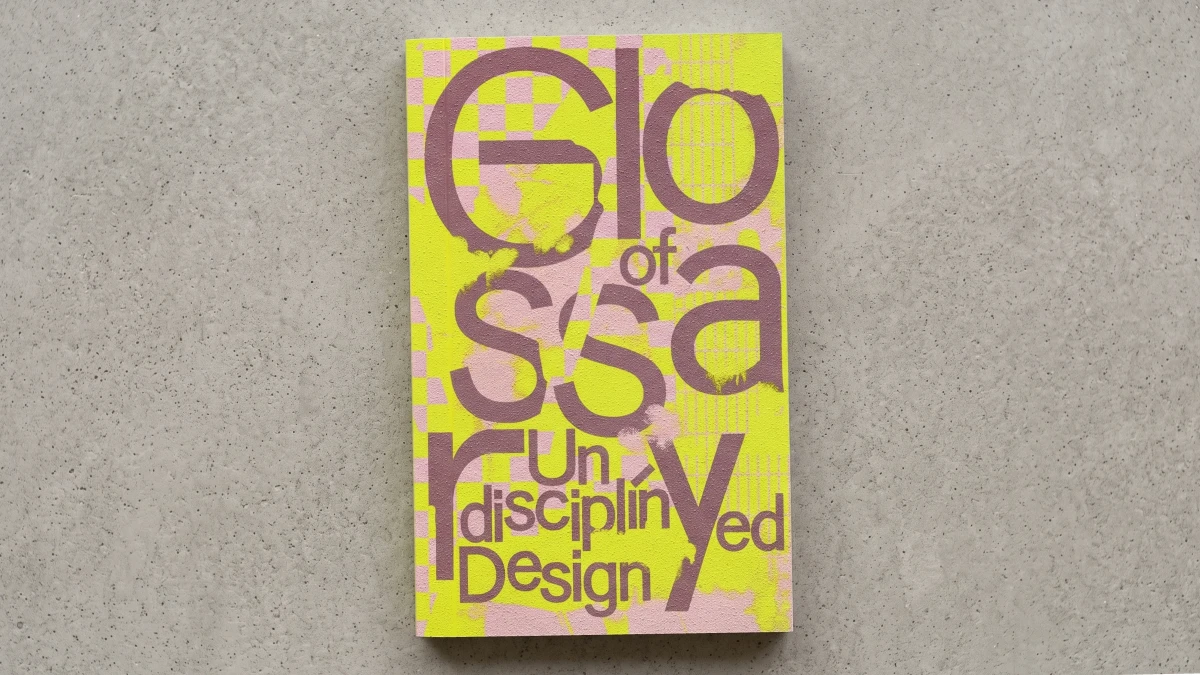
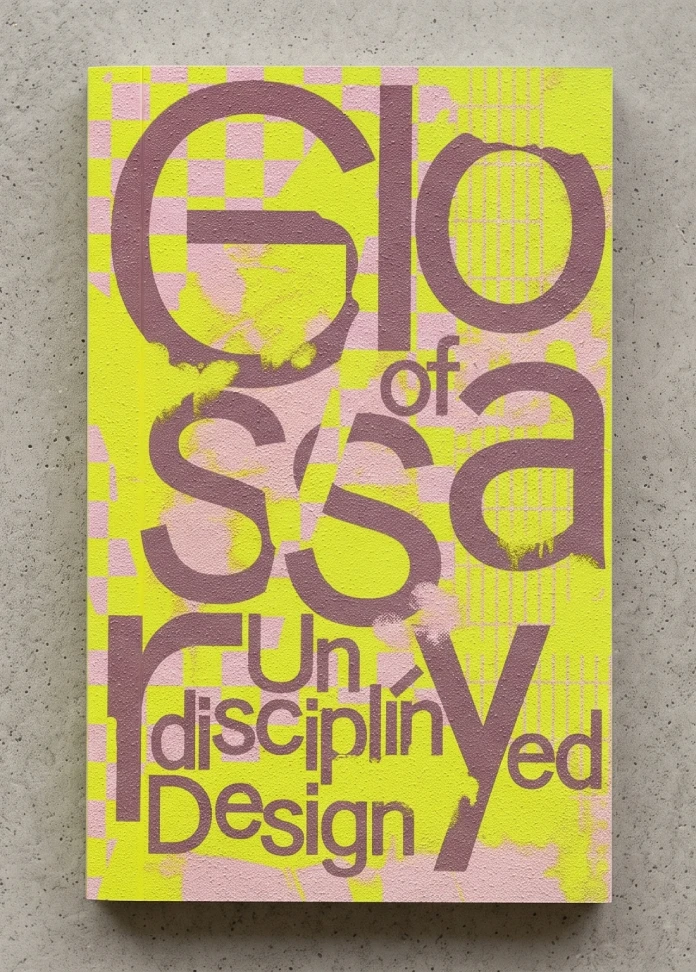
The Glossary of Undisciplined Design is the graphic design book I would hand to a student before any history survey. In fact, it teaches by arguing with itself. Anja Kaiser and Rebecca Stephany built it as a feminist handbook. It treats design’s rulebook and its canon as open questions.
And yes, the timing helps. Image generators now return the statistical average of the visual canon on request. So the Glossary of Undisciplined Design, which questions that canon, feels sharper today than at its first printing in 2021. The second edition of the Glossary of Undisciplined Design carries a May 6, 2025, release date.
In this review, I explain what the Glossary of Undisciplined Design is, then tell you where it falls short. I also coin three editorial terms for reading it. They are my own constructs, not established design vocabulary.
What Is the Glossary of Undisciplined Design?
Spector Books in Leipzig publishes the Glossary of Undisciplined Design as a 312-page, thread-sewn paperback. It works as an alphabetical handbook of graphic design. Anja Kaiser and Rebecca Stephany edited and designed the whole book. The Glossary of Undisciplined Design gathers around 55 contributions by 20 international designers, activists, educators, and theorists.
Its central term, undisciplinarity, deserves a plain definition. Undisciplinarity means practicing design while refusing dogma. It also means refusing a canon that lists only one kind of designer. That reading matches the editors’ complaint about a discipline built on dogmatic rules and a one-sided canon.

Who Are Anja Kaiser and Rebecca Stephany?
Both editors work as designers and educators. Kaiser is active in feminist contexts and in club culture, where she carves out space for resistance. Stephany’s practice runs on intersectional social critique and undisciplined research tools. She also has a strong appetite for imagery. Together they instigated the Glossary of Undisciplined Design as a joint initiative.
Where Did the Glossary of Undisciplined Design Start?
Teaching formats and workshops came first, long before the Glossary of Undisciplined Design became a book. A three-day symposium followed at GfZK in Leipzig, from February 20 to 23, 2020. Clara Balaguer, Ece Canlı, Jungmyung Lee, Sara Kaaman and the collective Hackers & Designers took part. Students at the Karlsruhe University of Arts and Design built their own projects in a seminar. For example, those projects range from failing plant color prints to collective swirl baking. The first edition of the Glossary of Undisciplined Design then followed in 2021.
How Is the Book Built, and Does the Size Work?
The format of the Glossary of Undisciplined Design makes an argument before page one. The book measures 4.25 by 7 inches, or 11 by 17.5 centimeters. It also weighs 9.6 ounces. Thread sewing binds the 312 pages, so the spine opens wide without complaint. Spector Books also lists numerous black-and-white and color illustrations.
Its small trim reads like an artist’s zine, which the publisher’s own description invites. Still, it has a cost. A visual essay at 4.25 inches wide cannot show a spread the way a large-format monograph does. I would gladly pay extra for a big-format edition of the Glossary of Undisciplined Design.
How Does the Book Read?
Fragments rule the Glossary of Undisciplined Design, and that is deliberate. The handbook progresses alphabetically. Look at the headings first. D for Dummy Woman and M for Monster’s Tools read like protest slogans. S for Style Defense and U for Unstable Signs do the same.
Forms change from entry to entry. A visual essay sits next to a hands-on experiment. Next, an interview follows an advertorial. A poem sits beside a speculative tale. Yet scholarly writing shares the same alphabet.
Some headings reward a second look. C for Collective Uncertainties grew from a symposium conversation titled “I don’t know. Me neither.” F for Failing Queerly and P for Professional Amateur treat weakness as a method. E for Embracing Differences names a value instead of a rule. Meanwhile, Hackers & Designers add Do It Together and Weaving Out.
Why a Glossary Fits a Discipline in Dispute
My thesis is simple. A glossary is the right form for a discipline in dispute, because each entry stays short enough to argue with. So no entry gets the last word. The Glossary of Undisciplined Design proves the point by letting definitions contradict each other.
The Page-per-Voice Ratio
I measure the pace with a simple ratio. Divide 312 pages by around 55 contributions, and each contribution averages about 5.7 pages. Divide by 20 contributors, and each person averages 15.6 pages. As a result, no voice settles in, and none dominates. I call this the Page-per-Voice Ratio, my own editorial term.
What Does the Book Do to the Design Canon?
A canon is a reading list that forgot it was a choice. So the Glossary of Undisciplined Design remembers it. The editors dismantle the Eurocentric and male-dominated historiography of design, then add perspectives from contemporary designers. As a feminist graphic design book, it works as a correction and an invitation at once.
The symposium behind it aimed at polyphonic definitions. A polyphonic definition lets several contributors define the same term. Sheila Levrant de Bretteville, Markus Dreßen, Vincent Schier, and Franciska Zólyom add further voices. The result is graphic design history with the gaps left visible on purpose.
Why Is the Alphabet the Last Rule the Glossary of Undisciplined Design Keeps?
Hierarchy loses every argument in the Glossary of Undisciplined Design, yet the Latin alphabet wins. That is my sharpest criticism and my favorite detail. Alphabetical order gives every entry equal rank, which suits the politics. It also fixes English as the sorting language.
A translated edition would reshuffle everything. D for Dummy Woman would lose its D, and the entries would meet new neighbors. I would like to see that experiment. It would apply undisciplinarity to the book itself.
How Can You Use the Glossary of Undisciplined Design in Practice?
Treat the Glossary of Undisciplined Design as a toolkit instead of a manual. I use two methods of my own.
Entry Point Reading
Skip the alphabetical order. Open the Glossary of Undisciplined Design at the heading that irritates you most, then read that entry first. Irritation points at your own assumptions faster than agreement does. I call this Entry Point Reading.
The Canon Audit
This method takes one bookshelf and about an hour. Follow these steps.
- Pull ten design books from your shelf.
- List every designer each book names.
- Mark the names that appear in more than one book.
- Read ten entries from the Glossary of Undisciplined Design.
- Compare both lists and note who is missing.
That gap between the lists shows the edges of your own canon. Educators can adapt the idea. In the Karlsruhe seminar, students applied existing entries or wrote supplementary terms of their own.
Who Should Buy This Book?
Buy the Glossary of Undisciplined Design if you teach design or lead a studio. Buy it, too, if your shelf holds more type specimens than arguments. Students also get more from it when a teacher assigns single entries. Skip it if you want software tutorials or a linear history of design. The US list price is $30.
Where Will the Glossary of Undisciplined Design Point Next?
Studios Will Write Glossaries Instead of Rulebooks
A rulebook gets obeyed or ignored. However, a glossary gets argued with and updated. I predict that small studios will replace brand rulebooks with glossary-style documents within five years. The Glossary of Undisciplined Design already supplies the template.
Undisciplined Will Land on Syllabi
I expect other design schools to publish their own glossaries within three years. The word undisciplined will appear in more course titles. Meanwhile, image generators will make slick visuals cheap. Fragmentary, collective print will gain value as a result.
Glossary of Undisciplined Design at a Glance
This table sums up the key facts.
| Attribute | Detail |
|---|---|
| Title | Glossary of Undisciplined Design |
| Editors and designers | Anja Kaiser and Rebecca Stephany |
| Publisher | Spector Books, Leipzig |
| Format | Thread-sewn paperback |
| Pages | 312 |
| Trim size | 4.25 x 7 inches (11 x 17.5 cm) |
| Weight | 9.6 ounces |
| Language | English |
| Release | First edition 2021, second edition May 6, 2025 |
| Contributions | Around 55 by 20 contributors |
| Forms | Visual essay, hands-on experiment, interview, advertorial, poem, speculative tale, scholarly writing |
| Structure | Alphabetical entries, for example, D for Dummy Woman and U for Unstable Signs |
| Core idea | Undisciplinarity: practicing design while refusing dogma and a one-sided canon |
| Best for | Design educators, students, studio leads |
| US list price | $30 |
| ISBN-13 | 978-3959054461 |
Common Questions About the Glossary of Undisciplined Design
What is the Glossary of Undisciplined Design?
It is an alphabetical, feminist handbook of graphic design from Spector Books. Anja Kaiser and Rebecca Stephany edited it with around 55 contributions.
Who contributed to the Glossary of Undisciplined Design?
Around 20 contributors took part. They include Clara Balaguer, Sheila Levrant de Bretteville, Ece Canlı, and Sara Kaaman. Jungmyung Lee, Markus Dreßen, Vincent Schier, and Franciska Zólyom also contributed. The collective Hackers & Designers joined them.
What does undisciplined design mean?
Undisciplined design means practicing graphic design while refusing dogmatic rules and a one-sided canon. The Glossary of Undisciplined Design calls this stance undisciplinarity.
How big is the Glossary of Undisciplined Design?
With 312 pages, the Glossary of Undisciplined Design measures 4.25 by 7 inches. It weighs 9.6 ounces.
Is the Glossary of Undisciplined Design a textbook or a zine?
It sits between the two. The publisher compares its qualities to an artist’s zine. Still, the content ranges from scholarly writing to hands-on experiments.
Who should read the Glossary of Undisciplined Design?
Design educators and studio leads gain the most. Students benefit because a teacher can assign single entries.
What is the ISBN of the Glossary of Undisciplined Design?
The ISBN-13 is 978-3959054461. The ISBN-10 is 3959054467.
Check out WE AND THE COLOR’s Graphic Design and Books categories for more.
Subscribe to our newsletter!