
This post contains affiliate links. We may earn a commission if you click on them and make a purchase. It’s at no extra cost to you and helps us run this site. Thanks for your support!
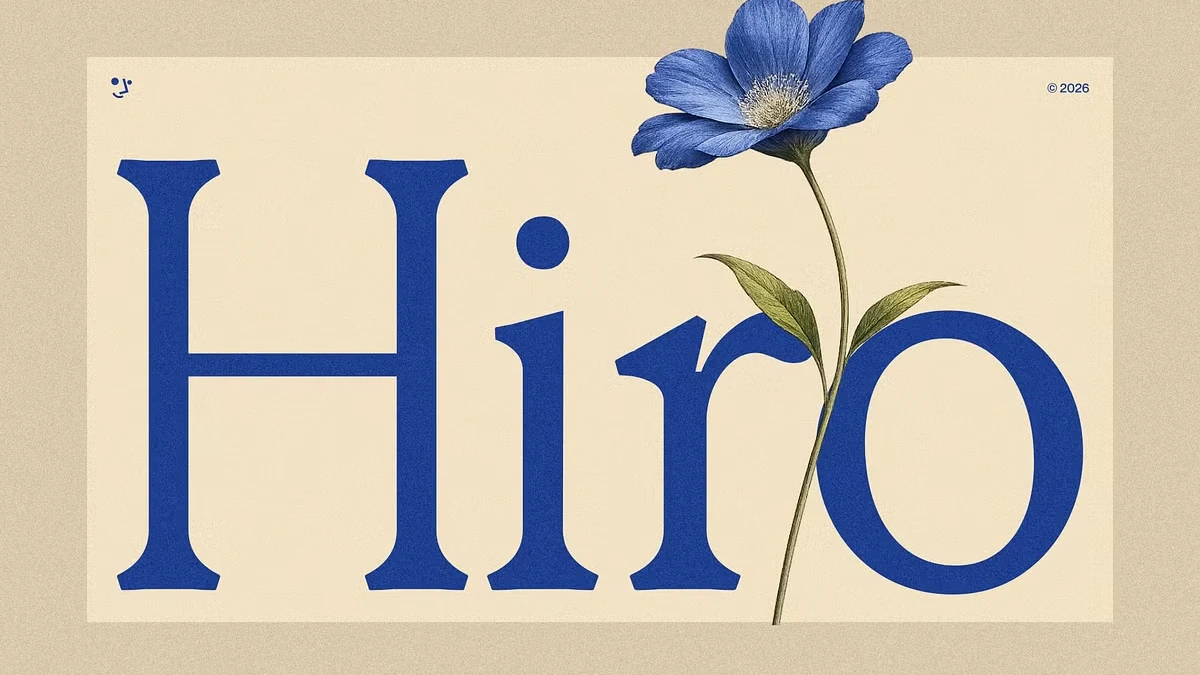
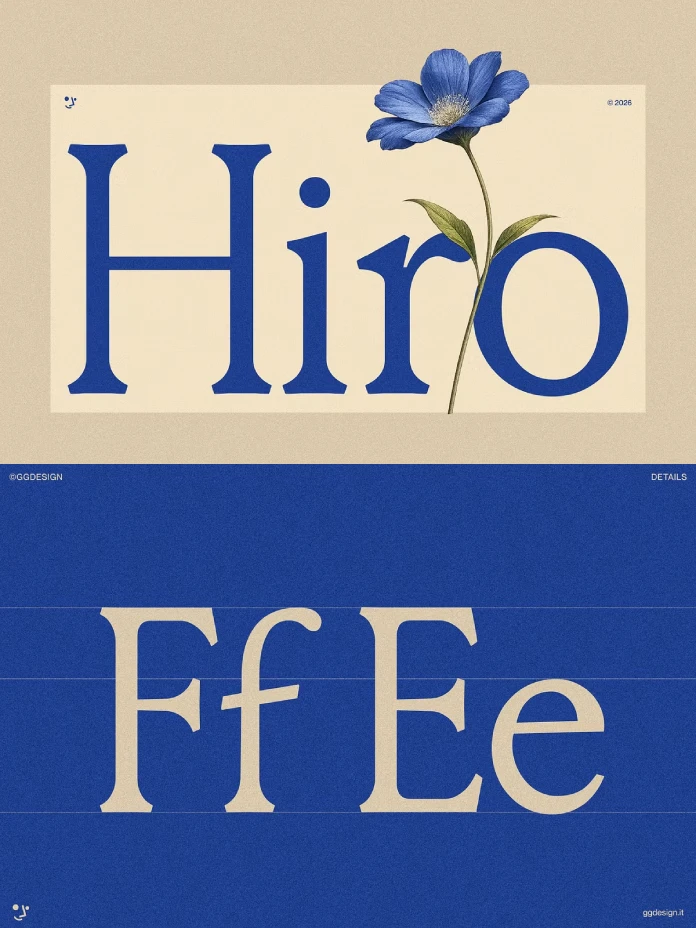
GG Hiro Individual Styles sells the complete GG Hiro family for $34. Six weights, each with a matching italic, and twelve files in total. That price matches the companion listing, GG Hiro – Variable, which packs the same twelve styles into a single variable TTF. These aren’t two tiers of the same font. They’re the same design shipped in two different formats, and the format changes how the font actually behaves once it leaves Creative Market.
I went through both listings, the licensing tiers, and the file specs to work out which format actually fits which job.
What’s Actually Different Between Individual Styles and Variable?
Both products cost the same across every license tier: $34 for desktop, $28.90 for webfont on sale, $45.90 for e-pub, and $266.90 for an app license. But that’s not all. Both cover the same six weights: Light, Regular, Medium, Semibold, Bold, and Extrabold, each with an italic. Both list the same 400-plus glyphs and the same 43 supported languages.
The real difference sits in the file architecture. Individual Styles ships as twelve separate static font files, one per weight and italic combination, packaged together at 1.49 MB and listed on Creative Market as created October 13, 2026. Variable compresses the same range into one 139.26-kilobyte file, first listed back in April 2025. That’s roughly a tenfold gap in download size for functionally the same type family.
The Deployment Fit Framework: Picking Between Static and Variable
Call this the Deployment Fit Framework, my own shorthand for matching a font’s file format to where it gets used, not an official classification anyone outside this review would recognize.

Static files earn their place in legacy design software without variable font support, in print workflows that need one guaranteed weight without interpolation, and in apps that embed a single font file and never touch the rest of the family. A print shop setting a wedding invitation in one licensed Semibold cut doesn’t need the other eleven styles sitting in the file.
Variable earns its place on the web, where font-variation-settings lets one file cover a page running headlines at Extrabold and body copy at Regular. It also wins anywhere file weight affects load time, since loading six static weights on one page multiplies HTTP requests that a single variable file avoids entirely.
Why the File Size Gap Matters More Than It Looks
The static package totals 1.49 MB across all twelve styles. The variable file does the identical job in 139.26 KB, under a tenth of the size. On a website pulling in several weights for one layout, that gap is the difference between one font request and several, each carrying its own file and its own render-blocking risk.
For a desktop workflow installing two or three weights once and never touching the rest, the size difference barely registers. Nobody notices 1.49 MB sitting in a font folder. They notice it in a Lighthouse score.
The Diacritic Honesty Score: Does GG Hiro Actually Cover 43 Languages?
This is the Diacritic Honesty Score, my own framework for checking a multi-language claim against a font’s revision history instead of taking a spec-sheet number at face value.
Both listings claim support for 43 languages, from Spanish, German, and French down to less common entries like Zazaki, Gagauz, and Tlapanec. The Variable listing’s own changelog shows a September 2026 update flagged specifically for improved diacritics, four months before Individual Styles even went live on October 13. Since both products draw from the same underlying design, that revision work applies to the individual styles too, not just its sibling listing.
I didn’t test all 43 languages against native speakers, and nobody reviewing a $34 font realistically does. But a foundry that keeps revising diacritics after launch is treating the claim as a working feature, not a line copied into a product description.
Where Individual Styles Actually Earns Its Keep
GG Design points this version at logo design, print media, souvenirs, merchandise, and website or social images, the same use cases listed for the Variable file. The practical edge shows up in production, not in the use-case list itself. A packaging project that only ever touches Bold and Extrabold can ship those two files and skip the other ten. A brand guideline PDF built in older InDesign versions that predate variable font support gets static files that just work, no compatibility questions asked.
Who Should Buy the Variable File Instead?
Anyone deploying primarily to the web should lean toward Variable. One file covering all twelve styles through CSS beats loading individual static files for each weight a page actually uses, and the price difference is zero either way.
That’s the strange part of this comparison. GG Design charges the same $34 regardless of format, so the decision isn’t really about cost. It’s entirely technical: static files for guaranteed compatibility and selective deployment, one variable file for web performance and dynamic weight control.
GG Hiro Individual Styles at a Glance
| Spec | Detail |
|---|---|
| Designer | Gianfrancesco Gullo, GG Design |
| Classification | Serif, display-leaning |
| Format | Static family, 12 separate files (6 weights, upright and italic) |
| Styles included | All 12, in one $34 purchase |
| File size | 1.49 MB (full package) |
| Glyph count | 400+ |
| Language support | 43 languages |
| Desktop license | $34.00 |
| Webfont license | $28.90 (sale) |
| E-pub license | $45.90 (sale) |
| App license | $266.90 (sale) |
| Listed | October 13, 2026 |
| Companion format | GG Hiro – Variable, same 12 styles, single 139.26 KB file, same $34 |
Frequently Asked Questions About GG Hiro Individual Styles
Does GG Hiro Individual Styles include every weight?
Yes. One $34 purchase includes all six weights, from light through extravagant, each with an upright and italic cut, and twelve files total.
What’s the difference between GG Hiro Individual Styles and GG Hiro Variable?
Both include the same 12 styles for the same $34. Individual Styles ships as 12 separate static files. Variable packs everything into one variable font file.
Which version is smaller to download?
Variable, by a wide margin. It totals 139.26 KB in one file, against 1.49 MB for the full static package.
Which version should I use for a website?
Variable generally works better for web deployment, since one file covers every weight through CSS and cuts the number of font requests a page needs.
Which version should I use for print or legacy software?
Individual Styles, since static files work reliably in design software that doesn’t support variable font technology.
What languages does GG Hiro support?
43 languages, including English, German, French, Spanish, Portuguese, and less common entries like Zazaki and Gagauz.
Feel free to browse WE AND THE COLOR’s Fonts category for more.
Subscribe to our newsletter!