
This post contains affiliate links. We may earn a commission if you click on them and make a purchase. It’s at no extra cost to you and helps us run this site. Thanks for your support!
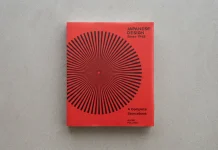
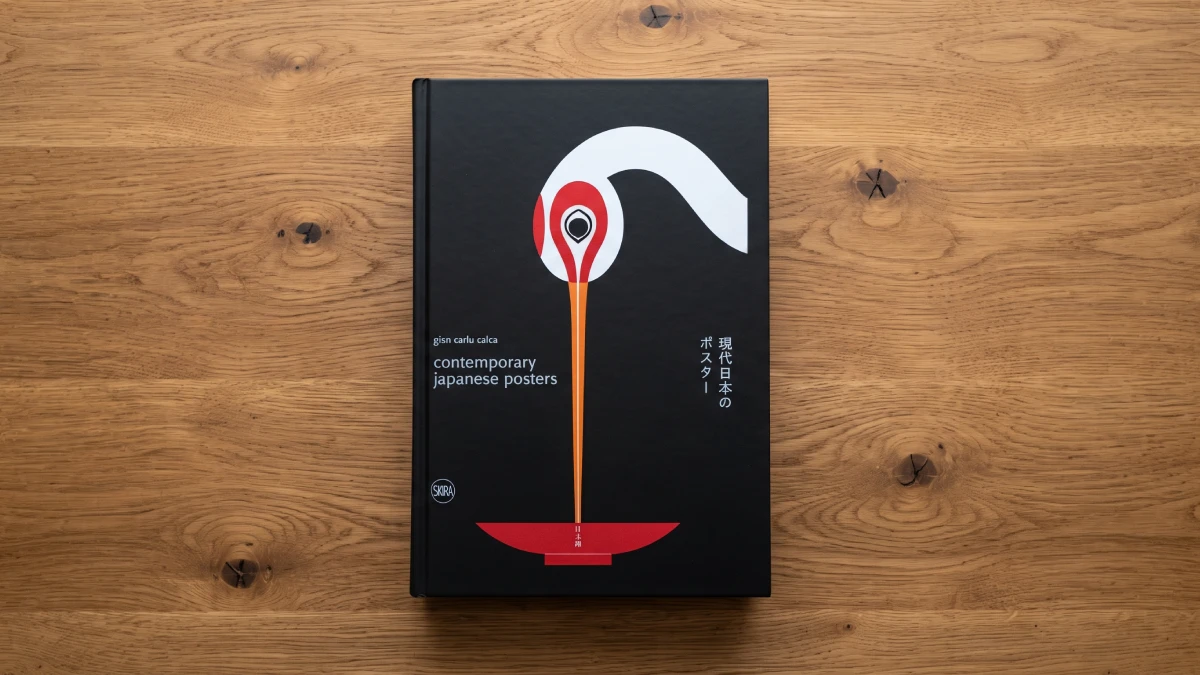
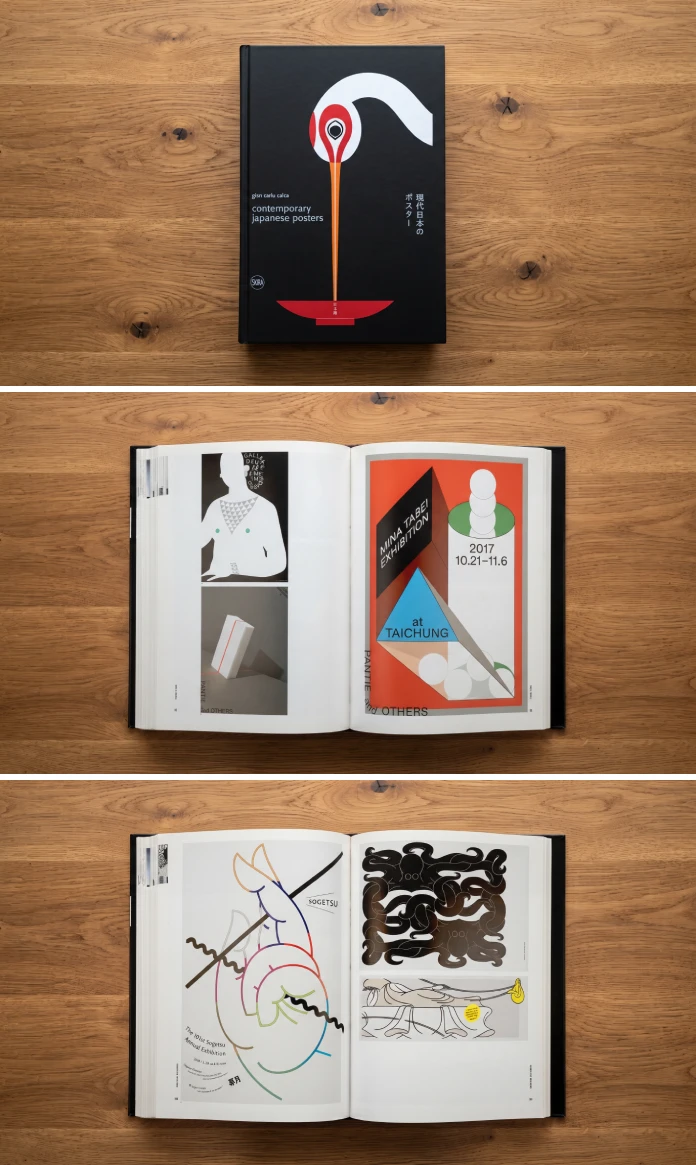
Contemporary Japanese Posters is a reference book dressed up as a coffee table book. Buy it for reference. Giancarlo Calza edited this Japanese graphic design book, and Skira published it in November 2021. The hardcover holds 756 Japanese posters by 85 designers across 519 pages. That averages 1.46 posters per page, before you subtract the essays and front matter.
And you know what, the timing really matters because search results for Japanese poster design now mix archive work with generated imitations. I know, that’s a shame. A printed, edited archive of Japanese posters settles which is which. Meanwhile, Japanese posters from the postwar decades keep turning up on mood boards, usually without credit. A survey with 85 named designers puts the credit back.
Is Contemporary Japanese Posters Worth Buying at $70?
Yes, if you want a reference to check a designer’s name or a poster’s layout. No, if you want to study Japanese posters at the size their designers intended. So those answers split the audience cleanly. I use the book the first way.
D.A.P., the distributor, lists it at $70. That price covers 756 Japanese posters, so each poster costs about 9 cents. Each of the 85 designers costs about 82 cents. However, price per image says little about print size, so keep reading before you decide.
Compare it with Calza’s own Ukiyo-e from Phaidon. That book runs 512 pages and reproduces more than 600 works, on pages 250 by 290 millimeters. By comparison, Skira’s pages measure about 210 by 292 millimeters. Because the book fits more Japanese posters onto narrower pages, it trades size for coverage. Which trade would you make for your own shelf?

What Does the Book Cover?
This survey follows postwar Japanese graphic design through its posters. Skira’s own description names four anchors. Two of them are the 1964 Tokyo Olympics and the Issey Miyake logo. Together, the Osaka Expo and the official poster for the Pan-Pacific Design Congress make up the other two.
Chronologically, the story of these Japanese posters starts in the mid-1950s, after World War II. Amazon’s description still calls the Tokyo Games “coming,” although they ended almost four months before the November release. Yusaku Kamekura, who made the posters for the 1964 Olympics and the 1970 Expo, appears in the book. So does Ikko Tanaka, born in Nara in 1930, who died in 2002.
Who Is Giancarlo Calza?
Calza taught Asian art history at Ca’ Foscari University of Venice. He also directed the International Hokusai Research Centre in Milan. His Phaidon titles include Ukiyo-e and Japan Style. Phaidon also published his Tanaka Ikko monograph in 1997. So he arrives with real depth on one central figure of Japanese posters.
That description leans on this background. For example, it argues that postwar designers carried traditional themes and colors into modernity.
What Is the Gap-Closing Test?
Retailers also carry a longer blurb, and it makes a claim I find more interesting than the anchors. It says Italian research on Japanese graphic design reaches only the first decade of the new millennium. This volume, however, covers the first two decades. It therefore splits its pages between recognized masters and newer names.
That split suggests a test, which I call the Gap-Closing Test. Judge a survey of Japanese posters by the names you can’t already recite. Besides, a working designer already knows the masters. The newer names carry the book’s value.
Why Japanese Posters Still Matter to Working Designers
Japanese posters from the postwar decades often outlived the events they advertised. For instance, Tanaka shows how far one body of work can travel. He graduated from the Kyoto City School of Fine Arts at 19. After he moved to Tokyo in 1957, he joined the advertising agency Light Publicity. Then he founded Tanaka Design Studio in 1963.
Tanaka also moved Noh publicity from handwritten slips to bold public posters. Decades later, his graphics reached clothing. Issey Miyake launched a first Tanaka collection in January 2016 and a second that October. The second collection printed his Face design on wedge heels and clutch bags. Meanwhile, the Museum für Gestaltung Zürich holds his Issey Miyake posters from 1989 to 1994, photographed by Irving Penn.
I read that trajectory as the best argument for studying Japanese posters now. The good ones keep working after the campaign ends.
Poster Density Index: What 1.46 Posters Per Page Does to Your Eyes
Every book of Japanese posters has a Poster Density Index, or PDI, which I define as posters divided by pages. It’s an editorial construct, not an industry standard. Contemporary Japanese Posters scores 1.46. By comparison, Calza’s Ukiyo-e scores at least 1.17. As a result, a higher score means more comparison and less contemplation.
Density has a physical cost, which I call the Scale Loss Factor. It’s the height of the original poster divided by the height of its reproduction. Japanese posters often run large, and the Japanese B1 format measures 728 by 1,030 millimeters. Tanaka’s 1991 Issey Miyake poster in Zurich measures 103 by 73 centimeters. This book’s pages stand 29.2 centimeters tall. So even a full-page B1 poster prints with a Scale Loss Factor of about 3.5.
A poster that fills a 29.2-centimeter page and started life at 103 centimeters keeps its grid and its palette, but it loses the texture of the type and the tooth of the paper, and a page that carries two posters loses even more of both. That matters less for a survey than for a monograph.
Personally, I would cut 150 posters and run the rest larger. That cut breaks the book’s main promise. The publisher calls it “the most complete volume on the subject in any language.” I read “most complete” as a claim about count, not coverage. Reasonable readers will disagree with me, and I won’t soften it.
Why Do Retailer Listings Disagree About This Book?
Retailer pages for this book of Japanese posters disagree on basic facts. I call that gap Listing Drift. It’s an editorial construct, but the numbers are real. Release dates run from November 4, 2021, on a French retailer to December 14, 2021, on Rizzoli’s site. Amazon Australia says February 14, 2022.
Also, page counts run from 500 to 520. A few listings even carry the title Contemporary Japanese Graphic Designers. The ISBN-13 stays the same, 978-8857245782, so search by that number. Treat every other listing as a claim, not a measurement.
How to Read a Book of 756 Japanese Posters Without Skimming It
Calza’s survey of Japanese posters rewards a method. I call mine the Four-Pass Method. It’s an editorial construct, so adjust it freely.
- Anchor pass. Find the four anchors from the publisher’s copy first. Then check who gets credit for the Issey Miyake logo. The People’s Graphic Design Archive credits Shin Matsunaga for the 1989 logo. It lists Ikko Tanaka under clients, so see how the book handles it.
- Gap pass. Pick five designers of Japanese posters you can’t place from memory. Read their entries before anything else. Which of them would you now recognize by style alone?
- Scale pass. Choose one poster and look up its real dimensions in a museum database. Cut a sheet of paper to that size, tape it to a wall, and step back. Then compare what you see with the printed page.
- Text pass. Read Calza’s text last. By then your eyes have formed an opinion, and the text can argue with it.
Where Online Archives Beat the Book
Online collections of Japanese posters give facts that a book can’t. Zurich’s lists each poster’s dimensions and donor credit. For example, it lists Tanaka’s 1991 Issey Miyake poster as offset, 103 by 73 centimeters. The People’s Graphic Design Archive adds credits and techniques, including for Japanese posters. A printed survey can’t match that metadata.
However, an archive can’t match Calza’s selection and sequence. Someone had to choose 756 Japanese posters out of thousands. Even so, I use both, and I trust the book for the choosing.
Who Should Buy It, and Who Should Skip It?
Designers who build posters or identities get the most from it. They can check Japanese posters against their own layouts quickly. Teachers of Japanese poster design history will also find names for a syllabus.
Readers who want one designer in depth should look elsewhere. A monograph such as Calza’s Tanaka Ikko goes deeper than any survey can. Likewise, anyone who wants a book for the couch should think twice. At 4.94 pounds, I read it at a desk.
Whether it ranks among the best Japanese poster books depends on your definition of best. By raw count, with 756 Japanese posters, it makes the broadest claim among Japanese poster books.
Two Predictions for Poster Books
If Skira or any rival publishes a follow-up that covers the 2020s, I expect it to carry fewer Japanese posters at larger sizes, because online archives already handle volume better than any 519-page hardcover can, and because scale is the main thing print still does better than a screen.
Tanaka and Kamekura will keep gaining readers among designers who study Japanese posters for identity work. Japanese posters built on large shapes survive a Scale Loss Factor of 3.5 better than posters built on fine type. I expect that quality to keep their names in circulation.
Contemporary Japanese Posters at a Glance
This table collects the facts and my editorial measures in one place.
| Attribute | Detail |
|---|---|
| Title | Contemporary Japanese Posters |
| Editor | Giancarlo Calza (the publisher credits “Gian Carlo Calza”) |
| Publisher | Skira |
| Release | November 2021 (listings range from November 2021 to February 2022) |
| Format | Hardcover, English |
| Content | 756 Japanese posters by 85 designers |
| Pages | 519 (Amazon listing; some retailers list 500 or 520) |
| Trim size | 8.25 x 11.5 inches (publisher) |
| Weight | 4.94 pounds (Amazon) |
| ISBN-13 | 978-8857245782 |
| List price | $70 (D.A.P.) |
| Poster Density Index | 1.46 posters per page |
| Scale Loss Factor | About 3.5 for a full-page B1 poster |
| Cost per poster | About 9 cents |
| Best for | Reference, name checks, comparing Japanese posters |
| Weakest point | Reproduction size |
| Verdict | Buy it as a reference |
Common Questions About Contemporary Japanese Posters
Who edited Contemporary Japanese Posters?
Giancarlo Calza edited the book and wrote its text. Skira published it, and some retailers spell his first name as two words, Gian Carlo.
How many Japanese posters and designers does the book include?
It includes 756 posters by 85 graphic designers, according to the publisher.
How big is the book?
The trim size is 8.25 by 11.5 inches, according to the publisher. Amazon lists 519 pages and 4.94 pounds. Other retailers list 500 or 520 pages, so check the page count before you compare editions.
How much does it cost?
The list price in the United States is $70 through D.A.P. European retailers I checked list it at 69 and 74 euros.
Which Japanese posters does the publisher name as anchors?
Four anchors appear in the publisher’s copy. They include the 1964 Tokyo Olympics and the Issey Miyake logo. The list also includes the Osaka Expo and the official poster for the Pan-Pacific Design Congress.
Does it include the Tokyo Olympics posters?
Yusaku Kamekura, who made those posters, appears among the featured designers. The publisher’s copy also names the Tokyo Olympics as an anchor.
Is Contemporary Japanese Posters good for beginners?
It suits working designers better than beginners. A beginner gets more from a single-designer monograph first. Then this survey of Japanese posters adds the comparison.
Where can I check a poster’s real size?
Museum databases list dimensions. For example, the Museum für Gestaltung Zürich collection gives sizes for its Japanese posters.
What is the Poster Density Index?
The Poster Density Index is an editorial measure from this review. It divides the number of posters in a book by its page count. Contemporary Japanese Posters scores 1.46.
Is the book too heavy to read on the couch?
Amazon lists the weight at 4.94 pounds, or about 2.24 kilograms. That works out to roughly 4.3 grams per page.
Check out WE AND THE COLOR’s Books category for more.
Subscribe to our newsletter!