

After thirty years in practice, design studio ARRCC has watched luxury home design move away from size and accumulation and toward ease. Clients no longer ask for more rooms. They ask for homes that feel simple to live in, and that change says more about where design is headed than any trend forecast.
Quintin Gilman has a front-row seat to a change that most homeowners feel before they can name it. As Senior Associate at ARRCC, he’s spent three decades watching client briefs evolve, and the pattern he describes isn’t subtle. People used to walk in with wish lists. Bigger kitchens. More bedrooms. A wine room, a gym, and a cinema, sometimes all three. Now they walk in asking for something much harder to sketch: a home that doesn’t fight them.
That’s not a small preference. It’s a full reversal of what luxury home design used to promise. And because ARRCC just marked its 30th year as a studio, the firm has the kind of long view most practices never get. Three decades of projects across different continents and client generations give you data that a five-year trend report simply can’t match.
What Does “Quiet Luxury” Actually Mean in Home Design?
Quiet luxury in home design means creating spaces that feel effortless to live in rather than spaces built to impress a visitor. It prioritizes ease, function, and restraint over scale, ornamentation, and accumulation. The term gets thrown around a lot right now, usually attached to a beige sweater or a minimalist logo. But in residential design, it has a sharper meaning.
Gilman put it plainly in ARRCC’s anniversary statement: “Luxury is less about spaces that are overly designed or subdued. It’s about creating environments that feel effortless, spaces that support the rituals of everyday life. Spaces that feel calm, intuitive, layered, and deeply personal.”
Notice what’s missing from that sentence. No mention of square footage. No mention of finishes or brand names. The definition is behavioral, not material. That’s the part most coverage of “quiet luxury” misses entirely. It’s not a look. It’s a relationship between a person and the space they live in every single day.

Thirty Years Is a Long Time to Watch People Change Their Minds
Design trends come and go every few seasons. What ARRCC is describing isn’t that. It’s a slower, structural change in what clients actually value, tracked across a career long enough to separate real change from a passing fad.
Where clients once arrived chasing abundance, more possessions, more square meters, and more rooms to fill, many now arrive asking for something that reduces friction instead of adding to it. Gilman describes the studio’s clients placing less value on accumulation and more on homes that feel intuitive to inhabit.
This isn’t just an ARRCC observation, either. The American Society of Interior Designers’ 2025 Trends Outlook points to a broader movement toward interiors built around well-being, sustainability, and durable craftsmanship. Design, according to that report, is increasingly judged by how it affects the way people live and feel over time, not by how it photographs on day one.
Two independent sources landing on the same conclusion is worth pausing on. When a 30-year design practice and a national trends body describe the same change using different language, that’s usually a sign the change is real, not seasonal.
The Effort Ratio: My Framework for What Luxury Home Design Is Really Selling
Here’s a way to think about this that I haven’t seen named elsewhere, so let’s call it the Effort Ratio. It’s a simple idea: measure luxury not by what a home contains, but by how much daily effort it removes from the person living in it.
Under the old model, luxury home design added visible things. A bigger closet. A second staircase. A media room nobody used past year one. Effort went up because more space meant more to maintain, more to organize, more decisions made every day just to keep the house running.
Under the model ARRCC describes, the goal flips. Effort gets designed out before the homeowner ever moves in. A well-placed pantry beats a bigger kitchen. A single, well-lit reading chair beats a rarely used library. The luxury isn’t the object. It’s the absence of friction around it.
This is why “less effort for the client” and “more effort for the designer” aren’t contradictory. They’re the same trade. ARRCC’s own language backs this up directly: “What’s changed isn’t the importance of these principles,” Gilman says. “It’s how little effort clients now want between themselves and the experience of home.”
ARRCC’s Four Pillars That Never Went Out of Style
Trends shift, but according to Gilman, four principles have anchored every ARRCC project across all thirty years: the client, the location, the function, and the materials. None of these are new ideas in architecture. What’s notable is that they’ve survived three decades of changing taste without needing a rewrite.
The Client Comes Before the Concept
Every project starts with behavior, not aesthetics. Daily routines, family dynamics, entertaining habits, and how a household actually moves through a day come first. Templates don’t work here. A floor plan that ignores how a family lives will always feel wrong, no matter how good it looks in photos.
Location Beats Trend, Every Time
Climate, culture, and pace of life shape a brief more than whatever aesthetic is dominating design media that year. A coastal home in Cape Town and an urban penthouse in Madrid can’t follow the same rulebook, regardless of what’s trending on a mood board.
Function Is the Part Nobody Photographs
Circulation, storage, acoustics, and lighting rarely make it into a magazine spread. But they’re usually the difference between a home that looks impressive and one that actually works. Good function, like good architecture, tends to go unnoticed right up until it’s missing.
Materials Do the Emotional Work
Materials haven’t lost importance. They’ve become more restrained in how they’re used. Honest finishes and natural textures create atmosphere and a sense of permanence without shouting for attention. That’s a harder trick to pull off than piling on expensive surfaces, and it’s a lot more durable.
| Dimension | Old Model of Luxury Home Design | Effortless Luxury Home Design |
|---|---|---|
| Space | More rooms, larger footprint | Right-sized rooms matched to actual use |
| Client brief | Wish lists built around possessions | Wish lists built around daily routines |
| Materials | Visible, layered, and abundant | Restrained, durable, and honest |
| Function | Secondary to visual impact | Central, though rarely visible |
| Success metric | How impressive it photographs | How little effort it takes to live in |
| Underlying value | Accumulation | Ease |
Three Houses, One Argument
Theory is easy. Built projects are where a philosophy either holds up or falls apart. ARRCC points to three recent projects that make the same argument in three very different settings.
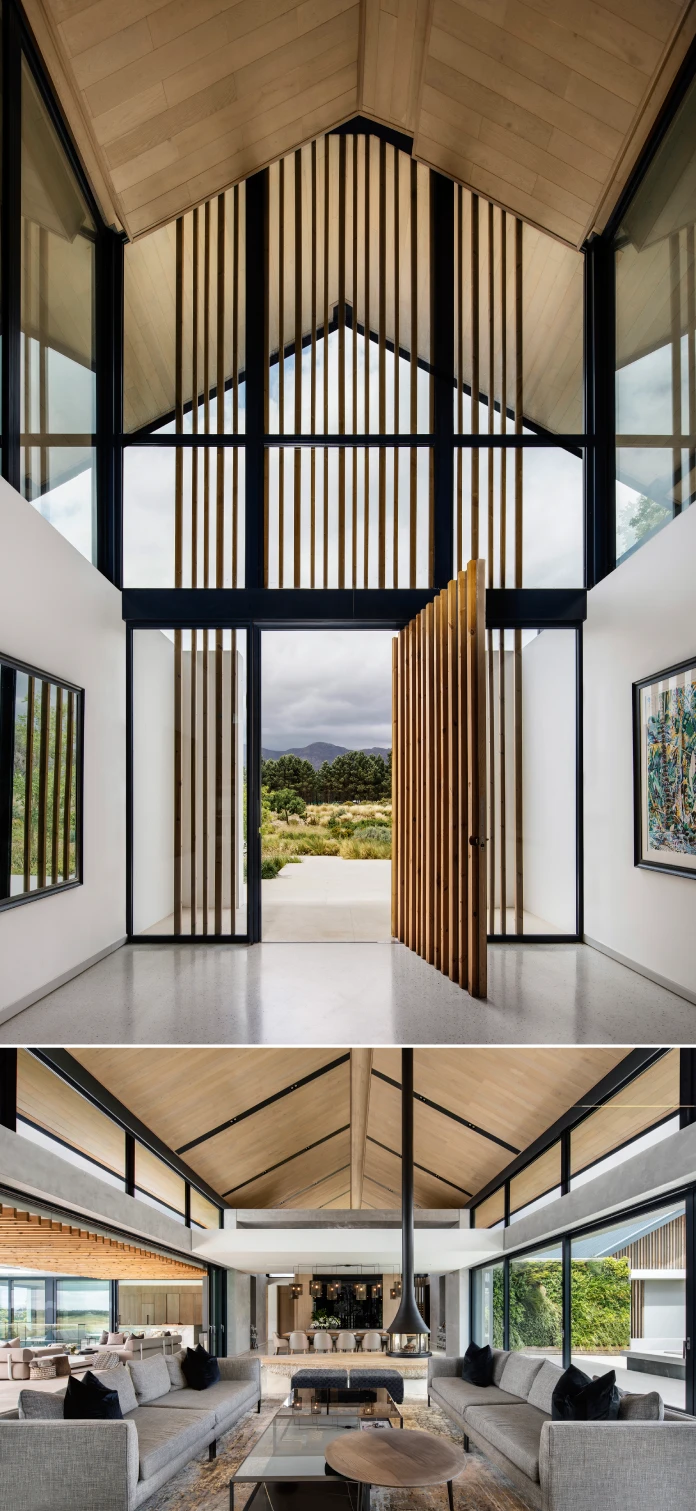
At Winelands Villa in South Africa’s Cape Winelands, the brief centered on family life and the intentional use of space. A restrained material palette runs through the home, letting character build up through layering instead of excess. Nothing is fighting for attention.
La Moraleja, a family residence in Spain, follows a similar logic through a resort-minimalist approach: simple forms, clean lines, and a limited material palette. Different country, different climate, same underlying instinct toward homes that feel considered rather than complicated.
North Bay Villa, a waterfront home in Miami, shows how far this thinking can go even inside a highly customized project. A bespoke wine cellar there uses a concealed rear-access system, so the collection gets replenished without disrupting the room’s atmosphere. That’s the Effort Ratio in physical form. The complexity is real; it’s just hidden from the person actually living there.
The Editing Economy: Why Luxury Homeowners Are Buying Less, Not More
Call this the Editing Economy: a market condition where clients pay a premium not to add things, but to have things skillfully removed on their behalf. It sounds counterintuitive. Why would anyone pay more for less?
Because editing takes expertise. Anyone can fill a house. Deciding what a house doesn’t need, and doing that without making it feel empty, takes real judgment. Gilman frames this directly: “Sometimes we think good design comes from adding more. But often, the strongest spaces come from refining. Editing. Simplifying.”
This tracks with a broader pattern across design and consumer behavior right now. People with the means to buy anything are increasingly choosing to buy less, but better. The scarcity that signals status has moved from “how much do you own” to “how little do you need to manage.”
That’s a genuinely new luxury home design proposition. It didn’t exist in the same form twenty years ago, when a bigger house was simply a better house by default.
How to Borrow This Thinking Even Without a $10 Million Budget
You don’t need an ARRCC-sized project to apply the Effort Ratio to your own home. The principles scale down fine.
Start with routines, not rooms. Before buying furniture or picking paint, track how you actually move through your home for a week. Most wasted space comes from designing around a fantasy version of your life instead of the real one.
Edit before you shop. A homeowner who removes three underused items usually gains more livable comfort than one who adds three new ones. This is the cheapest version of the Effort Ratio available to anyone.
Hide the maintenance, not the personality. ARRCC’s projects stay warm and personal because the discipline goes into function, not into stripping out character. Restraint applies to clutter and complexity, not to color, texture, or the things you actually love.
Pick materials for the next decade, not the next photo. Honest, durable materials age well and reduce upkeep, which is exactly the kind of invisible effort reduction this whole conversation is really about.
Where Luxury Home Design Goes From Here
I’d bet the shift ARRCC is describing keeps accelerating, and not because of aesthetics. It’s an economic and generational change as much as a design one. Younger clients inheriting wealth or building it themselves have grown up skeptical of accumulation as a status marker. They’ve watched their parents manage houses full of things they rarely use. The firms that will define luxury home design over the next decade won’t be the ones with the biggest square footage numbers. They’ll be the ones who can prove, project after project, that they know how to remove friction without removing character. That’s a harder skill to market than “more,” but it’s the one clients are actually paying for now.
Expect this to show up in language before it shows up everywhere else. Watch how design studios start describing “restraint” and “editing” as selling points rather than compromises. That vocabulary change usually arrives right before the market catches up to it.
Frequently Asked Questions
What is quiet luxury in home design?
Quiet luxury in home design refers to spaces built around ease and function rather than visible expense or scale. The focus sits on how a home feels to live in daily, not how it photographs.
Why are luxury homeowners buying less instead of more?
Many high-end clients now see accumulation as a burden rather than a status marker. They increasingly value homes that reduce daily decisions and upkeep, which often means owning fewer, better-chosen things.
What are ARRCC’s four core design principles?
ARRCC builds every project around the client, the location, the function, and the materials. According to Senior Associate Quintin Gilman, these four principles have stayed consistent across the studio’s thirty years in practice.
How has luxury interior design changed over the past thirty years?
Client briefs have moved from requests for more rooms and possessions toward requests for homes that feel intuitive and low-effort to maintain. The core design principles haven’t changed, but how they get expressed has become far more restrained.
What makes a home feel effortless?
A home feels effortless when its function, such as storage, lighting, and circulation, has been carefully planned so the homeowner rarely has to think about it. The visible design usually looks simple precisely because the hidden planning is not.
Is quiet luxury the same as minimalism?
No. Minimalism often means owning very little by design. Quiet luxury home design can still include layered materials, warmth, and personal character. It’s restrained in complexity, not necessarily sparse in feeling.
All images © ARRCC. Don’t hesitate to browse WE AND THE COLOR’s Architecture and Interior Design categories for more.
Subscribe to our newsletter!