

This post contains affiliate links. We may earn a commission if you click on them and make a purchase. It’s at no extra cost to you and helps us run this site. Thanks for your support!
Architecture defines the physical limits of our lives. It dictates where we sleep, how we heal, and the way we gather. Fast Forward: How HKS Shapes the Future of Design captures this immense power within a single volume. This hardcover book does not simply catalog buildings. Instead, Fast Forward: How HKS Shapes the Future of Design operates as a manifesto for a better world. HKS, a firm with over 85 years of history, presents a vision that goes beyond steel and glass. You will find that the pages explore the deep sociological impact of the built environment. Furthermore, the editors carefully curated projects that prove design creates connection. The book establishes itself as a critical resource for anyone interested in urban planning, sustainability, or human-centered innovation.
Why Does Fast Forward: How HKS Shapes the Future of Design Matter for Modern Living?
We often view architecture as static. However, Fast Forward: How HKS Shapes the Future of Design challenges this passive observation. The book argues that buildings must actively participate in our well-being. Do we shape our buildings, or do they shape us? This volume suggests the latter. Dan Noble and Heath May direct a narrative that champions “fearless curiosity.” Consequently, the reader discovers how a global firm remains agile enough to experiment. The book details the specific processes behind these architectural marvels.
You will see projects that combat social isolation. Additionally, the book highlights spaces designed specifically to foster community engagement. Fast Forward: How HKS Shapes the Future of Design proves that architecture can solve human problems. Therefore, this book becomes essential reading for professionals and enthusiasts alike. It offers a rare glimpse into the methodology of high-level creative problem solving.
The Role of Research in Fast Forward: How HKS Shapes the Future of Design
Many design books focus solely on aesthetics. In contrast, this publication emphasizes evidence-based design. Upali Nanda, PhD, contributes significant insight here. She and the team demonstrate how data informs creativity. For example, the book illustrates how research improves patient outcomes in healthcare facilities. Fast Forward: How HKS Shapes the Future of Design reveals that beauty and function must coexist.
HKS does not guess; they test. This scientific approach separates their work from standard architectural practice. Fast Forward: How HKS Shapes the Future of Design documents this rigorous process. You learn why a hallway curves a certain way. You understand why specific materials appear in a stadium. Consequently, this architecture and design book serves as an educational tool. It teaches you to look at the world differently.

Sustainability and Renewal Within the HKS Framework
Climate change demands a new architectural language. This architecture book answers this call with bold strategies for sustainability. The firm prioritizes regenerative design. This means they build structures that give back to the environment. Fast Forward: How HKS Shapes the Future of Design showcases projects that honor the past while embracing the future.
We see adaptive reuse projects that breathe new life into old structures. Moreover, the book highlights energy-efficient technologies. It positions sustainability as a core ethical responsibility. The contributors, including James P. Cramer, frame this perfectly. They argue that we cannot design for the future if we destroy the present. Thus, the book acts as a guide for ethical construction.
Human-Centered Design as a Core Philosophy
What does it feel like to walk through a space? This architecture and design book obsesses over the human experience. The editors, William Richards and Kathleen M. O’Donnell, ensure the narrative stays grounded in emotion. You encounter designs that reduce stress. The architecture book features airports that calm travelers and schools that inspire students.
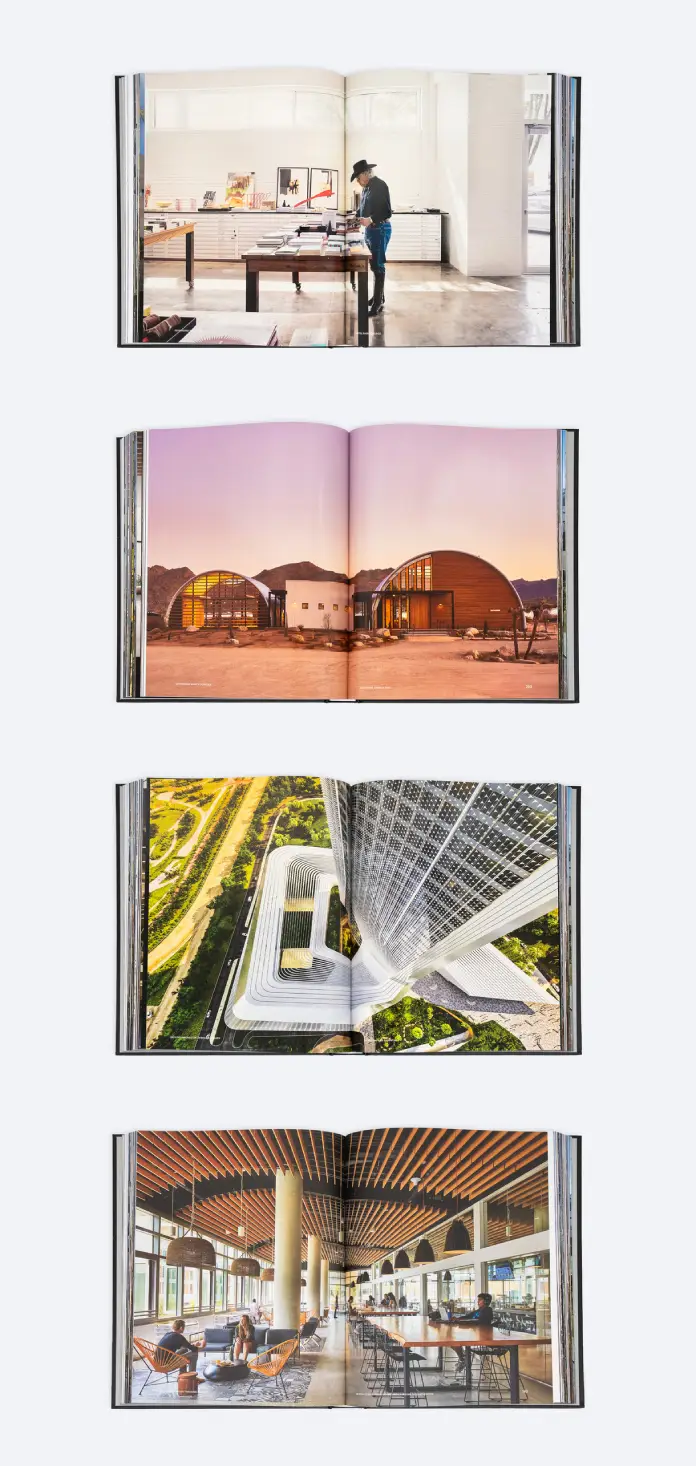
The book explores the “why” behind the “what.” HKS places people at the center of every equation. Fast Forward: How HKS Shapes the Future of Design illustrates this through stunning photography and detailed essays. You feel the intention in every line. Furthermore, the book discusses the concept of “healing spaces.” This section particularly resonates in our post-pandemic world.
The Visual and Tactile Experience of the Book
A book about design must itself be beautiful. Fast Forward: How HKS Shapes the Future of Design succeeds brilliantly in this regard. Creative Director James Frisbie and the graphic design team crafted an object of desire. The layout breathes. The typography invites reading, and the book feels substantial in your hands.
Estefanía Larragoity and Jaya Tolefree provided illustrations that clarify complex ideas. Consequently, the visual storytelling matches the architectural quality. This hardcover book sits perfectly on a coffee table or a research desk. It commands attention. You will want to return to its pages repeatedly for inspiration.
Why HKS Continues to Lead the Industry
Longevity requires evolution. Fast Forward: How HKS Shapes the Future of Design explains how an 85-year-old firm stays relevant. They embrace change. They leverage technology. The book outlines their collaborative ethos. No single “starchitect” dominates the narrative. Instead, the team shines.
This approach fosters innovation across every scale. From massive urban plans to intimate interiors, the quality remains consistent. The book attributes this to a culture of shared ownership. Everyone contributes to the vision. Therefore, the work reflects diverse perspectives. Fast Forward: How HKS Shapes the Future of Design captures the energy of a firm that refuses to stagnate.
Personal Reflections on the Text
I found myself pausing often while reading. Fast Forward: How HKS Shapes the Future of Design provokes thought. It asks you to evaluate your own surroundings. Do our cities serve us? The book suggests they can, if we design them with intention. The passion of the contributors bleeds through the text.
You sense a genuine desire to improve the human condition. This sincerity makes Fast Forward: How HKS Shapes the Future of Design unique. It is not just marketing. It is a promise. This book convinces you that architecture holds the key to many societal issues.
Integrating Technology and Innovation
The future relies on digital integration. Fast Forward: How HKS Shapes the Future of Design covers the role of advanced tech in construction. We see how digital tools allow for complex geometries. The book also discusses smart buildings. These structures adapt to user needs in real-time.
However, technology never overshadows the human element. The book maintains a balance. Tech serves the design; it does not dictate it. This distinction matters. The book presents a future where machines and humans coexist harmoniously in built environments.
Final Thoughts on This Architectural Landmark
You should own this book. It offers value to architects, designers, and laypeople. It provides a roadmap for a more connected world. The insights within Fast Forward: How HKS Shapes the Future of Design will remain relevant for decades.
HKS has set a high bar. They demonstrated that a firm profile can also be a philosophical treatise. This architecture book inspires us to demand more from our environments. We must build with purpose. We must design with empathy. This particular book leads the way.
Frequently Asked Questions
What is the main focus of Fast Forward: How HKS Shapes the Future of Design?
The book focuses on how HKS uses research, technology, and human-centered design to create spaces that improve communities and foster connection. It covers their philosophy on sustainability, health, and urban planning.
Who are the primary contributors to Fast Forward: How HKS Shapes the Future of Design?
The volume features contributions from HKS Directors Dan Noble and Heath May. It includes a preface by James P. Cramer. The editorial direction came from a team including Anthony Montalto and Upali Nanda.
Does the book only feature pictures of buildings?
No. While it includes stunning photography, it also features in-depth essays, research data, and illustrations. It explores the theory and sociology behind the architecture.
Is this book suitable for someone who is not an architect?
Yes. The book uses accessible language to discuss how design affects daily life. It appeals to anyone interested in cities, sustainability, or psychology.
What distinguishes HKS from other design firms mentioned in the book?
HKS emphasizes “fearless curiosity” and evidence-based design. They prioritize research and data to inform their creative decisions, ensuring their projects solve real-world problems.
Where can I find Fast Forward: How HKS Shapes the Future of Design?
The hardcover book is available through major booksellers and online retailers specializing in design and architecture literature.
Feel free to browse WE AND THE COLOR’s Architecture and Books categories for more.
Subscribe to our newsletter!