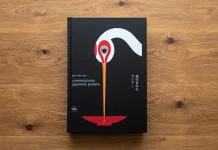


Design has always struggled to explain itself. It celebrates itself in museums, sells itself on billboards, and reshapes the world through every object you touch — yet nobody fully agrees on what it actually is. That tension is productive. And that tension is exactly what What was Design? Declarations and Definitions from a Century of Creative Quest, a new book from Slanted Publishers, leans into with sharp, precise intelligence.
This is not another coffee-table book. It is a philosophical intervention. It asks a question most designers quietly avoid: what if we stopped pretending we know what design means?
The design definition debate has never been louder. AI tools now generate designs. Algorithms now make aesthetic decisions. So the question of what design actually is — and who gets to say — has real stakes. What was Design? arrives at exactly the right moment.
Why Does the Design Definition Question Still Matter Today?
Most disciplines have an identity crisis once. Design seems to have one every decade. In the 1920s, it was about function over ornament. Later in the 1960s, it became a system. In the 1990s, it became a brand. Today, it is everything from UX flows to climate strategy. The word “design” now covers so much territory that it risks covering nothing at all.
Slanted Publishers recognized this problem clearly. So instead of adding another definition to the pile, they collected 87 of them. Eighty-seven single-sentence answers to the question “What is design?” — drawn from a full century of practitioners, theorists, and philosophers. The result is no consensus. It is productive chaos. And that contrast between 87 competing visions is precisely where the insight lives.
Consider this: when 87 intelligent people answer the same question with 87 different answers, the disagreement itself becomes the subject. You stop asking “which definition is right?” and start asking “why can’t we agree?” That shift is the intellectual engine of this book.

Furthermore, the accompanying essay by Florian Walzel does the work of excavating these deeper contradictions. Walzel does not try to resolve the tension. He traces its roots — and that restraint is what gives the essay its authority.
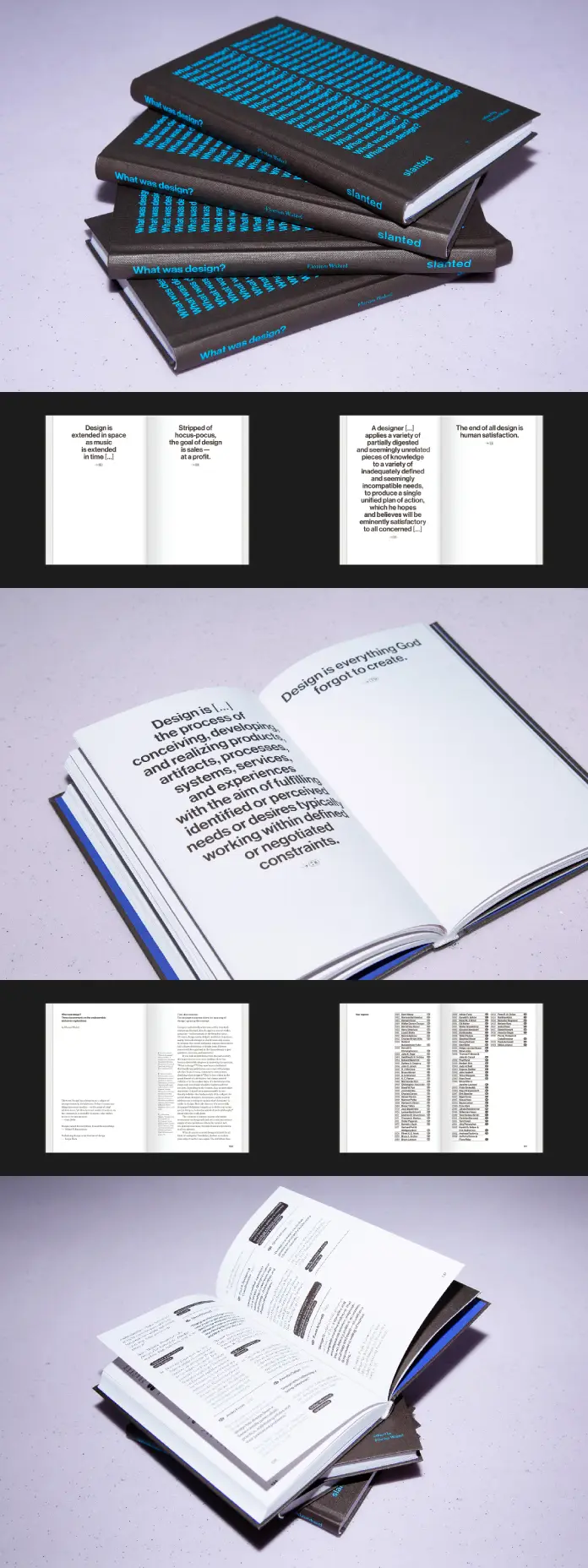
87 One-Sentence Design Definitions: What This Format Reveals
The editorial decision to use only one-sentence definitions is brilliant and demanding at the same time. It forces every thinker into a corner. You cannot hedge. You cannot qualify. You must commit. And commitment, as any designer knows, is where honesty begins.
I call this the Single-Sentence Stress Test: the discipline of reducing a complex concept to one sentence specifically to expose its contradictions, blind spots, and assumptions. When Buckminster Fuller defines design one way, and Victor Papanek defines it another, the disagreement is not a flaw. It is the argument made visible.
Moreover, placing 87 definitions side by side creates what I describe as a Competing Definition Index (CDI) — a conceptual map showing how much internal contradiction a field carries within its own vocabulary. A high CDI score signals a discipline in genuine flux. Design, by this measure, scores exceptionally high. And that is not a crisis. It is a sign of intellectual vitality.
The book works precisely because it does not try to settle the debate. It stages it. You read one definition, then the next, and the friction between them generates more insight than either definition alone could provide.
The Florian Walzel Essay: Tracing Terminological Collapse
Walzel’s essay goes further. He investigates what I call Terminological Collapse — the point at which a term accumulates so many competing meanings that it loses its ability to communicate reliably. Design is a near-perfect case study. The word now functions as a noun, a verb, a philosophy, a job title, a political act, and a marketing claim. All simultaneously. All legitimately.
But instead of mourning that ambiguity, Walzel treats it as evidence. The blurring of the design definition reveals the blurring of the disciplines around it — art, engineering, commerce, ethics, and politics. Design sits at all those intersections. Of course, it cannot hold a single, stable meaning. Nothing at an intersection ever can.
This is a genuinely important insight. And it makes the book essential reading not just for designers, but for anyone thinking seriously about creative practice, visual culture, or the history of ideas.
Design History Through the Lens of a Quote Collection
Quote collections get a bad reputation. They can feel lazy — a substitute for argument rather than an argument itself. What was Design? avoids that trap entirely. The curatorial intelligence here is sharp. The 87 definitions are not arbitrary. They represent a specific century of design thinking — the compressed, contested, constantly revised intellectual history of a discipline that refuses to stand still.
Think of it as Definitional Archaeology: excavating past definitions not to establish truth but to understand why the gaps in meaning appeared when they did. Each definition is a time capsule. Each one reflects the pressures — social, commercial, technological — that design faced in its moment of utterance.
Additionally, the book’s compact format is a deliberate editorial choice that matches its subject matter. Design is often about compression. About saying the maximum with the minimum. A book that defines design through single sentences enacts that principle on every page.
What Slanted Publishers Does Right With This Book
Slanted Publishers has a strong track record with design books that think critically rather than just celebrate. What was Design? continues that tradition with unusual clarity. The structure is clean. The editorial premise is tight. The concept scales beautifully from a casual reader flipping through a few definitions to a design theorist building a reading list.
The book also operates with what I call Retrospective Authority — the intellectual power that comes specifically from looking backward. In a field obsessed with the next tool, the next trend, and the next system, stepping back a century and asking “what did we actually mean?” is a genuinely radical act. It is also a necessary one.
Because here is the honest truth: we cannot build a useful future for design without knowing what it has already been. And we cannot know what it has already been without confronting how much we disagreed about it along the way.
Who Should Read This Book?
The short answer is: anyone who uses the word “design” seriously. That includes graphic designers, architects, product designers, UX researchers, art directors, critics, curators, and students at every level. But it also includes writers, philosophers, and cultural theorists who watch design from the outside and wonder what all the noise is about.
The longer answer is more specific. If you have ever felt uncomfortable when someone asks you to define design — if you have stumbled over the answer, hedged, or switched to a vague gesture toward “problem-solving” — this book is for you. It will not give you a clean answer. But it will give you excellent company in the uncertainty.
Furthermore, educators will find the book immediately useful. A seminar built around 87 competing definitions would generate more productive discussion than most textbooks. The friction between definitions is the curriculum.
The Design Definition Crisis Is Also a Design Opportunity
Here is a prediction, stated clearly: the next major shift in design discourse will not come from a new tool or a new aesthetic movement. It will come from a renewed argument about what design is actually for. The AI moment forces that argument into the open. When a machine can execute the technical act of design, the only remaining questions are the philosophical ones. What is the intent? Who benefits? What values does this object or system carry?
Those are exactly the questions that a century of design definitions has been circling. And What was Design? maps that circle with precision and intellectual honesty.
The book’s title uses the past tense deliberately. “What was design?” implies that something has shifted. That the design definition we inherited may no longer hold. That we need to look backward before we can look forward with any clarity. That framing is not pessimistic. It is rigorous.
Moreover, it is brave. Admitting that a discipline has not agreed on its own definition for a century is not a weakness. It is an invitation to keep thinking. And thinking is where design has always done its best work.
My Take: Why This Book Belongs on Your Shelf
I have read a lot of design books. Many of them explain things you already know in language that sounds more confident than it deserves to be. What was Design? does the opposite. It admits uncertainty. It structures that uncertainty. And it makes uncertainty feel like intellectual progress rather than failure.
The single-sentence format works on a level I did not expect. You read a definition and think you understand it. Then you read the next one, and your certainty quietly dissolves. Then you read ten more, and you realize the dissolution is the point. That experience — that slow, productive disorientation — is what good design criticism should do.
Florian Walzel’s essay earns its place. It provides the theoretical scaffolding without overwhelming the primary material. The balance is right. The book does not lecture. It invites.
Finally, the Slanted Publishers production values are consistently strong. You can expect a physical object that takes the subject seriously — which, for a book about design, is the minimum required and something many publishers still get wrong.
What was Design? is a genuinely important contribution to design history and design theory. It will not give you a clean design definition. But it will give you 87 honest attempts — and that is far more valuable.
Frequently Asked Questions About What was Design? by Slanted Publishers
What is the book What was Design? about?
What was Design? Declarations and Definitions from a Century of Creative Quest is a curated collection of 87 single-sentence definitions of design. Slanted Publishers assembled these statements from a wide range of practitioners, design theorists, and philosophers. The book traces a full century of design thinking through the lens of competing and often contradictory definitions. An essay by Florian Walzel accompanies the collection, examining the deeper reasons why the design definition has remained so unstable over time.
Who is the publisher of What was Design?
Slanted Publishers, the independent German design publisher known for its critical and visually rigorous publications, produced the book. Slanted consistently publishes work that treats design as a subject of serious intellectual inquiry rather than purely visual celebration.
Who wrote the essay in What was Design?
Florian Walzel wrote the accompanying essay. Walzel investigates the conceptual ambiguity surrounding the term “design” and traces the historical, cultural, and commercial pressures that have contributed to its terminological instability over the past century.
Why does the book use the past tense — “What was Design?”
The past tense is a deliberate editorial and philosophical choice. It signals that the definitions collected in the book represent a historical moment — or series of moments — rather than a final truth. It also suggests that the meaning of design is shifting again, and that looking backward is necessary before we can understand where design is heading next.
How many design definitions does the book include?
The book features exactly 87 one-sentence definitions. Each definition comes from a different thinker — a designer, theorist, or philosopher — and each one reflects a specific moment in the history of design thinking. The contrast between definitions is intentional and forms the intellectual core of the book.
Who should read this book?
Anyone who uses the word “design” professionally or intellectually should read this book. That includes graphic designers, architects, UX designers, product designers, design educators, critics, and cultural theorists. Students of design history and design theory will find it especially useful. The book is also accessible to readers outside the design field who are curious about the history of creative thinking and visual culture.
Is What was Design? suitable for academic use?
Yes. The book is well-suited for academic seminars, design history courses, and theoretical design studies. The collection of 87 definitions provides a rich primary source base for discussion and critical analysis. The Walzel essay offers a solid theoretical framework for understanding the broader discourse around design definition and terminological ambiguity.
What makes this book different from other design theory books?
Most design theory books argue for a single position. What was Design? stages an argument between many positions simultaneously. The one-sentence format strips away nuance and hedging, forcing each thinker to commit to a clear statement. The result is a concentrated map of how contradictory design thinking has been — and continues to be — across a full century of creative and critical practice.
All images © Slanted Publishers. Browse WE AND THE COLOR’s Design and Books categories for more.