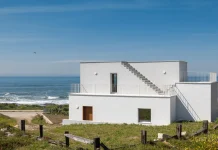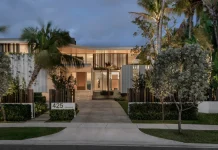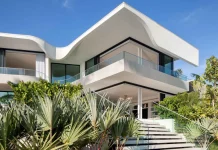


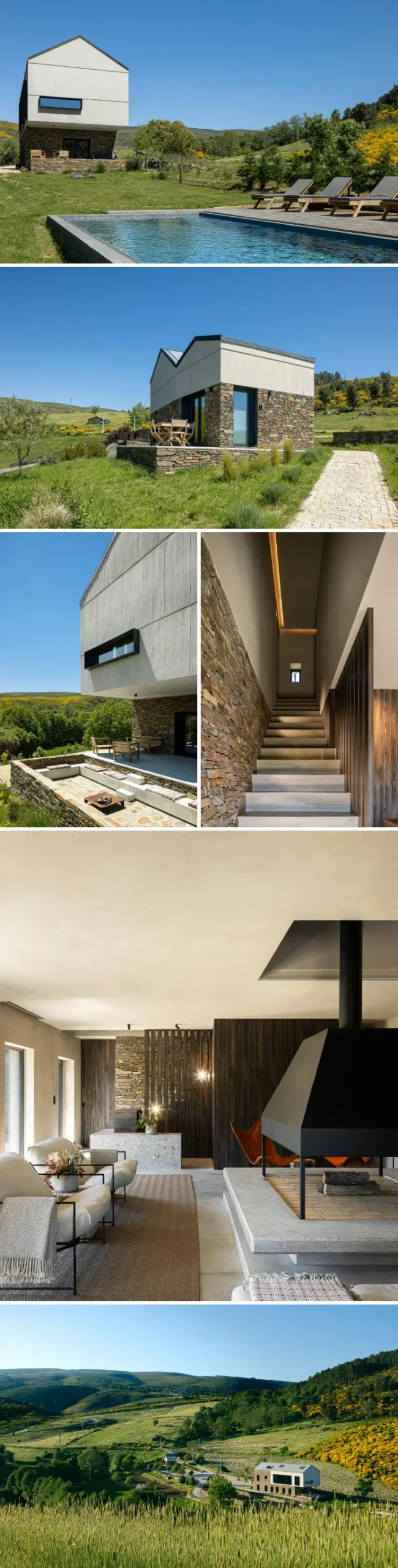
Schist and concrete shouldn’t work together. Yet here, at 1,200 meters above sea level in Portugal’s Serra da Estrela Natural Park, this unconventional pairing creates something remarkable. The TerraSense Mountain Charm Retreat, designed by Atelier DRK and captured through Ivo Tavares’ lens, proves that contemporary intervention can honor historical memory without mimicking it. This rural hotel project introduces what we might call “Material Honesty Dialectics”—a framework where traditional building materials engage in architectural conversation with modern additions, each speaking its own structural language while achieving spatial harmony.
What Makes This Rural Hotel Different From Standard Mountain Accommodations?
Traditional mountain lodges rely on nostalgia. Therefore, they recreate what was, rather than reimagining what could be. TerraSense takes a different approach entirely. Atelier DRK developed what we can term “Temporal Layering Architecture”—a design methodology that makes renovation interventions deliberately visible. The original schist structures remain intact. Meanwhile, exposed concrete cantilevers extend boldly from these stone volumes. This creates clear visual separation between old and new.
The result? Guests understand the building’s evolution at first glance. Moreover, they experience architectural history as a readable narrative rather than a romanticized blur. This transparency matters because it establishes authenticity in an era when rural hotel design often defaults to superficial rusticity.
The Site as Creative Constraint
Environmental protection regulations initially appeared limiting. However, these strict guidelines became the project’s conceptual foundation. Located within the highest protection zone of Serra da Estrela Natural Park, the site demanded minimal environmental impact. Consequently, Atelier DRK adopted what we might call “Constraint-Driven Minimalism.” This approach uses regulatory limitations as design generators rather than obstacles.
Only schist and concrete feature in the exterior palette. Furthermore, the building footprint closely follows the original structures’ boundaries. These restrictions forced clarity of expression. Each material performs a specific role. Schist anchors the building to regional tradition and topography. Meanwhile, concrete frames the mountain views with surgical precision.
Redefining Rural Hotel Spatial Experience Through Choreographic Design
Most boutique rural hotel projects prioritize surface aesthetics over spatial sequence. TerraSense inverts this priority. The design employs “Spatial Choreography”—a concept where room-to-room transitions create deliberate emotional shifts. Narrow schist-walled passages suddenly open into light-flooded concrete volumes. Subsequently, these volumes frame specific mountain vistas with almost cinematic intentionality.

This choreographic approach transforms the guest experience fundamentally. Instead of simply moving through rooms, visitors experience architectural rhythm. Additionally, each accommodation unit offers a distinct spatial character. The main house units differ dramatically from the separate villa accommodations. Therefore, return guests can choose entirely different experiential modes during subsequent visits.
How Atelier DRK Achieved “Silent Architecture” in This Rural Hotel
Contemporary design often screams for attention. Conversely, TerraSense practices what we might call “Silent Architecture”—design that amplifies environmental qualities rather than competing with them. This philosophy manifests through specific strategies:
Material restraint: Only essential materials appear in each space. Thus, nothing distracts from mountain views and natural light patterns.
Acoustic intentionality: The schist walls provide natural sound insulation. Moreover, concrete surfaces reflect interior sounds without harshness. This creates what acoustic designers call “comfortable reverberation.”
Visual framing: Windows function as deliberate view selectors. Rather than panoramic glass walls, carefully positioned openings isolate specific landscape elements. Consequently, guests notice details they might otherwise miss—a particular rock formation, a specific tree, changing cloud patterns.
The Cantilevered Concrete Gesture: Bold Yet Contextual
Those concrete cantilevers deserve deeper examination. They represent what we can term “Gestural Minimalism”—dramatic architectural moves executed with extreme material economy. Each cantilevered volume extends living spaces toward prime views. However, these extensions don’t rest on additional foundations. Instead, they project directly from the schist cores.
This structural honesty matters significantly. The cantilevers clearly read as additions rather than original elements. Furthermore, their exposed concrete surfaces weather differently than schist. Over time, this weathering will enhance the dialogue between old and new. The building will visibly age in layers, each material developing its own patina.
Why This Rural Hotel Project Matters for Contemporary Sustainable Design
Sustainability discussions often fixate on technology and systems. Nevertheless, TerraSense demonstrates that material reuse and adaptive preservation deliver equally important environmental benefits. By retaining and rebuilding the original schist structures, Atelier DRK avoided massive demolition waste. Additionally, using locally sourced schist eliminated transportation emissions associated with imported materials.
This approach exemplifies “Embedded Energy Preservation”—a sustainability framework that values the energy already invested in existing structures. Demolishing buildings wastes this embedded energy. Conversely, adaptive reuse preserves it while updating performance.
Craftsmanship as Sustainable Practice
The schist reconstruction required traditional masonry skills, increasingly rare in contemporary construction. Therefore, the project supported local craft knowledge transfer. Younger masons worked alongside experienced practitioners. This knowledge preservation carries sustainability implications beyond carbon calculations. When traditional building techniques disappear, communities lose adaptive capacity for existing building stock.
Moreover, craft-based construction creates employment in rural areas experiencing population decline. This social sustainability often receives less attention than environmental metrics. However, it remains crucial for maintaining viable mountain communities.
Ivo Tavares’ Photography: Documenting Atmospheric Architecture
Architectural photography can misrepresent buildings by idealizing them. However, Ivo Tavares’ images of TerraSense capture something more nuanced—what we might call “Atmospheric Documentation.” His photographs show how light, weather, and time transform the spaces.
Photography as Design Validation
Tavares’ images validate Atelier DRK’s spatial choreography concept. The photographs demonstrate how carefully framed views operate in practice. Additionally, they reveal the material palette’s subtle complexity. Schist surfaces appear different under various lighting conditions. Similarly, concrete reads warm during golden hour yet cool under overcast skies.
This photographic documentation serves another purpose: it establishes visual precedent for future rural hotel projects. Designers studying these images understand how minimal material palettes can achieve maximal spatial richness.
The Future of Rural Hotel Design: Predictions and Implications
TerraSense suggests several trajectories for high-altitude hospitality architecture:
Material honesty will replace artificial rusticity. Guests increasingly value authenticity over theming. Therefore, expect more projects that make contemporary interventions visible rather than camouflaging them.
Environmental constraints will drive design innovation. As protected areas expand globally, architects must develop sophisticated approaches to working within strict limitations. TerraSense demonstrates how constraints generate creative solutions.
Craft knowledge will regain economic value. Luxury travelers seek experiences unavailable elsewhere. Consequently, buildings showcasing traditional construction techniques offer competitive advantages in boutique rural hotel markets.
Spatial quality will supersede amenity quantity. Rather than adding pools, spas, and restaurants, successful mountain retreats will focus on perfecting essential experiences—contemplation, rest, and landscape immersion.
What Designers Can Learn From This Project
Several principles emerge from TerraSense that apply broadly:
Clear conceptual frameworks matter. “Material Honesty Dialectics” and “Spatial Choreography” aren’t just terminology—they’re operational design strategies that shaped every decision.
Regional materials create automatic contextuality. Using schist immediately grounds the building in Serra da Estrela’s geological and cultural identity. No styling effort could achieve equivalent authenticity.
Preservation enables rather than limits innovation. The schist cores provided structural armature for bold concrete cantilevers. Old and new mutually strengthen each other.
Restraint produces richness. Two materials create more architectural interest than six would have. Limitation forces precision.
Critical Perspective: Where TerraSense Could Push Further
While impressive, the project raises questions worth considering:
Could the concrete elements incorporate recycled aggregate from demolished regional structures? This would extend the embedded energy preservation concept into new construction elements.
Might future phases experiment with other traditional Serra da Estrela materials—wood, cork, or rammed earth? These additions could expand the material conversation without compromising the existing clarity.
Should the interiors express the same material honesty as exteriors? Some interior finishes feel slightly conventional compared to the bold exterior dialectic.
Why This Rural Hotel Resonates Beyond Architecture
TerraSense succeeds because it addresses fundamental human needs. Mountain environments offer escape from urban intensity. However, generic mountain lodges often recreate urban expectations in rural settings. This rural hotel does the opposite. It amplifies mountain qualities—silence, solitude, spatial clarity, material honesty.
Consequently, guests experience a genuine retreat rather than a themed vacation. The building facilitates contemplation without prescribing it. Spaces invite quiet inhabitation without demanding it. This gentle facilitation feels increasingly rare and valuable.
Final Thoughts: Quiet Radicalism in Rural Hotel Architecture
TerraSense Mountain Charm Retreat demonstrates that radical innovation doesn’t require formal pyrotechnics. Sometimes the boldest move is restraint. Sometimes the most contemporary gesture is honoring what existed before. Atelier DRK understood this paradox and built accordingly.
The project offers a replicable model for rural hotel development in protected landscapes worldwide. Its principles—material honesty, spatial choreography, constraint-driven design, craft preservation—apply across contexts and climates. Moreover, these principles resist stylistic trends. They root design decisions in site-specific conditions rather than aesthetic fashions.
As climate change intensifies and environmental protection expands, more projects will face the kinds of constraints TerraSense navigated. This rural hotel proves such constraints need not compromise architectural ambition. Instead, they can focus it, sharpen it, and ultimately elevate it into something memorably essential.
All images © Ivo Tavares. Check out WE AND THE COLOR’s Architecture and Interior Design categories for more.
Subscribe to our newsletter!