

Mark Rielly, Principal at ARRCC, dismantles the obsession with novelty in modern design. He argues that 2026 interiors must prioritize human experience over visual hype. This shift marks a critical departure from the fast-paced trend cycles of the previous decade. Rielly envisions a design landscape where emotional resonance outweighs aesthetic shock value. He calls this approach “conscious living.” This philosophy requires a deep understanding of how environments shape our biology and psychology. Consequently, architects and designers must rethink their fundamental approach to space. You can no longer rely on superficial decoration. Instead, you must orchestrate a considered way of living. 2026 interiors demand a transition from passive viewing to active feeling.
Why Is Conscious Living Replacing Trends in 2026 Interiors?
Designers often mistake curation for mere decoration. However, Rielly clarifies that true design involves crafting a narrative. He suggests that 2026 interiors will focus on “Bio-Narrative Design.” This framework prioritizes the story of the inhabitant and their biological well-being. Therefore, the era of the “copy-paste” aesthetic ends now.
Trends offer only a fleeting dopamine hit. In contrast, conscious living provides sustained emotional regulation. Rielly notes that experience and well-being matter far more than the next viral style. When you enter a room, your body reacts before your brain analyzes the decor. 2026 interiors acknowledge this physiological truth. Thus, the focus shifts to how a space supports rest, connection, and authentic aging.
The Hospitality Effect: Blurring Work and Leisure
Global travel fundamentally shifts our domestic expectations. Hybrid work models expose us to high-end hospitality destinations regularly. Rielly explains that this exposure ignites a specific desire. We want to emulate that resort-style calm in our daily rhythm.
Consider the sensation of entering a luxury lobby. Rielly describes this vividly. You feel the amber dusk settling and hear the hush of a wool rug. 2026 interiors capture this sensory release. However, this is not about imitation. It is about “Sensory Anchoring.” This term defines the use of texture, sound, and scent to ground the user in the present moment.
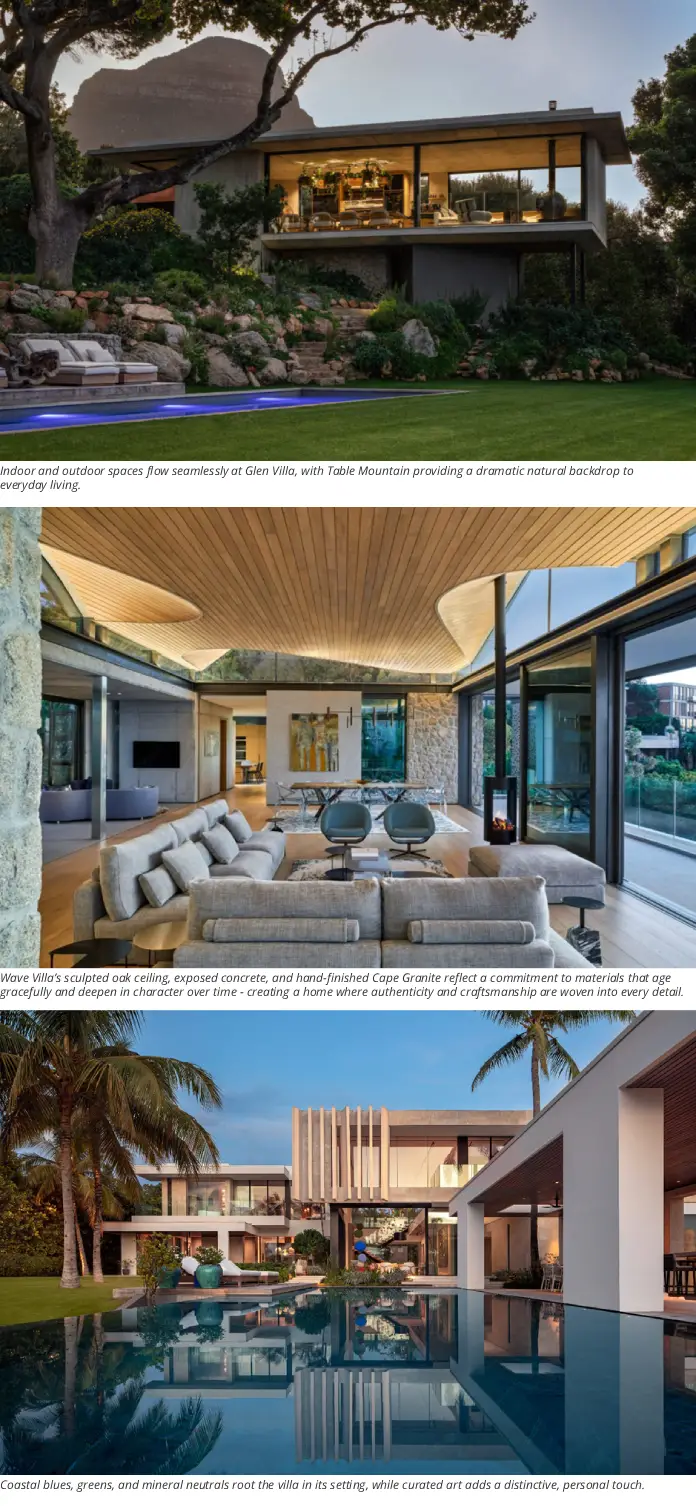
Glen Villa, situated at the foot of Table Mountain, exemplifies this perfectly. Its design harnesses a powerful juxtaposition. Clean architectural forms meet the organic mountainside. The horizon line of the sea softens the entire composition. Here, the home functions as a sanctuary. 2026 interiors must perform this same function. They must offer a curated narrative shaped by family rituals, not just furniture catalogs.

Visual Metabolism: Why Materials Must Age
Novelty has a short shelf life. We can define the speed at which a design becomes outdated as its “Visual Metabolism.” Trend-driven materials have a fast metabolism; they age quickly and poorly. Rielly observes that today, people seek longevity. Therefore, 2026 interiors embrace materials with “Temporal Resilience.”
This concept refers to elements that improve physically and aesthetically over time. Rielly points to timbers elevated into art and metals left to patinate. Additionally, stone should feature hand-finished, artisanal edges. These choices add layers of narrative authenticity.
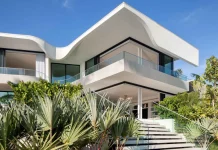
The award-winning Wave Villa illustrates this thesis. Light oak paneling softens the iconic roof structure. Simultaneously, exposed concrete adds necessary grit. Cape Granite anchors the design to its setting. This is not nostalgia. Rielly calls it intentionality. These materials grow more elegant as they weather. Consequently, 2026 interiors reject the pristine and embrace the lived-in.
The Circadian Imperative: Light Attuned to Life
Light acts as the primary governor of our internal clocks. Rielly identifies “Light Attuned to Life” as a non-negotiable for 2026 interiors. This goes beyond installing a dimmer switch. It requires a commitment to “Circadian-Attuned Architecture.”
Lighting greatly influences our mood, rest, and performance. Therefore, designers must prioritize warmer, orange tones in the evening. This supports the body’s natural rhythm. Rielly emphasizes the need for layered scenes and adaptive settings. Furthermore, designers must possess the confidence to design for darkness.
Darkness serves rest. In an always-on world, 2026 interiors must offer respite from artificial brightness. This approach improves sleep hygiene and mental focus. Thus, lighting becomes a health tool, not just an aesthetic feature.
Provenance and the Psychology of Connection
Conscious design acts as a moral compass. Rielly asserts that responsible sourcing is no longer a footnote. Homeowners now consider the provenance of every item. They expect meaningful collaboration with local artisans. 2026 interiors rely on this connection to place and culture.
This drives the “Psychology of Connection.” Spaces must actively support mental well-being. Layouts should respect both privacy and gathering. Tactility should soothe the nervous system. Biophilic cues must lower the heart rate. Rielly insists that interiors are the most intimate expression of identity.
Personal curation has overtaken prescriptive minimalism. Coastal blues or herbal greens should stem from the immediate surroundings, not a Pantone chart. This connects the dweller to their specific environment. Consequently, 2026 interiors become a mirror of a life well lived.
Predictions for the Future of Living
We can distill Rielly’s insights into three forward-looking theses for 2026 interiors:
- Narrative over Novelty: Spaces will tell specific stories about their inhabitants rather than displaying generic luxury markers.
- Biological Synchronization: Lighting and layout will prioritize hormonal health and circadian rhythms over visual symmetry.
- Material Immortality: The value of a material will be judged by its ability to patinate and endure, rejecting the disposable culture of the past.
Rielly concludes that design is not a mood board. It is a shaped life. 2026 interiors ask us to design spaces that adapt. We must create environments that awaken all five senses. These spaces must keep earning their welcome year after year. That is the only design that lasts.
All images © ARRCC. Check out WE AND THE COLOR’s Architecture and Interior Design categories for more.
Subscribe to our newsletter!