
František Jungvirt made a smart move by turning his vases into lamps. Villa Volman, a functionalist landmark near Prague, is the right place to judge it. The Czech glass artist presents three vase series there as light objects. Designblok 2026 ran from October 7 to 11 under the theme Light, and this installation belongs to that program. Visitors can still see it until October 31, 2026, but only with a reservation.
I think the František Jungvirt idea works because the villa never wanted a museum’s silence. Its architects mixed curves and color into a rational plan. A glass lamp with a ruby heart fits that house better than a spotless white box would.
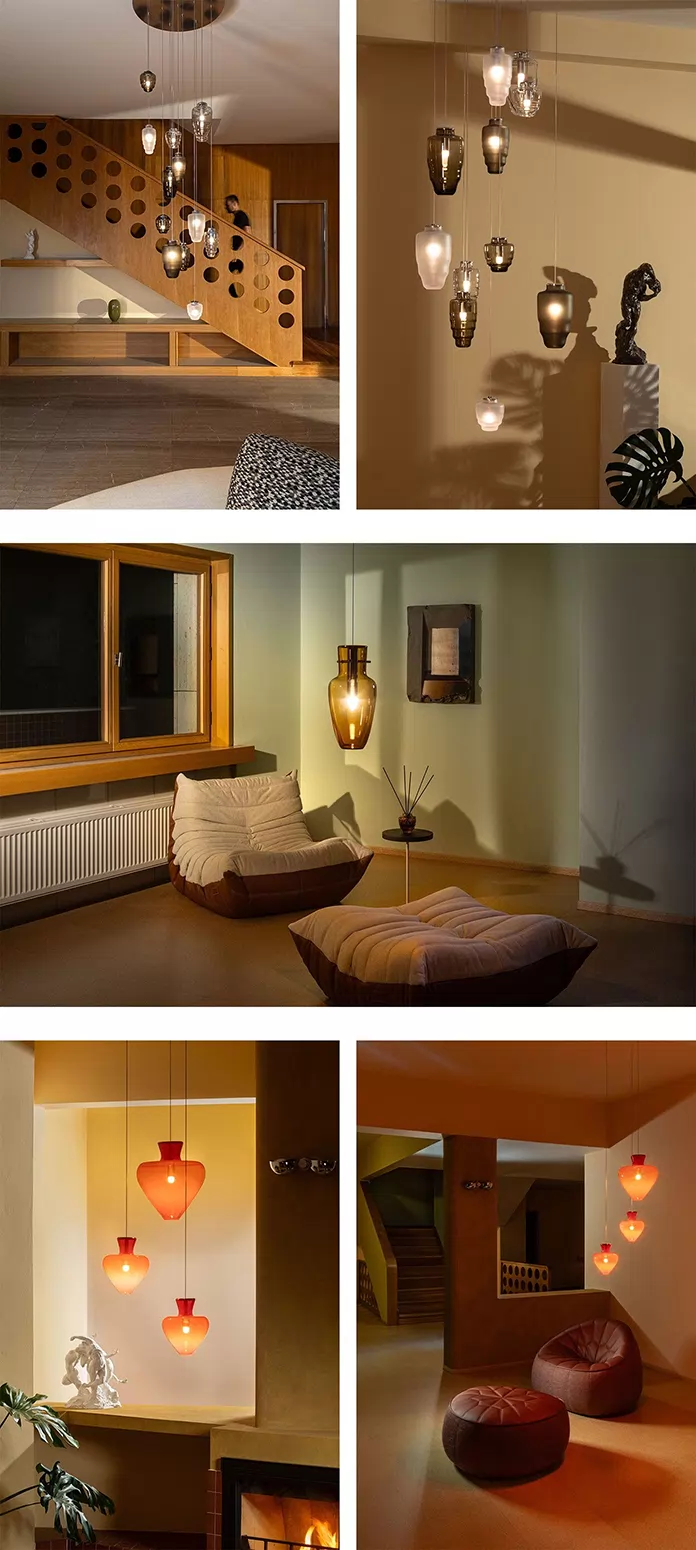
What Did František Jungvirt Change at Villa Volman?
He changed the job of the glass. Since the villa reopened in 2022, František Jungvirt’s vases have stood in its rooms as permanent objects. Now the same forms give off light instead of holding flowers.
I call this the Vessel-to-Light Shift. It describes a glass form that stops containing something and starts emitting something. The silhouette stays the same, yet the role in the room reverses completely.
Think about what a lamp does to a space. It decides what your eye finds first at dusk. It also colors every wall within reach. A vase asks for attention, but a lamp sets the terms of the whole room.
František Jungvirt says the objects are no longer interior accessories. They act as direct sources of light that change how visitors read the architecture. That claim is bold, and in my view it is fair.

Why Villa Volman Suits Glass Light Objects
A House Built on Curves
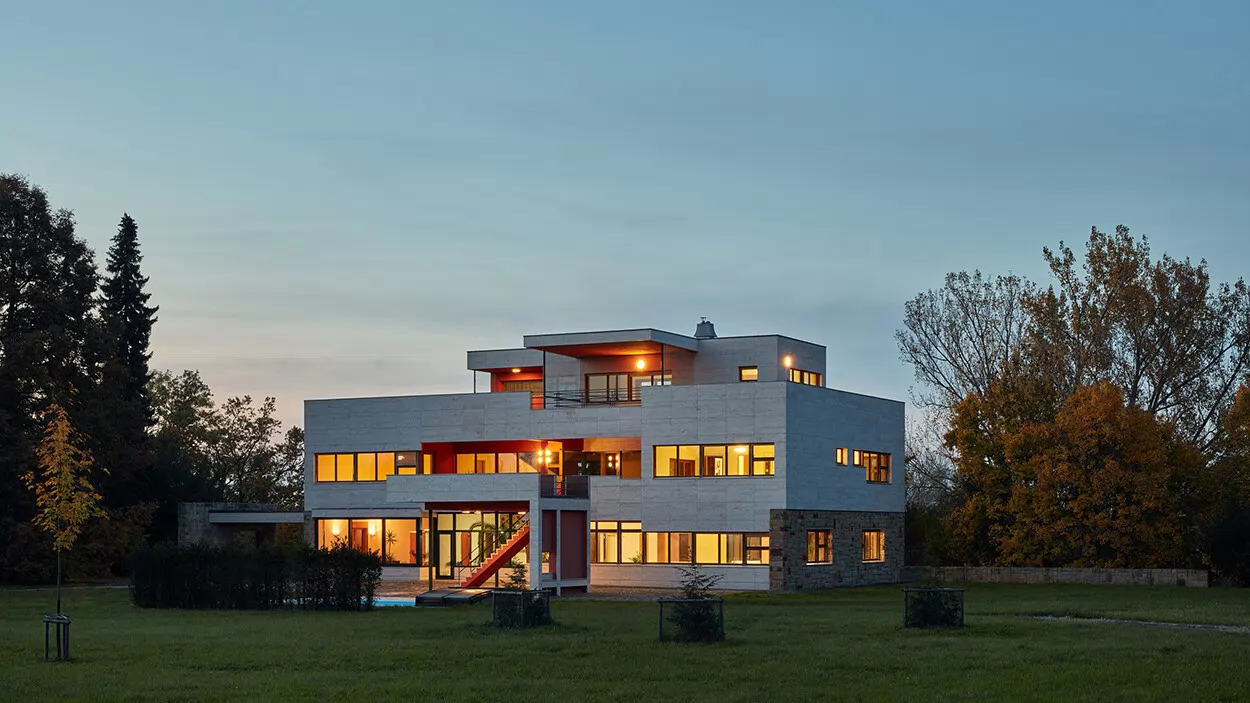
Industrialist Josef Volman commissioned the villa in 1938 and 1939. The young architects Jiří Štursa and Karel Janů designed it, and both admired Le Corbusier. Many consider it one of the best works of Czech interwar Functionalism.
Strict Functionalism would reject a heart-shaped lamp. Villa Volman does not. Štursa and Janů added expressive curves, organic details, and an unusually rich palette of materials and colors. Historians often call this approach emotional or expressive Functionalism.
A Rescue That Earned a Jury Prize
After the communist takeover in 1948, the Volman family had to leave. The house then declined for decades. By the 1990s, part of the building faced demolition.
Local entrepreneurs bought the protected monument and began a full restoration. TaK Architects led the work under architect Marek Tichý. The project won the jury prize for sensitive restoration in the 2016 Stavba roku competition. The villa reopened in 2022 and joined the Iconic Houses network that same year.
Curator Zuzana Kadlečková, who chairs the Villa Volman association, says the team never wanted a frozen artifact. She wants the villa to keep developing with young artists. František Jungvirt fits that plan well.
The Three Series Behind the Collection
The František Jungvirt lamps come from three existing series: Garden Basic, Toy, and Bloom. Each series answers a different question about glass and light. Before I rank them, I need a test.
The Two-State Test for Glass Lamps
A glass lamp lives in two states. Switched off, it works as a sculpture in daylight. Switched on, it works as a colored light source at night. I call this the Two-State Test, and most glass lighting fails one half of it.
Garden Basic: The Safe Pick
Garden Basic strips the vase down to its simplest form. The light versions use subtle earthy tones and keep the silhouette clear. They pass the off state easily. However, I expect them to sell best and surprise least.
Toy: The Risky Pick
Toy uses undulating curves that recall childhood play and molten glass. This is the series that must pass both states. Wavy forms can turn muddy once a bulb sits inside them. Still, the villa’s own curves give them a fair chance.
Bloom: The Pick That Carries the Idea
Bloom matters most in the František Jungvirt collection, so it gets the most space here. The original vases have a heart shape and ruby-red glass. As lamps, they take on a softer and more intimate character. They cast a warm glow across the villa’s interiors.
Heart shapes turn kitschy fast. That is my honest worry about the František Jungvirt Bloom lamps. Ruby glass filters light toward red, so white plaster nearby should pick up a warm cast. A restored 1939 interior also gives the form a serious counterweight.
If any František Jungvirt piece goes viral, I bet it is a Bloom lamp. It photographs well in a dark room. It also gives the Vessel-to-Light Shift a face that people remember.
How František Jungvirt Makes the Light Objects
The František Jungvirt studio makes every light object by hand with traditional glassblowing. A glassblower blows each piece into a wooden mold. Then a grinder shapes it by hand, and the surface gets either a matte finish or a high polish. Finally, a custom metal structure joins the glass, and the studio develops it for that single object.
The finish choice matters more than it sounds. Matte glass diffuses light and softens shadows. Polished glass throws sharper highlights and shows the bulb more clearly. As a result, the same shape can behave like two different lamps.
The press material leaves out technical lighting data. It gives no wattage, bulb type, or dimming details. Architects who specify lighting will ask for those numbers first, so I would request them before planning a project.
What Comes Next for František Jungvirt
František Jungvirt plans larger light installations and monumental glass sculptures for specific architectural projects. He also wants to take on fuller interior commissions, from small objects to one-of-a-kind artworks. His portfolio now includes visualizations and 3D models that architects can use in client presentations.
He has worked with architects for years. His objects appear in projects by 0,5 Studio and Miaow architekti, and selected vases sit in the Four Seasons Hotel. He graduated from the Glass Studio at UMPRUM under Rony Plesl. His collections carry his own brand, františek jungvirt.
My prediction is simple. František Jungvirt’s next big commission will be a stairwell or atrium installation. Meanwhile, more Czech glass studios will pitch lighting to restored heritage houses within two years. Villa Volman has set the template.
František Jungvirt at Villa Volman at a Glance
| Detail | Information |
|---|---|
| Artist | František Jungvirt, glass artist and designer |
| Project | New collection of glass light objects |
| Venue | Villa Volman, Stankovského 1200/46, Čelákovice, Czech Republic |
| Villa architects | Jiří Štursa and Karel Janů (1938–1939) |
| Restoration | TaK Architects under Marek Tichý; reopened in 2022 |
| Source series | Garden Basic, Toy, and Bloom |
| Technique | Hand-blown in wooden molds, hand-ground, matte or polished |
| Mounting | Custom metal structure for each object |
| Festival | Designblok 2026, 28th edition, October 7–11, theme Light |
| On view until | October 31, 2026 |
| Access | Guided tours with advance reservation |
| Photographer | Anna Pleslová |
How to See the Glass Lamps in Person
To see the František Jungvirt lamps, go to Villa Volman in Čelákovice, about 20 kilometers east of Prague. The lamps appear on the villa’s regular guided tours. You must reserve in advance. As of October 20, eleven days remain.
Bring a camera and arrive with a question. Ask yourself which of the three series earns its place. Then compare your answer with mine.
Frequently Asked Questions About František Jungvirt and Villa Volman
Who is František Jungvirt?
František Jungvirt is a Czech glass artist, designer, and glass painter. He graduated from the Glass Studio at UMPRUM in Prague. His brand, františek jungvirt, sells cohesive glass collections to collectors worldwide.
What is the Villa Volman installation?
It is a new František Jungvirt collection of glass light objects inside Villa Volman in Čelákovice. The lamps develop forms from three vase series. His vases have stood in the villa permanently since 2022.
Which František Jungvirt series became lamps?
František Jungvirt turned Garden Basic, Toy, and Bloom into lamps. Garden Basic uses earthy tones, Toy uses undulating curves, and Bloom uses heart-shaped ruby-red glass.
How does František Jungvirt make the lamps?
His glassblowers blow each piece into a wooden mold. The studio then grinds it by hand and finishes it matte or polished. A custom metal structure completes each object.
When can I see the František Jungvirt lamps?
The František Jungvirt lamps stay installed until October 31, 2026. You can see them on guided tours of the villa. Visitors must reserve in advance.
Where is the František Jungvirt installation?
The František Jungvirt installation stands at Villa Volman, which sits at Stankovského 1200/46 in Čelákovice. The town lies about 20 kilometers east of Prague.
What does František Jungvirt plan next?
He plans larger light installations and monumental glass sculptures for specific architectural projects. He also plans fuller interior commissions, from small objects to one-of-a-kind artworks.
All images © Anna Pleslová. Browse WE AND THE COLOR’s Interior Design category for more inspiring articles.
Subscribe to our newsletter!