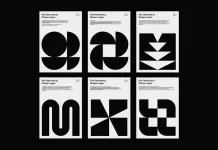

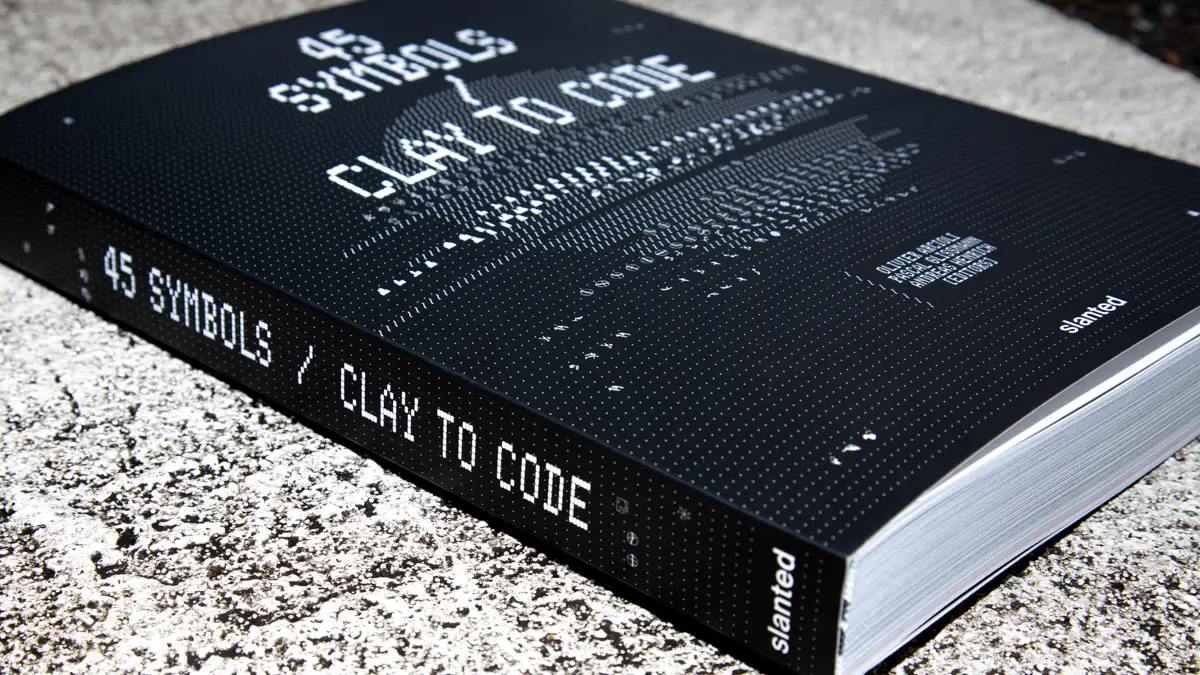
45 Symbols—Clay to Code represents a massive shift in design pedagogy and visual anthropology. We often struggle to find meaning in random visual noise. Slanted Publishers provides a solution with this January 2026 release. It connects the 3,700-year-old Phaistos Disc to modern algorithmic design. This volume collects results from over a decade of the Phaistos Project. Editors Andreas Henrich, Olivier Arcioli, and Pascal Glissmann curated this masterpiece. They prove that constraints actually fuel creativity rather than hinder it.
Designers need a structured approach to understand complex systems. 45 Symbols—Clay to Code examines how emerging artists develop systematic approaches to a visual language. The book uses the undeciphered Phaistos Disc as a primary prompt. This ancient relic contains 45 distinct symbols pressed into clay. Consequently, the book bridges the gap between these ancient artifacts and digital syntax. It stands as a living archive of research inquiries. Furthermore, it serves as a testament to collective experimentation.
How does the Phaistos Disc inspire contemporary visual storytelling?
The Phaistos Disc remains one of history’s greatest unsolved mysteries. However, its mystery provides the perfect canvas for modern interpretation. The Phaistos Project utilizes this artifact to trigger new forms of visual storytelling. Participants in this global seminar series create their own sets of 45 symbols. They translate personal narratives or global themes into a cohesive visual grammar.
We call this methodology the “Phaistos Parallax.” This term describes looking at ancient data through the lens of future technology. 45 Symbols—Clay to Code showcases over 2,000 symbols generated through this specific lens. Therefore, the book transforms a single historical object into a global dialogue. The editors organized these contributions into five distinct thematic fields. Each field explores a different aspect of our shared reality.
The Five Pillars of Symbolic Systematization
The book structures its massive content through a framework I categorize as “Symbolic Systematization.” This structure ensures clarity amidst the visual abundance.
- Traces of Everyday Life: This section explores material culture and the domestic archive.
- Planetary Surfaces: Artists analyze the ecological memory of the Anthropocene.
- Politics of Language: This pillar focuses on symbols of protest and collective transformation.
- Cultural Scripts: Designers investigate spiritual codes and visual identity.
- Speculative Alphabets: The final section envisions linguistic flux and future archives.
Each section functions as a standalone gallery. Yet, they collectively build a comprehensive worldview. 45 Symbols—Clay to Code acts as a Rosetta Stone for the modern era.

Exploring the materiality of the book object
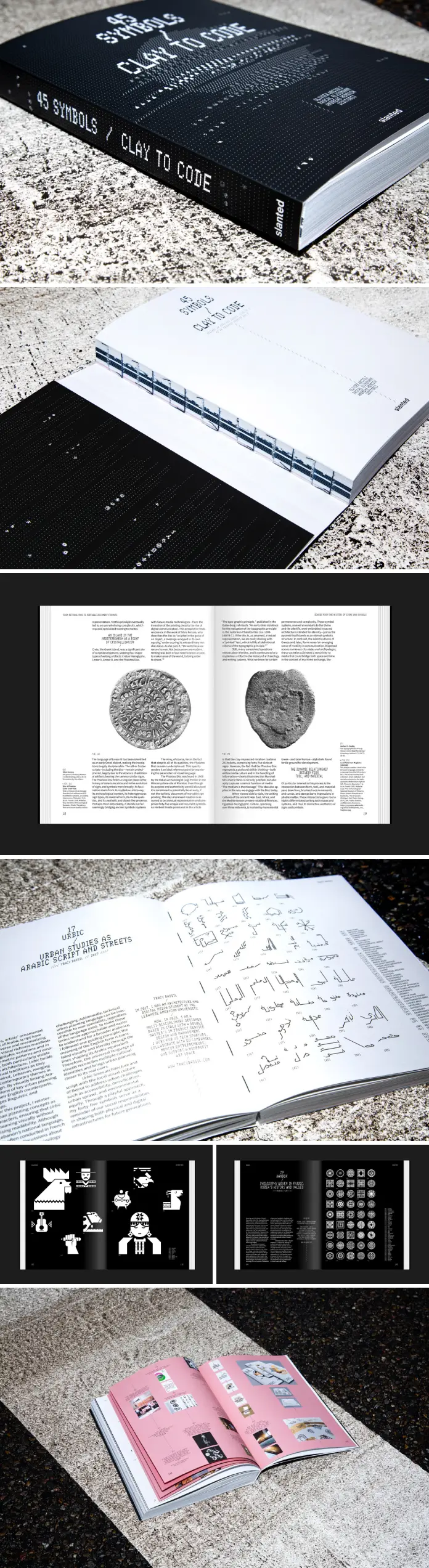
Slanted Publishers always delivers exceptional production quality. This book is no exception to this rule. The physical object reflects the content’s depth.
- Format: 28 × 21 cm.
- Volume: 320 pages.
- Paper: Munken Print White, 115 g/sm.
- Binding: Swiss brochure with flaps and open thread stitching.
The tactile experience of the Munken paper contrasts with the digital nature of the content. Foil lamination adds a futuristic touch to the cover. Therefore, holding the book feels like holding a piece of history.
What methods does the book offer for design research?
45 Symbols—Clay to Code aims to provide hands-on methods for developing skills. It goes beyond simple portfolio showcasing. Readers gain insight into documentation and reflection practices. These practices foster authentic and systematic personal outcomes.
The editors included a range of intercultural dialogues. This diversity prevents the visual language from becoming monolithic. Instead, we see a plurality of voices. The book proves that a rigid system can support infinite variation.
The relevance of the Anthropocene and protest
Theme II and Theme III appear particularly relevant today. We face climate crises and political instability. 45 Symbols—Clay to Code tackles the ecological memory of the Anthropocene. Artists visualize planetary surfaces as archives of human impact.
Simultaneously, the book addresses the politics of language. Symbols of protest require immediate recognition. The contributors demonstrate how to strip a message down to its core. Thus, the book becomes a manual for activism. It teaches us to speak loudly without saying a word.
How does Slanted Publishers maintain such high standards?
Slanted Publishers occupies a unique space in the design world. They consistently champion experimental and academic work. 45 Symbols—Clay to Code fits perfectly into their catalog. The publication dates to January 2026. It arrives at a time when we need physical anchors for our digital lives.
I believe this book will serve as a primary reference for decades. It documents a specific moment in design history. We see the transition from physical clay to digital code clearly. The book captures this linguistic flux perfectly.
Implementing the “Visual Syntax Protocol”
Designers should adopt what I call the “Visual Syntax Protocol.” This concept draws directly from the book’s methodology.
- Observe: Look at the traces of everyday life.
- Encode: Simplify observations into a symbol.
- Systematize: Arrange symbols to form a narrative.
- Iterate: Refine the forms until they hold universal meaning.
The book guides the reader through this exact process. It transforms the reader from a passive observer into an active maker.
The legacy of 45 Symbols—Clay to Code
The book is essential reading. It is not merely a collection of pretty images. It is a rigorous academic inquiry into how we make meaning. The collaboration between Andreas Henrich, Olivier Arcioli, and Pascal Glissmann yields incredible results. They have successfully translated the mystery of the Phaistos Disc for the modern age.
You should add this volume to your library. It offers practical value for visual identity projects. Furthermore, it provides theoretical depth for academic research. 45 Symbols—Clay to Code ultimately proves that symbols are our most enduring technology.
FAQ: Everything You Need to Know About 45 Symbols—Clay to Code
What is the main focus of 45 Symbols—Clay to Code?
The book focuses on how designers develop systematic visual languages. It uses the 3,700-year-old Phaistos Disc as a starting point. The book collects over 2,000 symbols created during the global Phaistos Project.
Who are the editors of 45 Symbols—Clay to Code?
The book was edited and designed by Andreas Henrich, Olivier Arcioli, and Pascal Glissmann. They are the driving forces behind the Phaistos Project and this publication by Slanted Publishers.
How is 45 Symbols—Clay to Code structured?
The content is organized into five thematic fields. These include Everyday Life, Planetary Surfaces (Anthropocene), Politics of Language, Cultural Scripts, and Speculative Alphabets. This structure aids in navigating the 320 pages.
Why is this book relevant for Visual Storytelling?
It provides hands-on methods for documentation and reflection. The book teaches designers how to construct an original visual grammar. It demonstrates how to turn abstract concepts into distinctive personal outcomes.
What are the physical specifications of the book?
45 Symbols—Clay to Code measures 28 × 21 cm. It features offset printing on Munken Print White paper (115 g/sm). The binding is a Swiss brochure with open thread stitching and foil lamination.
Does 45 Symbols—Clay to Code address modern issues?
Yes, it covers current topics like the ecological memory of the Anthropocene. It also explores symbols of protest and political transformation. The book connects ancient history with contemporary challenges.
When was 45 Symbols—Clay to Code released?
Slanted Publishers released the book in January 2026. It is available under ISBN 978-3-948440-95-4.
What is the connection between the Phaistos Disc and the book?
The Phaistos Disc is an ancient clay disk with 45 undeciphered symbols. The book uses this object as a prompt. Artists create their own 45 symbols to explore the transition from clay to code.
All images © Slanted Publishers. Check out other recommended books here at WE AND THE COLOR.
Subscribe to our newsletter!