
This post contains affiliate links. We may earn a commission if you click on them and make a purchase. It’s at no extra cost to you and helps us run this site. Thanks for your support!
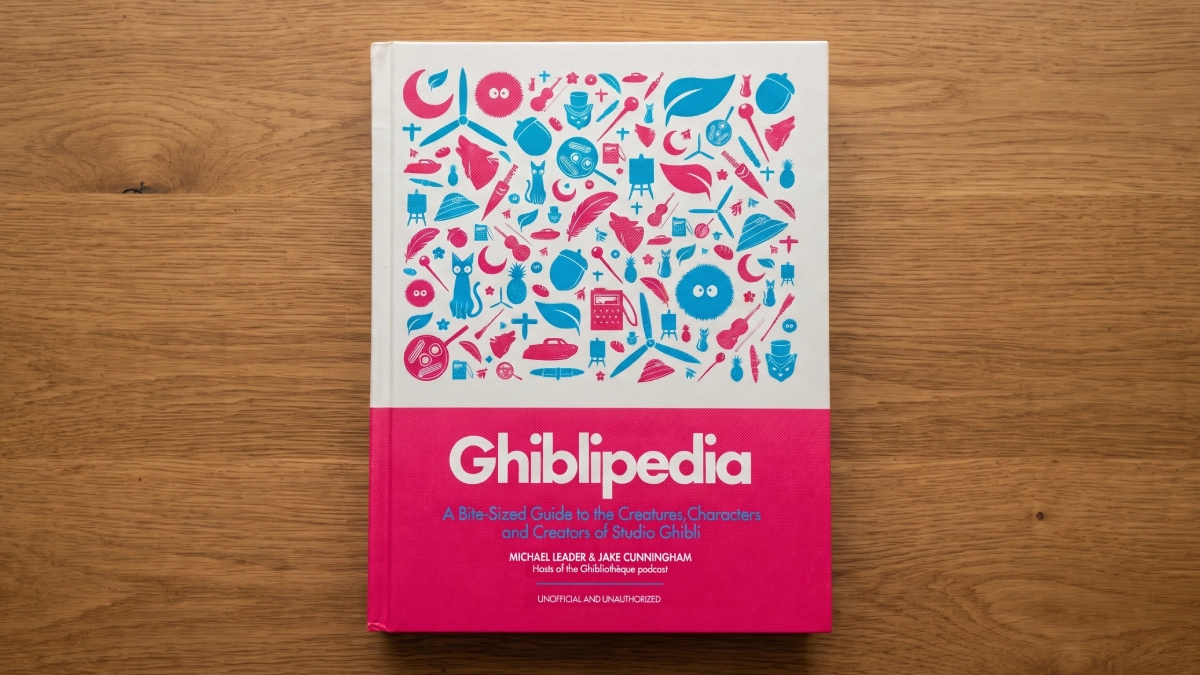
Ghiblipedia is the best Studio Ghibli book for adults who already love the films. It lets them stay inside those worlds a little longer. I found it this summer and bought it for my partner right away.
She’s an adult, and she adores Studio Ghibli. Then I opened the book myself. After spending real time with its pages, I understand her fascination far better, because Ghiblipedia shows how much care went into these worlds and the characters who live in them.
Studio Ghibli stays in the spotlight. The Boy and the Heron won the Oscar for best animated feature in March 2024. In March 2025, social feeds were filled with AI images that copied the studio’s look. Those copies capture a surface. Ghiblipedia documents the creatures and the filmmakers behind the real thing.
Why Does Studio Ghibli Need a Proper Reference Book?
Studio Ghibli formed in 1985, and its first film under that name, Castle in the Sky, arrived in 1986. Spirited Away won the Oscar for best animated feature in 2003. The Boy and the Heron won it again in 2024. Almost four decades of films leave a long list of names, places and machines to track.
Viewers tend to remember the headliners and lose the supporting cast. I call that distance the reference gap, the space between the films you’ve watched and the names you can actually place. Ghiblipedia targets that gap directly.

What Is Ghiblipedia and Who Wrote It?
Ghiblipedia is a 208-page hardcover encyclopedia of Studio Ghibli. Welbeck published it in August 2026. It holds more than 200 bite-sized entries in seven themed chapters, and more than 150 photographs, artworks, and stills illustrate them.
Michael Leader and Jake Cunningham wrote it. They host the Ghibliotheque podcast, so they’ve spent years talking about these films out loud. Leader has written for Sight & Sound and Little White Lies. Cunningham has written for Empire and NME. Welbeck also published their earlier books, The Ghibliotheque Anime Movie Guide in 2022 and An Unofficial Guide to the World of Studio Ghibli in 2023.
According to the publisher, the entries span every Ghibli film, from My Neighbor Totoro to Spirited Away to The Boy and the Heron, and they reach beyond the films too. That makes Ghiblipedia a Studio Ghibli encyclopedia rather than a single-film guide.
How Does Ghiblipedia Compare With the Authors’ Earlier Books?
The Ghibliotheque Anime Movie Guide spreads 192 pages across Japanese animation as a whole. An Unofficial Guide to the World of Studio Ghibli ran 128 pages in its 2023 edition. Ghiblipedia spends 208 pages on one studio. The room matters because an encyclopedia lives on small subjects.
Why Does Ghiblipedia Work Better Than a Film-by-Film Guide?
The Coffee-Break Entry
A film guide asks you to commit to a whole movie. An entry asks for a few minutes. I call this unit the coffee-break entry, a reference piece short enough to finish before your drink cools. Ghiblipedia consists of more than 200 of them.
That format suits Ghibli, because the studio’s films are crowded. Spirited Away alone holds No-Face, Zeniba, Yubaba, and a bathhouse full of spirits. A plot summary squeezes that crowd into one paragraph. An entry lets each oddity stand on its own.
Take Zeniba, Yubaba’s twin sister. She’s far kinder than Yubaba and lives in a cottage far from the bathhouse. The film gives her a short stretch of screen time. An encyclopedia can give her a full page, and the publisher’s blurb even uses her name as the far end of its range, from Arrietty to Zeniba.
Arrietty anchors the other end. She comes from The Secret World of Arrietty, the 2010 film that adapts Mary Norton’s novel The Borrowers. Her film gets less attention than Spirited Away, so an entry on her feels welcome.
Ghiblipedia packs more than 200 entries and over 150 images into 208 pages, so the average entry gets about a page or less, which forces the authors to choose the one fact that matters and drop the rest, and in my time with the book, they chose well.
How Do the Seven Chapters Map the Ghibli Universe?
Creatures and characters come first in the publisher’s description. Filmmakers, locations, contraptions, and influences follow. That’s a wide net for 208 pages, and Ghiblipedia keeps it manageable by sorting everything into seven chapters.
Contraptions is my favorite category. Howl’s castle walks on bird-like legs. Kiki makes her deliveries on a broom. Ghibli’s machines behave like characters, so a book that gives them their own theme gets something right.
The creature and character entries matter just as much. According to the blurb, Totoro and No-Face headline the creatures, while Porco Rosso and Nausicaä headline the characters. Nausicaä makes a good test case. Her film arrived in 1984, a year before Studio Ghibli existed. A reference book can state that in one line, and I suspect many casual viewers have never heard it.
Do the Images in Ghiblipedia Earn Their Space?
A book about animation has to show what it describes. The publisher counts more than 150 photographs, artworks, and stills across the book. That works out to roughly seven images for every ten pages. The mix suits a studio famous for hand-drawn animation.
As an editor at a design blog, I judge a book by its images first. Here, the pages don’t read like a wall of trivia, and the visuals give each entry something to look at while you read.
What Does Ghiblipedia Show About Hayao Miyazaki and Isao Takahata?
The blurb calls both men legendary filmmakers, and Ghiblipedia includes them among its filmmakers. That matters, since casual fans often credit Miyazaki with everything. Takahata directed Grave of the Fireflies, which opened in Japan in April 1988 on a double bill with My Neighbor Totoro.
That double bill sticks with me. Because both films played on a single ticket in April 1988, an audience could leave the theater carrying a gentle forest spirit in one hand and a heavy grief in the other, and I think a good reference book should say so out loud.
How Should You Read Ghiblipedia? Try Sideways Viewing
Sideways viewing means moving between one reference entry and one scene, instead of moving through a film from start to finish. Ghiblipedia invites that method.
Here’s how I’d use it. Pick an entry, then watch the scene where that creature or contraption appears. Next, read a neighboring entry. Skip the rest of the film for now. The entry supplies context, and the scene supplies the feeling.
The reverse works too. Watch a film first, then read the entries on everything you couldn’t name. I’d start with My Neighbor Totoro, because the film runs only 86 minutes and the blurb lists Totoro among the iconic creatures.
A Short Glossary for This Ghiblipedia Review
Coffee-break entry. A reference entry short enough to finish before a coffee cools.
Sideways viewing. Moving between one reference entry and one film scene instead of watching a film straight through.
Reference gap. The distance between the Ghibli films you’ve watched and the names you can place.
These terms come from this review by Dirk Petzold at WE AND THE COLOR.
Is Ghiblipedia a Good Studio Ghibli Gift for Adults?
Yes, and I bought it as one. My partner is an adult who loves Studio Ghibli, and this book suits exactly that kind of reader. It gives her something to hold.
The object helps. Ghiblipedia measures 7.56 by 9.45 inches and weighs 1.65 pounds. That’s heavy enough to feel like a real gift. It still fits comfortably on a lap. Pair it with a screening of her favorite film, and let her pick the first entry to read.
U.S. bookshops list it at $29.95. Amazon’s price moves, so check it before you order.
Who Should Skip Ghiblipedia?
Every Ghiblipedia review should name a limit, so here’s mine. Skip it if you want a production history of every film. Two hundred entries in 208 pages can’t carry that. Readers who love long essays will want a different book.
Still, I’d rather own a reference that invites short visits than an essay collection I never finish. Also, I’d watch a film before reading its entries, because an entry on a character works best after you’ve met that character.
Ghiblipedia at a Glance
Here’s the short version, built for quick reference.
| Detail | Ghiblipedia |
|---|---|
| Full title | Ghiblipedia: A Bite-Sized Guide to the Creatures, Characters and Creators of Studio Ghibli |
| Authors | Michael Leader and Jake Cunningham, hosts of the Ghibliotheque podcast |
| Publisher | Welbeck |
| Publication date | August 25, 2026 (Amazon listing) |
| Format | Hardcover, 208 pages |
| Entries | More than 200 bite-sized entries |
| Chapters | Seven themed chapters |
| Images | More than 150 photographs, artworks, and stills |
| Size and weight | 7.56 x 0.87 x 9.45 inches, 1.65 pounds |
| ISBN-13 | 978-1035436415 |
| List price at U.S. bookshops | $29.95 |
| Best for | Adult Studio Ghibli fans who want a reference to browse |
| My verdict | Strongly recommended |
Common Questions About Ghiblipedia
What is Ghiblipedia?
This 208-page encyclopedia of Studio Ghibli holds more than 200 bite-sized entries, and Welbeck published it in August 2026.
Who wrote Ghiblipedia?
The hosts of the Ghibliotheque podcast, Michael Leader and Jake Cunningham, wrote Ghiblipedia.
Does Ghiblipedia cover every Studio Ghibli film?
Yes, according to the publisher. The entries span every film from My Neighbor Totoro to Spirited Away to The Boy and the Heron, and they extend beyond the films.
How does Ghiblipedia organize its entries?
Seven themed chapters sort the entries. The publisher names creatures, characters, filmmakers, locations, contraptions, and influences among the themes.
Is Ghiblipedia a good gift for adult Studio Ghibli fans?
It is. I bought Ghiblipedia for my adult partner, who loves Studio Ghibli, and I enjoyed it myself.
How many images does Ghiblipedia contain?
More than 150 photographs, artworks, and stills fill the book.
How big and heavy is Ghiblipedia?
The book measures 7.56 by 0.87 by 9.45 inches and weighs 1.65 pounds.
Browse WE AND THE COLOR’s Books category for more.
Subscribe to our newsletter!